Leaning tower pisa green
1344×768 · AVIF · CC BY 4.0
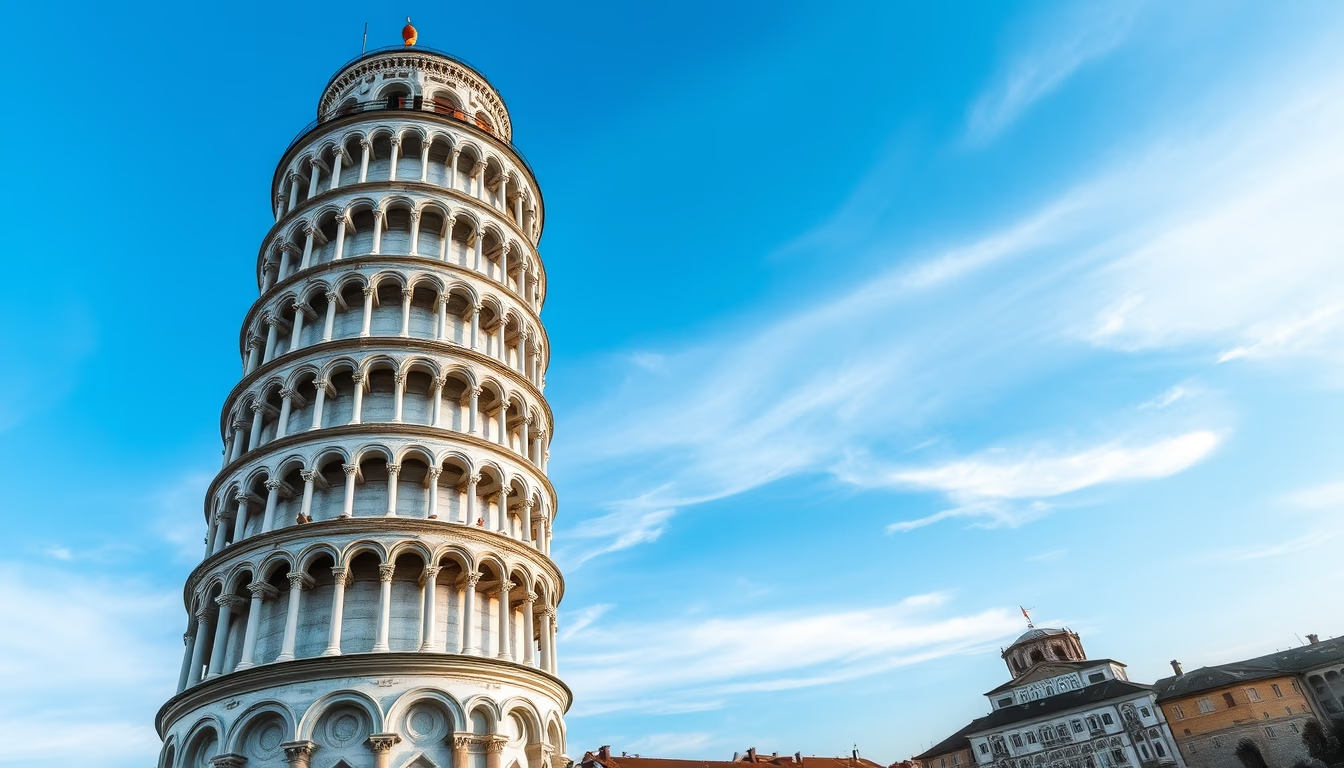
The Leaning Tower of Pisa, an Italian icon famous for its tilt, is the bell tower of Santa Maria Assunta Cathedral in the Piazza dei Miracoli.
About this subject
The Leaning Tower of Pisa, or Torre Pendente di Pisa, is the bell tower of the Cathedral of Santa Maria Assunta, located in the Piazza dei Miracoli (Square of Miracles) in Pisa, Italy. Construction began in 1173 and spanned nearly 199 years across three phases, interrupted by wars and economic crises. The tower stands 55.86 meters on the lower side and 56.67 meters on the higher side, weighing about 14,500 tons. Its tilt, currently about 3.97 degrees, resulted from unstable clay and sand soil that gave way during the second floor's construction.
Architecturally, it is Romanesque, with white marble base and intricate reliefs. The tower has eight stories, including the belfry at the top, housing seven bells tuned to a musical scale. Each bell corresponds to a note and is used for different liturgical occasions. The oldest, Pasquereccia, dates to 1262. The internal spiral staircase has 294 steps leading to a panoramic view of the city and cathedral.
Several stabilization projects over centuries prevented collapse. Between 1990 and 2001, the tower was closed to the public for major restoration, reducing the lean by 45 centimeters. Methods included removing soil from the north side and installing lead counterweights. Today, engineers consider the tilt stable for at least 200 years. The tower is a UNESCO World Heritage Site since 1987, along with the entire Piazza dei Miracoli complex.
The term "Pisa green" may refer to the greenish hue the stone acquires in damp conditions or the surrounding vegetation, such as the grass of the square. In long-exposure photography, green tones can be emphasized by ambient light or filters. The tower is one of the most photographed landmarks globally, attracting millions of visitors yearly. Its unique tilt, combined with architectural elegance, makes it a lasting symbol of human ingenuity and geological unpredictability.
Frequently Asked Questions
Why is the Leaning Tower of Pisa tilted?
The tilt resulted from unstable clay and sand soil that gave way during construction, which started in 1173. The soil could not support the tower's weight, causing one side to sink.
Is the Leaning Tower of Pisa still leaning?
After restoration work between 1990 and 2001, the lean was reduced by 45 centimeters and stabilized. Engineers estimate the tower will not topple for at least 200 years.
How many steps are in the Leaning Tower of Pisa?
The tower has 294 spiral steps leading to the top viewing platform, where the seven bells are located.
Direct URL
https://pub-c7d6a6ea828543ac903a74a341ccb2e1.r2.dev/imagens/leaning-tower-pisa-green-long-exposure-p0.avifHow to credit
Include a visible link back to UtilizAí. Copy one of the snippets below:
<a href="https://xn--utiliza-eza.com/en/midia/imagens/leaning-tower-pisa-green-long-exposure-p0">Leaning tower pisa green</a> by <a href="https://xn--utiliza-eza.com">UtilizAí</a>, licensed under <a href="https://creativecommons.org/licenses/by/4.0/">CC BY 4.0</a>.
[Leaning tower pisa green](https://xn--utiliza-eza.com/en/midia/imagens/leaning-tower-pisa-green-long-exposure-p0) by [UtilizAí](https://xn--utiliza-eza.com), CC BY 4.0
License: CC-BY-4.0