Lap steel guitar
1344×768 · AVIF · CC BY 4.0
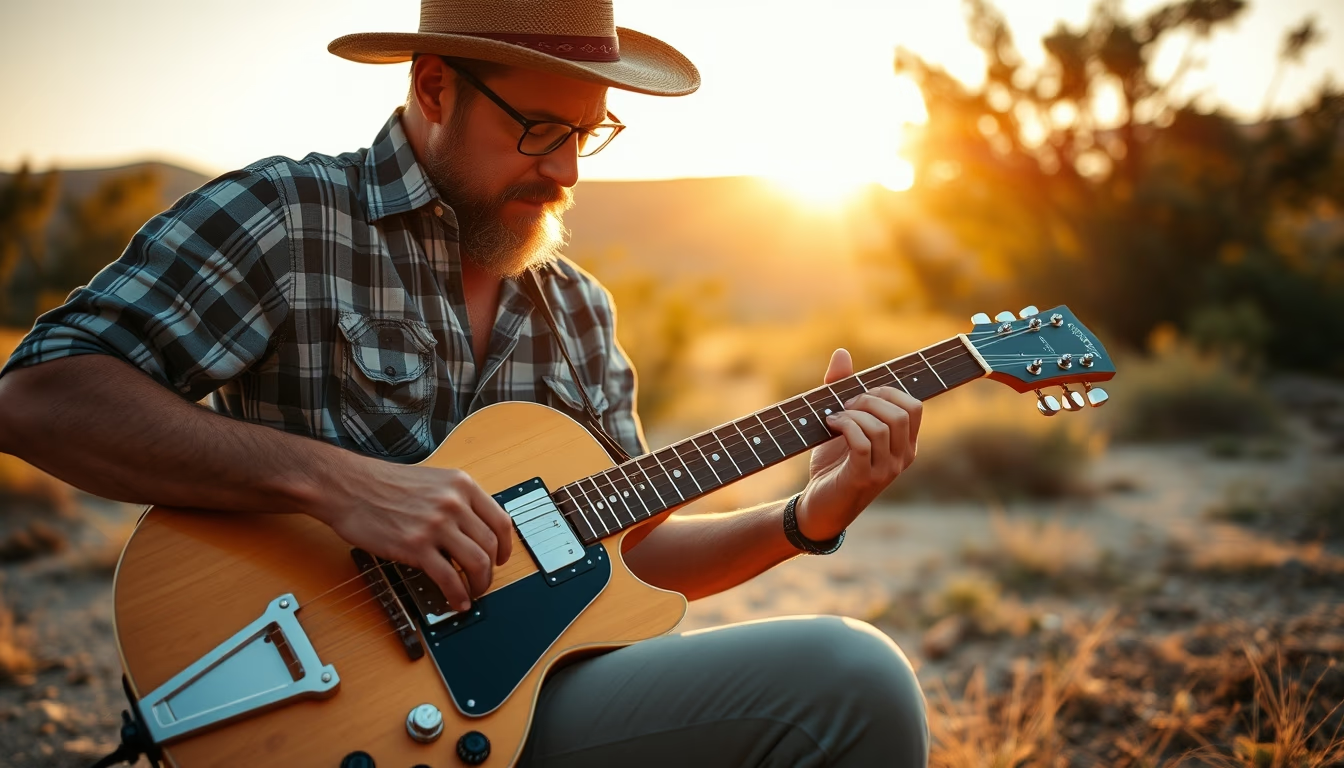
The lap steel guitar is a string instrument played horizontally with a steel bar, originating from Hawaii and essential in country and blues music.
About this subject
The lap steel guitar, also called Hawaiian guitar, originated in the late 19th century in Hawaii, when local musicians began sliding a metal bar across the strings of standard acoustic guitars to produce smooth glissandos. The distinctive sound quickly spread to the mainland United States in the early 20th century, driven by Hawaiian troupes performing at world fairs and radio broadcasts. Unlike a conventional guitar, the lap steel is played horizontally, resting on the player's lap. The strings are raised (high action) and the instrument is tuned to open chords, such as G major or D major, allowing full chords with a single bar stroke.
In American music, lap steel became a staple of country and blues in the 1930s and 1940s, with pioneers like Sol Hoopii and Jerry Byrd. Later, the sliding sound influenced rock, especially through guitarists like Duane Allman and the evolution into the pedal steel, which adds pedals to change tuning during performance. Lap steel retains a rawer, more direct tone, used in genres from folk to psychedelic rock. Two main variations exist: metal-bodied (resonator) and solid-body, the latter popularized by manufacturers such as Rickenbacker and Gibson.
In Brazil, lap steel has a modest presence but appears in instrumental and experimental recordings, particularly in jazz and regional music. Guitarist Nenê and multi-instrumentalist Paulo Moura have occasionally incorporated its timbre. Technically, the instrument demands precise control of the steel bar (usually steel or chrome) and finger or pick attack, producing vibratos and bends impossible on regular guitar. Lap steel is also historically called "Hawaiian guitar," but the term "lap steel" now distinguishes it from pedal versions.
Notably, David Gilmour of Pink Floyd used lap steel on tracks like "Breathe" and "Shine On You Crazy Diamond," demonstrating its versatility beyond country. Despite its association with old Hawaiian music, the instrument thrives in enthusiast communities and blues-surf festivals. Its handcrafted construction and demanding technique ensure each lap steel has a unique personality, with fine woods and single-coil pickups that accentuate mid and treble frequencies.
Frequently Asked Questions
What is the difference between lap steel and pedal steel?
Lap steel is played with a sliding bar and has fixed open chord tuning. Pedal steel has pedals and levers that alter string tension during playing, allowing complex chord changes, more common in modern country music.
Is lap steel difficult to learn?
It requires specific coordination to slide the bar accurately while picking simultaneously. Open tuning makes chords easy, but controlling vibrato and intonation demands practice. Many guitarists find the initial transition challenging.
Is lap steel used in genres other than country and blues?
Yes, it appears in rock (Pink Floyd, Led Zeppelin), surf rock (Dick Dale), jazz (Jerry Byrd), and even Brazilian experimental music. Its unique timbre adds atmospheric textures.
Direct URL
https://pub-c7d6a6ea828543ac903a74a341ccb2e1.r2.dev/imagens/lap-steel-guitar-travel-photography-p9.avifHow to credit
Include a visible link back to UtilizAí. Copy one of the snippets below:
<a href="https://xn--utiliza-eza.com/en/midia/imagens/lap-steel-guitar-travel-photography-p9">Lap steel guitar</a> by <a href="https://xn--utiliza-eza.com">UtilizAí</a>, licensed under <a href="https://creativecommons.org/licenses/by/4.0/">CC BY 4.0</a>.
[Lap steel guitar](https://xn--utiliza-eza.com/en/midia/imagens/lap-steel-guitar-travel-photography-p9) by [UtilizAí](https://xn--utiliza-eza.com), CC BY 4.0
License: CC-BY-4.0