Lacework antique tatting
1344×768 · AVIF · CC BY 4.0
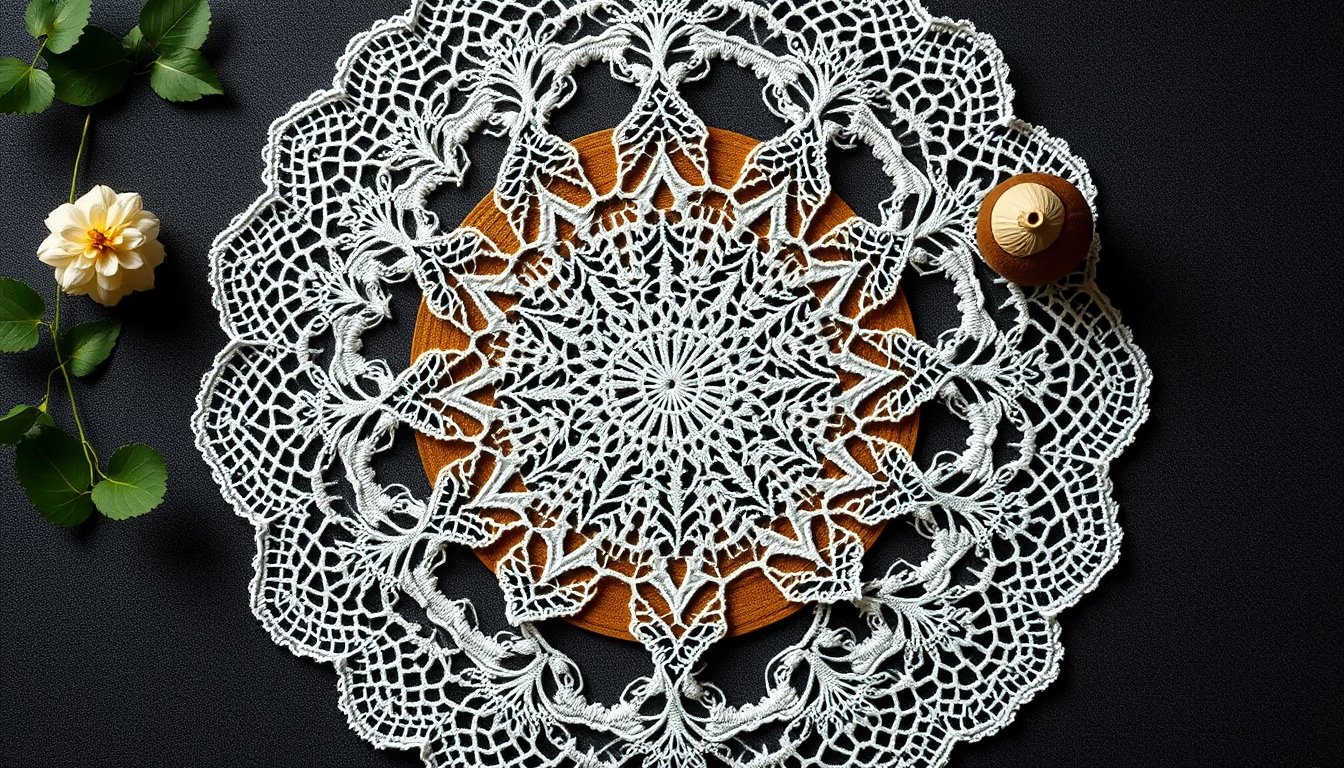
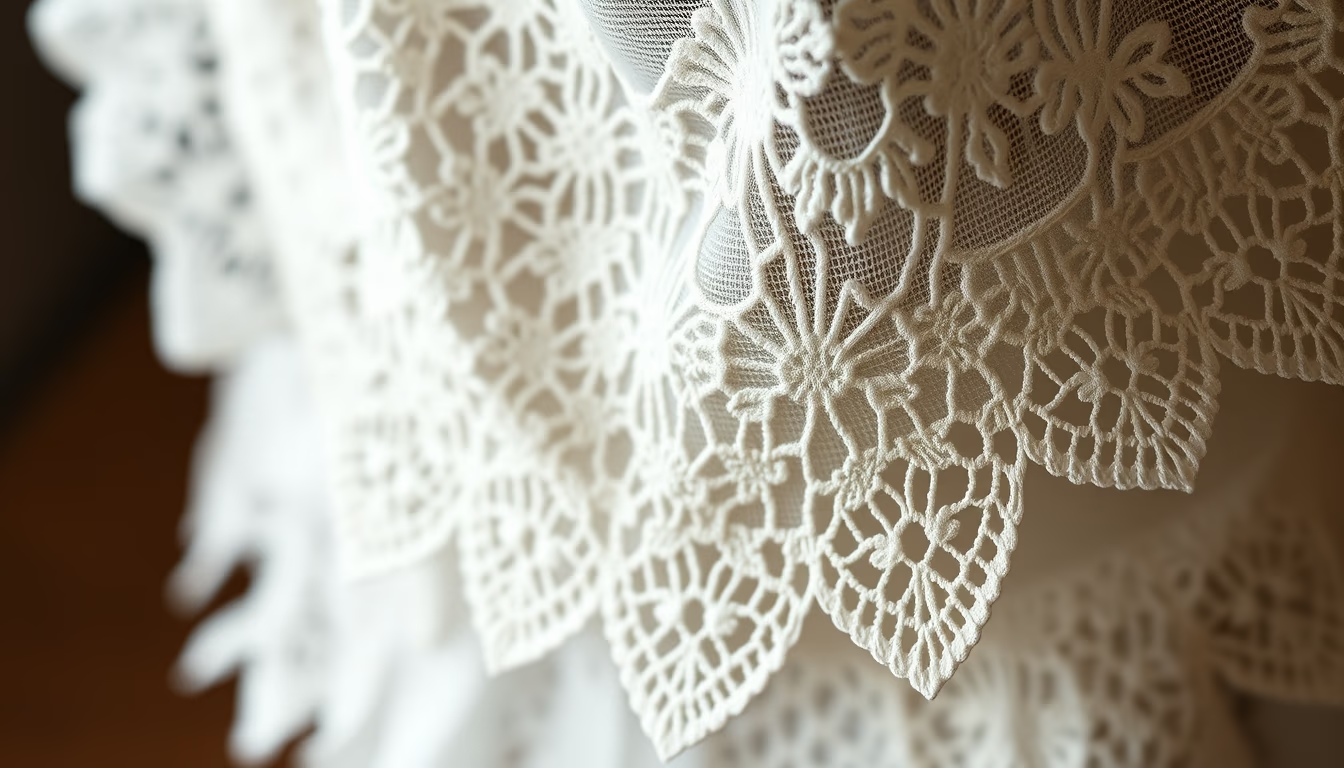
Antique tatting lacework, a textile craft technique that creates geometric patterns with knots and loops using a shuttle.
About this subject
Tatting is a lacemaking technique that emerged in the 19th century, though its roots can be traced to knotting methods used in fishing and netmaking. Unlike bobbin lace or crochet, tatting uses a shuttle to form double stitches and rings that connect into precise geometric patterns. Originally, it was a popular pastime among upper-class Victorian women, who created pieces to embellish clothing and household items such as quilts, towels, and napkins.
Antique tatting, as depicted in the image, typically employs fine cotton or linen threads in pastel or white tones, and common patterns include rosettes, arabesques, and scalloped edges. The technique requires patience and manual dexterity, as each knot is formed individually. Unlike other laces, tatting does not fray easily, making it durable. In Brazil, tatting was introduced by European immigrants and is still practiced by craftswomen in cultural preservation groups.
A curious fact is that the term "tatting" derives from the French "faire de la frivolité", and in France the technique is called frivolité. During the Victorian era, it was common for women to carry their shuttles in small bags called tatting bags, to work on during visits or social gatherings. Antique tatting pieces are highly valued by historical textile collectors, often fetching high prices at specialized auctions. The isometric flat lay style of the image highlights the symmetry and delicacy of the patterns, inviting viewers to appreciate the intricate details.
Frequently Asked Questions
What is the difference between tatting and crochet?
Tatting uses a shuttle to form double stitches that create rings and chains, while crochet uses a hook to make continuous loops. Tatting results in a firmer, more geometric lace with less stretch.
Is tatting difficult to learn?
Initially, tatting can be challenging due to the coordination required to handle the shuttle and control thread tension. However, with practice and tutorials, many people can master basic knots within a few weeks.
Where can I find antique tatting pieces?
Antique tatting pieces are often found at thrift stores, antique shops, vintage craft fairs, and online auctions specializing in historical textiles.
Direct URL
https://pub-c7d6a6ea828543ac903a74a341ccb2e1.r2.dev/imagens/lacework-antique-tatting-isometric-flat-lay-fresh8.avifHow to credit
Include a visible link back to UtilizAí. Copy one of the snippets below:
<a href="https://xn--utiliza-eza.com/en/midia/imagens/lacework-antique-tatting-isometric-flat-lay-fresh8">Lacework antique tatting</a> by <a href="https://xn--utiliza-eza.com">UtilizAí</a>, licensed under <a href="https://creativecommons.org/licenses/by/4.0/">CC BY 4.0</a>.
[Lacework antique tatting](https://xn--utiliza-eza.com/en/midia/imagens/lacework-antique-tatting-isometric-flat-lay-fresh8) by [UtilizAí](https://xn--utiliza-eza.com), CC BY 4.0
License: CC-BY-4.0