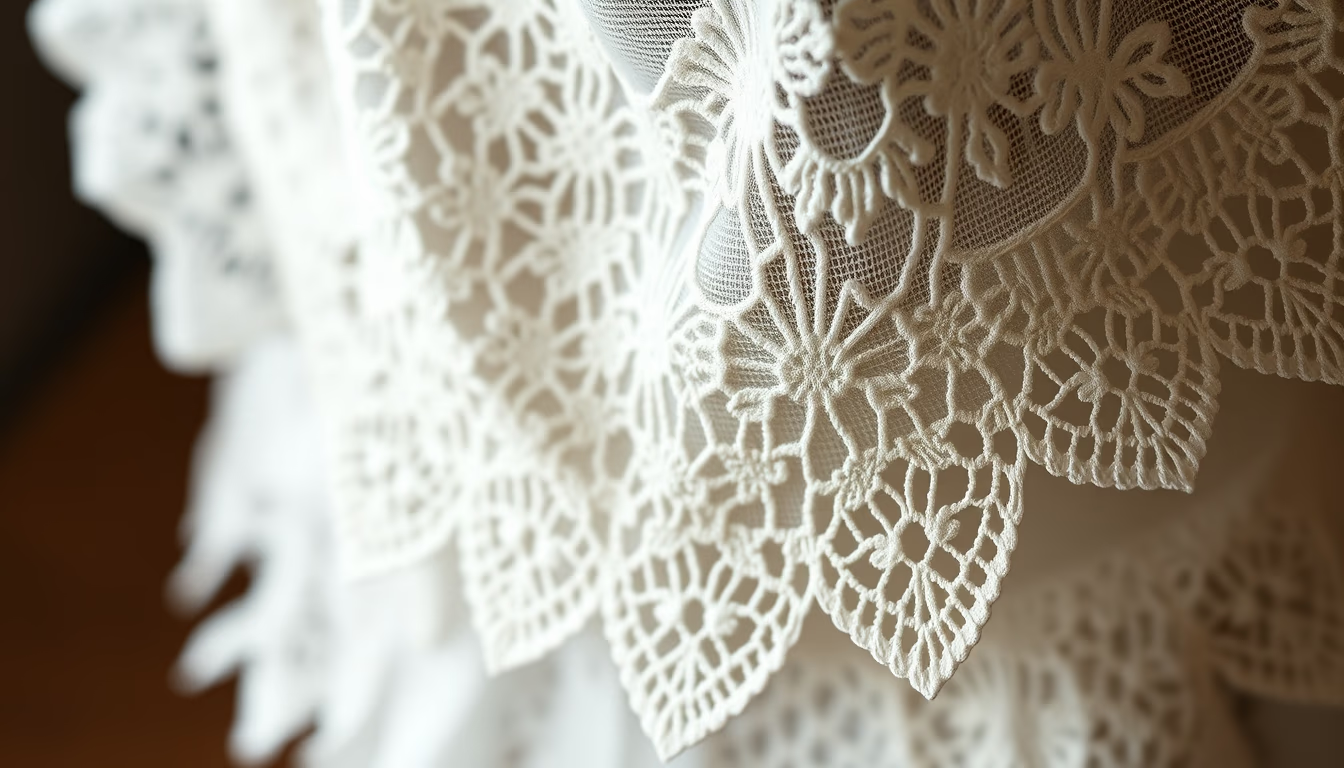
Lacework antique tatting
1344×768 · AVIF · CC BY 4.0

Tatting is a lace-making technique using knots and loops, popular in 19th-century Europe and still practiced today.
About this subject
Tatting is a lace-making technique that uses a shuttle or needle to create a series of knots and loops, forming delicate, geometric patterns. It originated in early 19th-century France and England, likely evolving from netting or macramé techniques. Unlike crochet or bobbin lace, tatting is characterized by its lightness and simple stitches, allowing the creation of edgings, collars, and decorative items for clothing and home accessories.
During the Victorian era, tatting became a popular pastime among upper-class women, who produced pieces to adorn their homes and garments. Many of these antique pieces have survived and are now valued by collectors and museums, especially those made with fine cotton or silk threads. The technique was also spread by missionaries and European immigrants, reaching countries like Brazil, where it is preserved in traditional handicraft groups.
The main difference between tatting and other laces lies in the use of simple knots (like the lark's head knot) that form a continuous chain. This allows the creation of rings, arches, and picots without cutting the thread. Antique tatting often features floral or geometric motifs, made with millimeter precision. Today, modern artisans continue to practice the technique, often combining it with beads or other materials.
In Brazil, tatting is known as 'renda de agulha' (needle lace) or 'renda de tatu', though the terms 'frivolité' and 'tatting' are also used. The tradition is kept alive by craft associations, particularly in regions with European colonization such as the South and Southeast. Craft fairs and specialized stores offer both contemporary and antique pieces, which can be identified by their knot patterns and fine thread.
Frequently Asked Questions
What is tatting?
Tatting is a handcraft technique for making lace by knotting thread with a shuttle or needle, forming loops and rings. It differs from crochet, knitting, or bobbin lace.
How is tatting different from crochet?
Tatting uses a single continuous thread and specific knots (like the lark's head) to create rings and arches, whereas crochet uses a hooked needle for varied stitches. Tatting produces finer, more geometric lace.
Where can I find antique tatting pieces?
Antique tatting can be found at antique shops, craft fairs, specialized lace stores, and online auctions. Fashion and textile museums also often display historical examples.
Direct URL
https://pub-c7d6a6ea828543ac903a74a341ccb2e1.r2.dev/imagens/lacework-antique-tatting-fish-eye-wide-angle-fresh9.avifHow to credit
Include a visible link back to UtilizAí. Copy one of the snippets below:
<a href="https://xn--utiliza-eza.com/en/midia/imagens/lacework-antique-tatting-fish-eye-wide-angle-fresh9">Lacework antique tatting</a> by <a href="https://xn--utiliza-eza.com">UtilizAí</a>, licensed under <a href="https://creativecommons.org/licenses/by/4.0/">CC BY 4.0</a>.
[Lacework antique tatting](https://xn--utiliza-eza.com/en/midia/imagens/lacework-antique-tatting-fish-eye-wide-angle-fresh9) by [UtilizAí](https://xn--utiliza-eza.com), CC BY 4.0
License: CC-BY-4.0