Lacework antique tatting
1344×768 · AVIF · CC BY 4.0
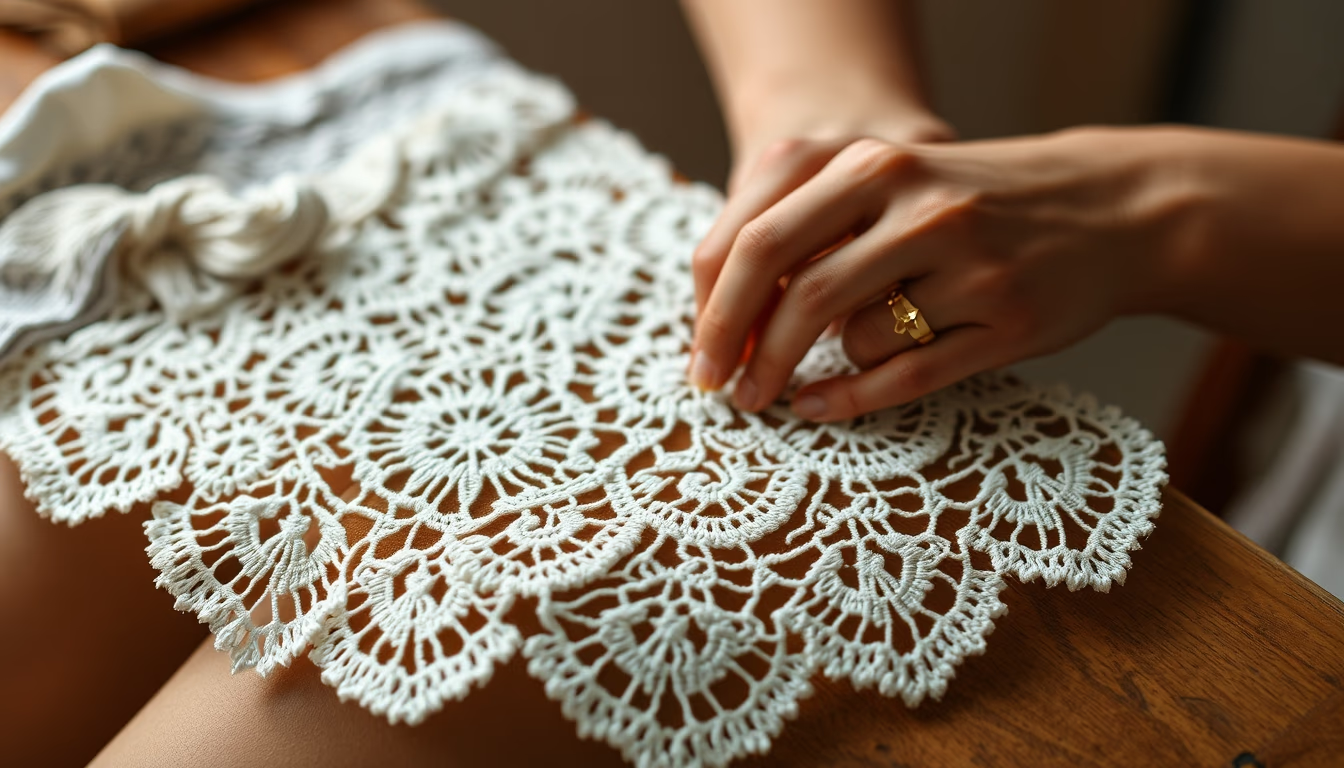
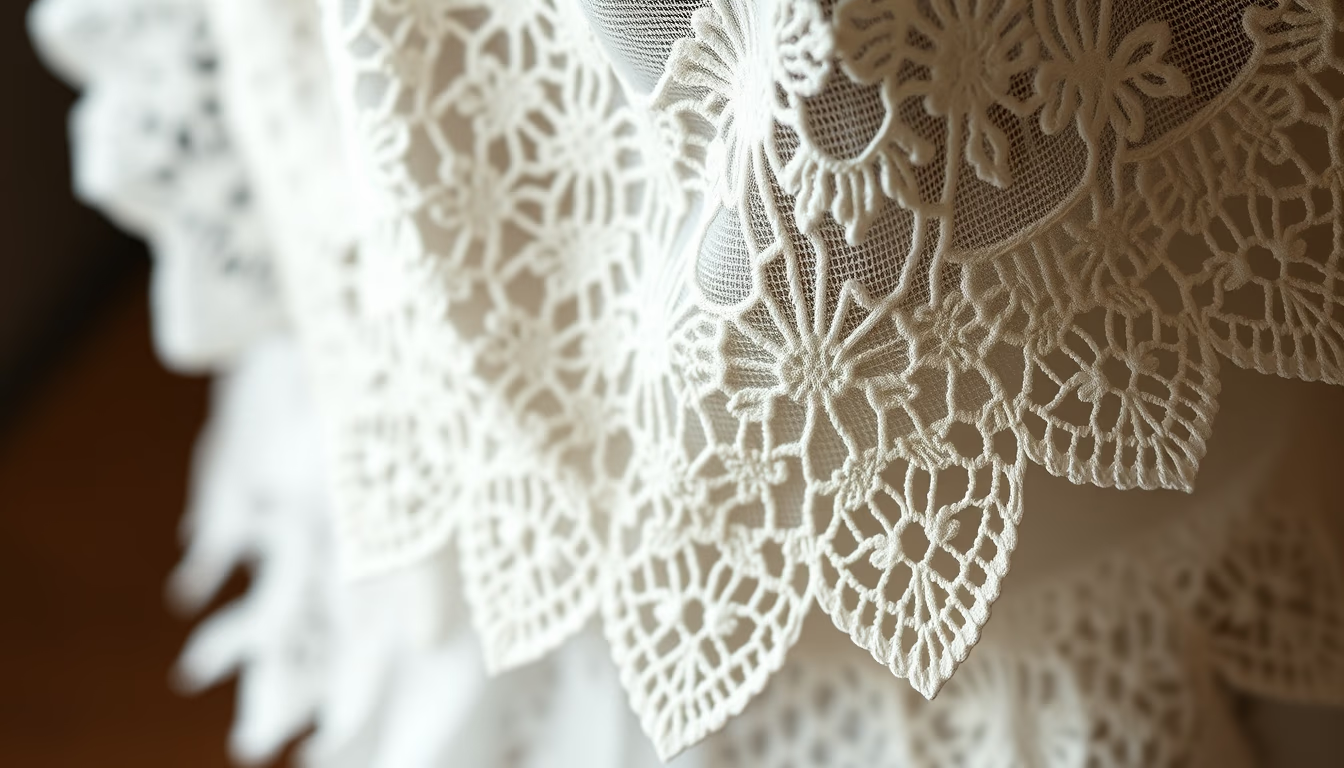
Antique tatting lacework, also known as frivolité, is a textile craft technique that produces delicate lace using a shuttle.
About this subject
Tatting, also known as frivolité in French, is an ancient lace technique that uses a shuttle to form a series of knots and rings. Unlike bobbin lace or crochet, tatting is characterized by its structure of rings and picots, creating a light, openwork fabric. The technique emerged in Europe in the early 19th century, possibly evolving from knot lace methods, and became especially popular during the Victorian era, when aristocratic and middle-class women practiced it as an elegant pastime.
he process involves winding thread around the shuttle and manipulating the knots with the non-dominant hand to form arches, joining them to create floral or geometric motifs, as well as lace for collars, edgings on sheets, towels, and clothing embellishments. Traditionally, fine cotton or linen threads are used, but silk or metallic threads are also employed for more ornate pieces. The technique requires patience and manual dexterity, and is considered a needlework craft demanding precision.
Culturally, tatting represents a legacy of 19th-century feminine handicraft, often passed down from mother to daughter. In Brazil, the technique arrived with European immigrants and spread among lace-making communities, especially in the South and Southeast regions. Today, tatting is valued as a traditional textile art and is practiced by artisans and enthusiasts worldwide, with production of contemporary pieces and restoration of antique ones. Antique tatting pieces, such as those described in the image, are collected by museums and textile history aficionados.
Frequently Asked Questions
What is the difference between tatting and crochet?
Tatting uses a shuttle to form knots and rings, resulting in a more geometric and open structure. Crochet uses a hook to create loops and chains, allowing for more varied textures and stitches.
What materials are used in traditional tatting?
Traditionally, fine cotton or linen thread is used. For ornate pieces, silk or metallic threads are also employed. Shuttles can be made of metal, bone, or plastic.
Is tatting a difficult technique to learn?
Yes, it requires fine motor coordination and practice. However, with online tutorials and classes, many beginners can produce simple projects within a few weeks.
Direct URL
https://pub-c7d6a6ea828543ac903a74a341ccb2e1.r2.dev/imagens/lacework-antique-tatting-documentary-photography-fresh12.avifHow to credit
Include a visible link back to UtilizAí. Copy one of the snippets below:
<a href="https://xn--utiliza-eza.com/en/midia/imagens/lacework-antique-tatting-documentary-photography-fresh12">Lacework antique tatting</a> by <a href="https://xn--utiliza-eza.com">UtilizAí</a>, licensed under <a href="https://creativecommons.org/licenses/by/4.0/">CC BY 4.0</a>.
[Lacework antique tatting](https://xn--utiliza-eza.com/en/midia/imagens/lacework-antique-tatting-documentary-photography-fresh12) by [UtilizAí](https://xn--utiliza-eza.com), CC BY 4.0
License: CC-BY-4.0