Lab technician looking through microscope
1344×768 · AVIF · CC BY 4.0
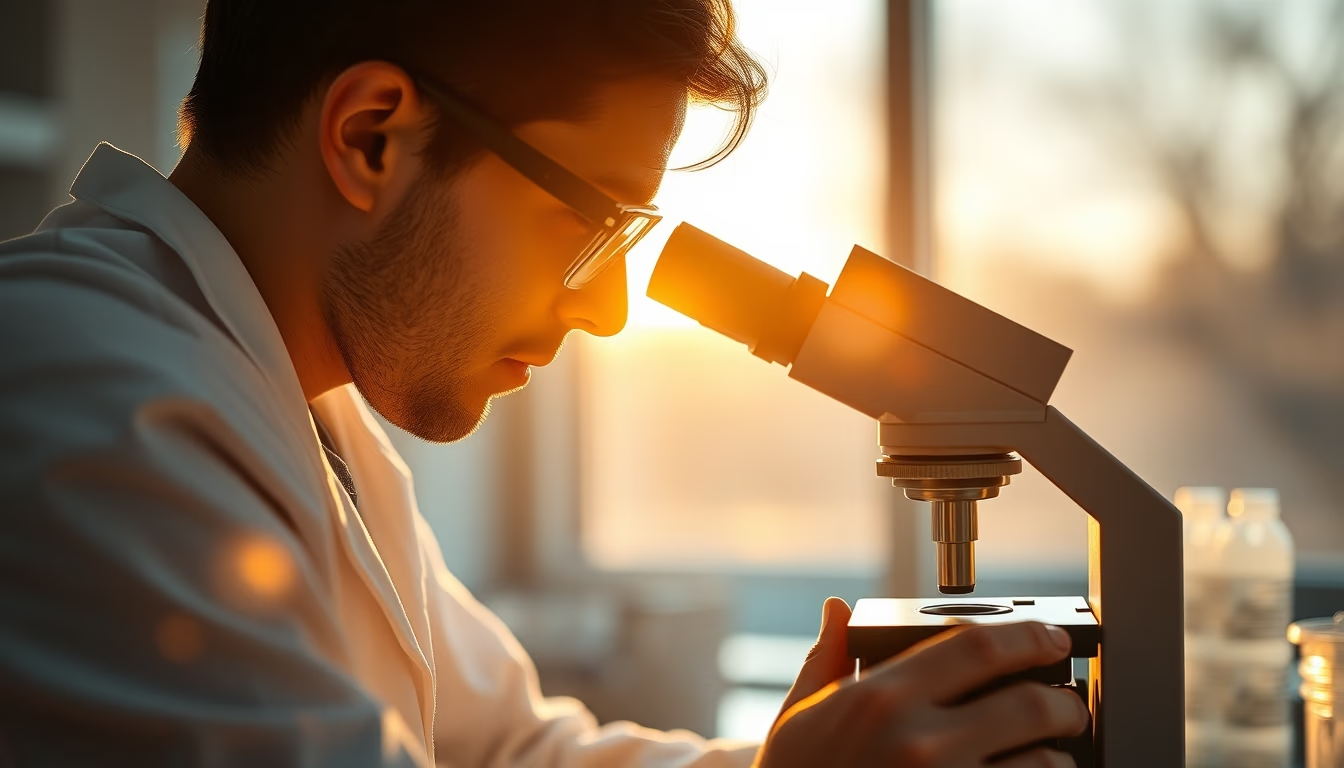
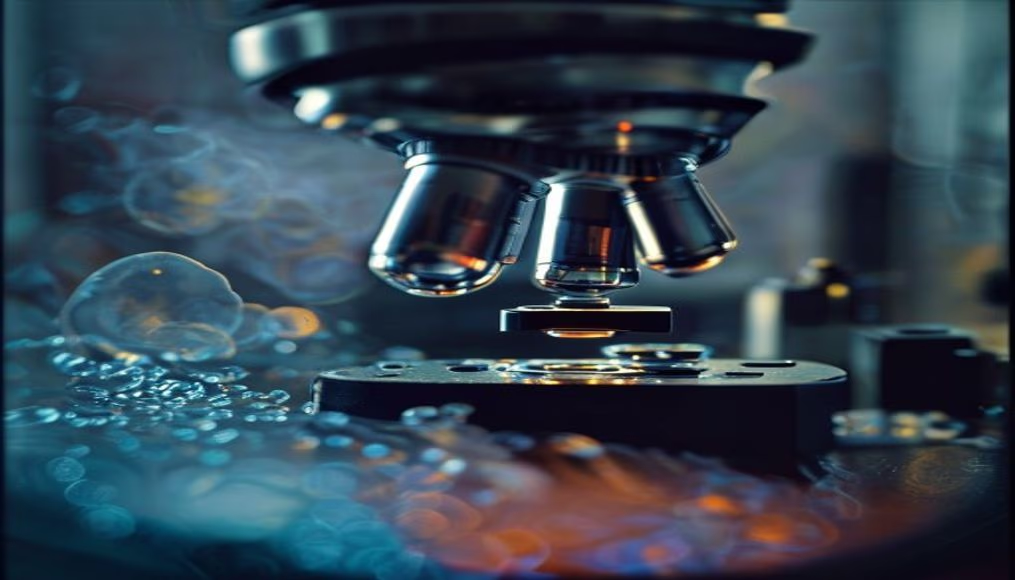
Lab technician examines a sample under a microscope during scientific analysis in a clinical setting.
About this subject
In Brazil, clinical analysis laboratories process about 2 billion tests per year, according to the Brazilian Association of Diagnostic Medicine. The professional using the microscope is a key part of this workflow, responsible for identifying abnormal cells, parasites, bacteria, and other structures that indicate diseases. The routine ranges from complete blood counts to urine and stool tests, including cytopathology and microbiology.
The optical microscope, invented in the 17th century, has evolved into binocular models with up to 1000x magnification, allowing visualization of cellular details. Lab technicians require training in technical courses or higher education in Biomedicine, Pharmacy, or Clinical Analysis, with registration in the professional council. The ability to focus and interpret images is developed through years of practice.
Interestingly, Brazil has one of the largest cervical cancer screening programs in the world, demanding millions of slides analyzed per year. Microscopy is also essential during outbreaks of diseases like dengue and chikungunya, where identification of red blood cells and platelets aids diagnosis. The laboratory environment follows strict biosafety rules, with use of lab coats, gloves, and safety glasses.
Late afternoon lighting, as in the scene, is common in labs that operate extended hours to meet demand. Many professionals prefer natural light to reduce eye strain, although most modern microscopes have built-in illumination. Concentration and precision are crucial, as misinterpretation can lead to incorrect diagnoses.
Frequently Asked Questions
What training is required to become a lab technician?
A technical course in Clinical Analysis or a degree in Biomedicine, Pharmacy, or related fields, with registration in the professional council (CRBM or CRF).
How many tests does a Brazilian lab process per year?
About 2 billion tests per year, according to the Brazilian Association of Diagnostic Medicine, including blood counts, urinalysis, and microbiology.
Why is microscopy important in disease diagnosis?
It allows identification of abnormal cells, parasites, and bacteria, essential for diagnosing cancer, infections, and tropical diseases like dengue.
Direct URL
https://pub-c7d6a6ea828543ac903a74a341ccb2e1.r2.dev/imagens/lab-technician-looking-through-microscope-wide-late-afternoon-6.avifHow to credit
Include a visible link back to UtilizAí. Copy one of the snippets below:
<a href="https://xn--utiliza-eza.com/en/midia/imagens/lab-technician-looking-through-microscope-wide-late-afternoon-6">Lab technician looking through microscope</a> by <a href="https://xn--utiliza-eza.com">UtilizAí</a>, licensed under <a href="https://creativecommons.org/licenses/by/4.0/">CC BY 4.0</a>.
[Lab technician looking through microscope](https://xn--utiliza-eza.com/en/midia/imagens/lab-technician-looking-through-microscope-wide-late-afternoon-6) by [UtilizAí](https://xn--utiliza-eza.com), CC BY 4.0
License: CC-BY-4.0