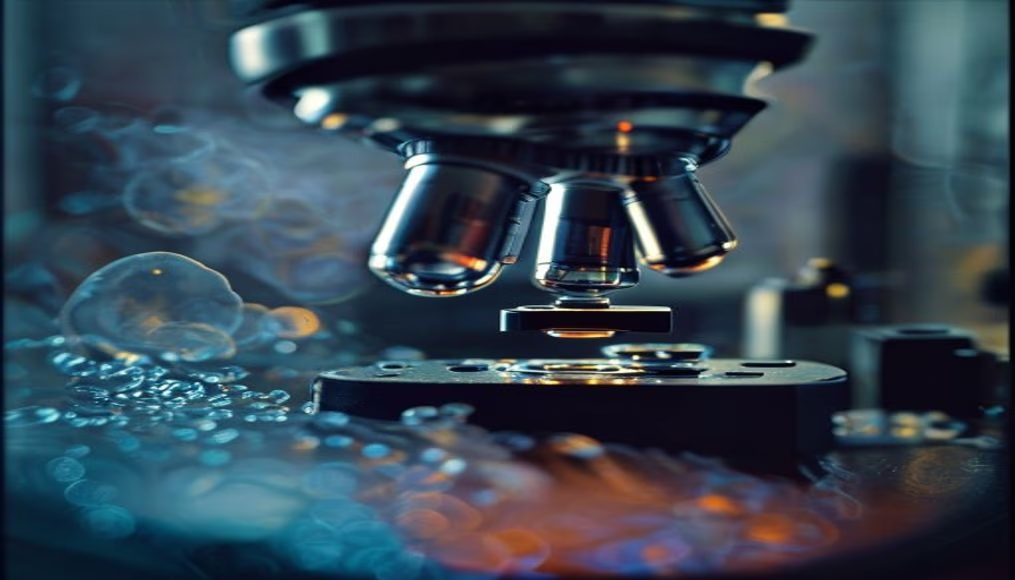
Lab technician looking through microscope
1344×768 · AVIF · CC BY 4.0
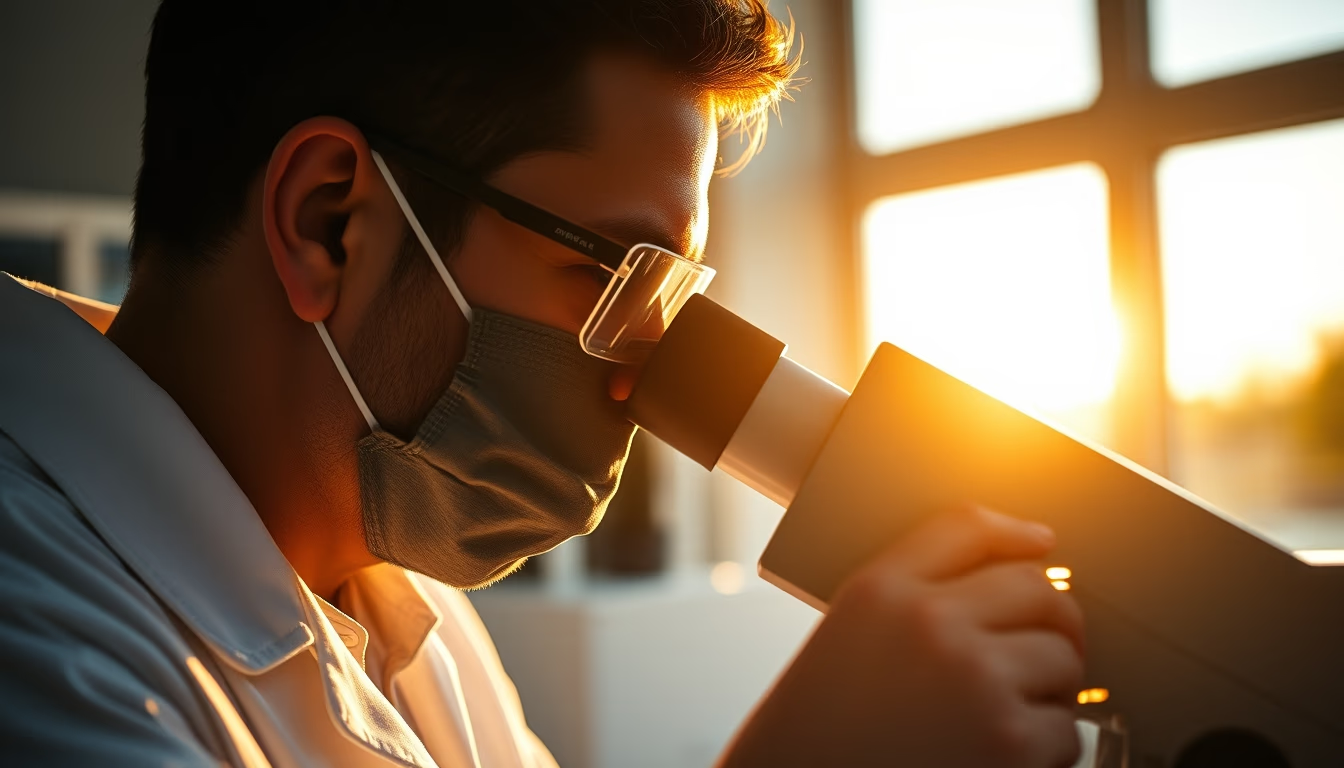
Lab technician examines samples under a microscope during clinical research in the late afternoon.
About this subject
The work of a lab technician is essential for the advancement of science and health. Using advanced microscopes, these professionals analyze biological samples such as cells, tissues, and microorganisms to identify diseases, test medications, and support accurate diagnoses. In Brazil, thousands of technicians work in public and private laboratories, many trained in clinical analysis or biomedical technical courses. The routine includes preparing slides, calibrating equipment, and meticulously recording observations, following strict biosafety protocols.
The optical microscope, invented in the 17th century, revolutionized medicine by allowing visualization of structures invisible to the naked eye. Modern models, such as fluorescence and confocal microscopes, expand analytical capabilities, but the traditional compound microscope is still widely used in routine labs. Proper lighting is crucial: the late afternoon light depicted in the image can influence detail perception, so labs rely on controlled artificial lighting.
Interestingly, Brazil has one of the largest public laboratory networks in Latin America, including the Oswaldo Cruz Foundation (Fiocruz) and the Butantan Institute, which conduct everything from routine tests to cutting-edge research on tropical diseases. Lab technicians also work in university hospitals, contributing to clinical and epidemiological studies. Precision and attention to detail are essential skills, as a mistake can compromise test results that affect medical decisions.
The career of a lab technician requires constant updating, as new techniques and equipment emerge continuously. In Brazil, the Federal Council of Biomedicine and the Regional Council of Clinical Analysis Technicians regulate the profession, ensuring quality standards. With an aging population and increasing chronic diseases, demand for these professionals is expected to grow, making the field promising for those seeking a career in healthcare.
Frequently Asked Questions
What is the difference between a lab technician and a biomedical scientist?
A lab technician typically has technical training at the secondary or associate level in clinical analysis, while a biomedical scientist holds a bachelor's degree in Biomedicine. Both can work in labs, but biomedical scientists have broader responsibilities, including section coordination and issuing reports.
What types of samples does a technician analyze under a microscope?
They analyze blood, urine, feces, secretions, tissues, and body fluids to detect infections, hematological, parasitic, and neoplastic diseases. They also examine microorganism cultures for antibiotic sensitivity tests.
Is it necessary to use protective equipment while using a microscope?
Yes, wearing a lab coat, gloves, and safety goggles is mandatory to avoid contact with potentially infectious biological materials. Additionally, the workbench must be disinfected before and after use.
Direct URL
https://pub-c7d6a6ea828543ac903a74a341ccb2e1.r2.dev/imagens/lab-technician-looking-through-microscope-wide-late-afternoon-3.avifHow to credit
Include a visible link back to UtilizAí. Copy one of the snippets below:
<a href="https://xn--utiliza-eza.com/en/midia/imagens/lab-technician-looking-through-microscope-wide-late-afternoon-3">Lab technician looking through microscope</a> by <a href="https://xn--utiliza-eza.com">UtilizAí</a>, licensed under <a href="https://creativecommons.org/licenses/by/4.0/">CC BY 4.0</a>.
[Lab technician looking through microscope](https://xn--utiliza-eza.com/en/midia/imagens/lab-technician-looking-through-microscope-wide-late-afternoon-3) by [UtilizAí](https://xn--utiliza-eza.com), CC BY 4.0
License: CC-BY-4.0