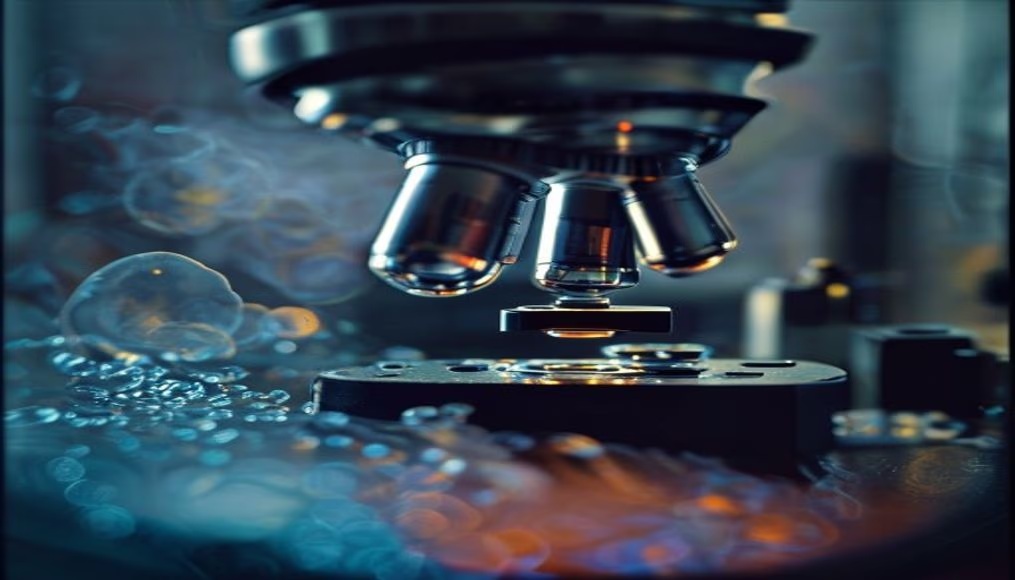
Lab technician looking through microscope
1344×768 · AVIF · CC BY 4.0
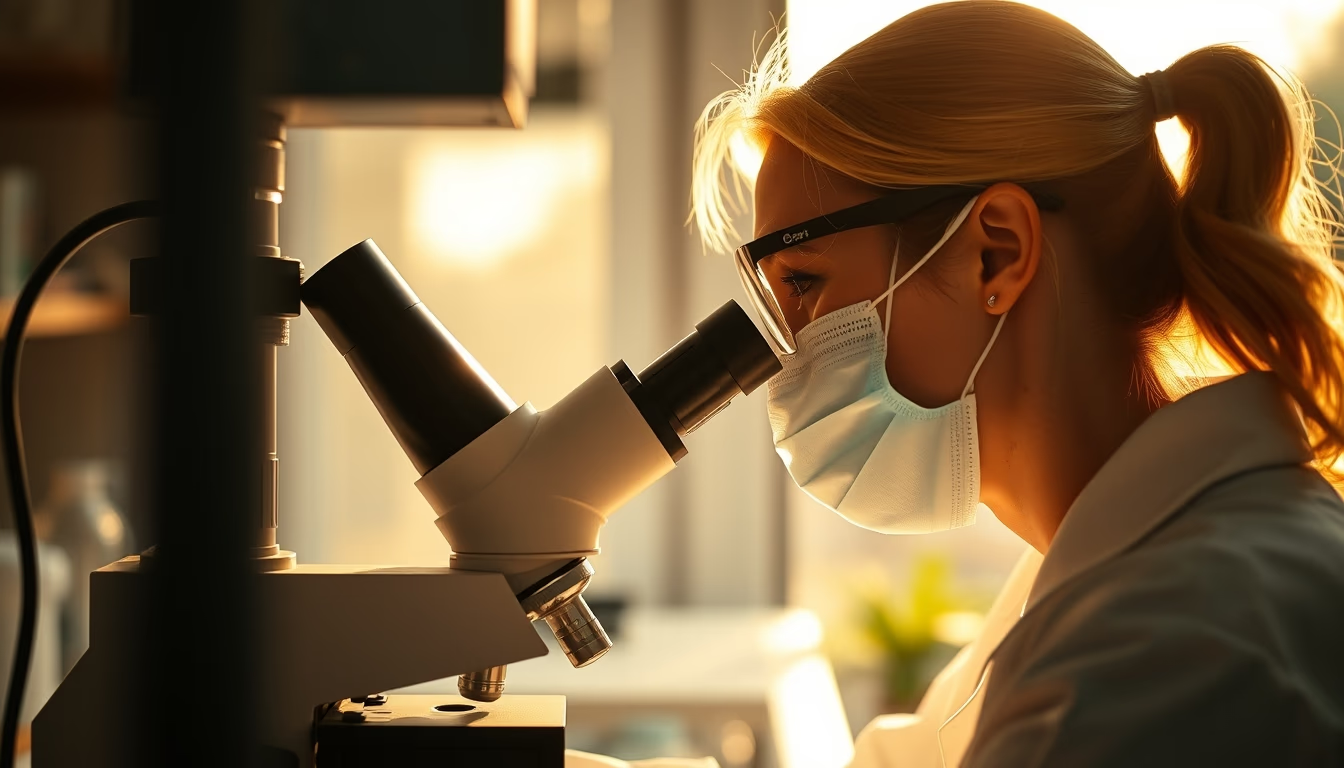
Lab technician examines samples under microscope during late afternoon research at a Brazilian public health institute.
About this subject
Microscopy is a cornerstone of public health laboratories, enabling the identification of pathogens, analysis of cells and tissues, and quality control of medicines. In Brazil, institutions such as the Oswaldo Cruz Foundation (Fiocruz) and the Butantan Institute employ specialized technicians who operate optical and electron microscopes to diagnose diseases like tuberculosis, malaria, and COVID-19. The work demands precision and rigorous training, as microscopic interpretation can determine the success of treatments and health policies.
During the late afternoon, natural light may affect observation quality, especially in optical microscopes that rely on proper illumination. Technicians adjust focus, condenser aperture, and light intensity to obtain clear images. Many Brazilian labs use binocular microscopes with attached cameras to document findings and share them with multidisciplinary teams.
A technician's routine includes slide preparation, sample staining, and equipment maintenance. In public health, these professionals work in epidemiological surveillance, identifying outbreaks and monitoring antimicrobial resistance. Brazil has a network of central laboratories (LACENs) that perform routine and emergency analyses.
Trivia: the first compound microscope was built in the 16th century, but modern microscopy began with Antonie van Leeuwenhoek in the 17th century. Today, techniques like fluorescence and confocal microscopy allow visualization of subcellular structures, crucial for cancer and genetics research.
Frequently Asked Questions
What training is required to become a lab technician in Brazil?
Typically, a technical course in clinical analysis or related field is required, along with registration with a professional council (CRBM or CRF). Many also hold degrees in biomedicine or pharmacy.
What types of samples are analyzed under a microscope in public health labs?
Samples include blood, urine, feces, sputum, tissues, and secretions, as well as Pap smears and biopsies. Each type requires specific preparation and staining.
How does microscopy help in epidemic control?
Microscopy enables rapid identification of infectious agents in patient samples, monitors disease progression, and verifies treatment effectiveness, aiding public health decision-making.
Direct URL
https://pub-c7d6a6ea828543ac903a74a341ccb2e1.r2.dev/imagens/lab-technician-looking-through-microscope-wide-late-afternoon.avifHow to credit
Include a visible link back to UtilizAí. Copy one of the snippets below:
<a href="https://xn--utiliza-eza.com/en/midia/imagens/lab-technician-looking-through-microscope-wide-late-afternoon">Lab technician looking through microscope</a> by <a href="https://xn--utiliza-eza.com">UtilizAí</a>, licensed under <a href="https://creativecommons.org/licenses/by/4.0/">CC BY 4.0</a>.
[Lab technician looking through microscope](https://xn--utiliza-eza.com/en/midia/imagens/lab-technician-looking-through-microscope-wide-late-afternoon) by [UtilizAí](https://xn--utiliza-eza.com), CC BY 4.0
License: CC-BY-4.0