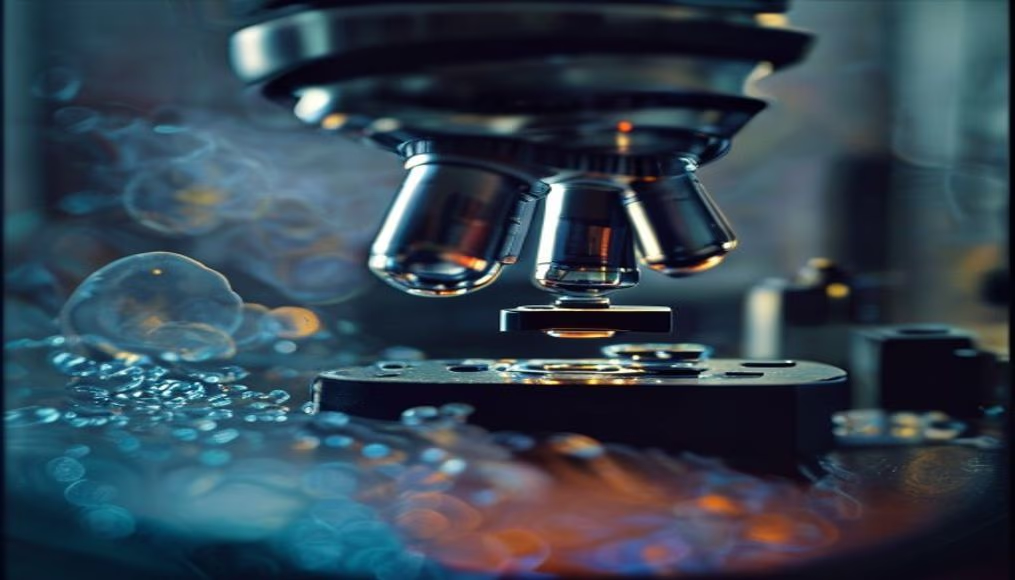
Lab technician looking through microscope
1344×768 · AVIF · CC BY 4.0

Lab technician examines samples under a microscope, an essential procedure for diagnostics and scientific research.
About this subject
The work of a lab technician is essential to the daily operations of hospitals, clinics, and research centers. By observing slides under a microscope, this professional identifies abnormal cells, microorganisms, and other structures that may indicate diseases such as infections, cancer, or hematological disorders. Microscopic analysis is one of the most critical steps in laboratory medicine, as it provides accurate data that guides patient diagnosis and treatment.
In Brazil, the training of lab technicians is regulated by the Federal Council of Pharmacy and requires a specific technical course covering histology, microbiology, and biochemistry. These professionals work in various fields, including clinical analysis, pathology, cytology, and pharmaceutical research. The demand for skilled technicians grows with technological advances, especially in genetics and molecular biology labs.
The use of optical microscopes, like the one in the image, is a classic technique dating back to the 17th century, when Antonie van Leeuwenhoek first observed bacteria and protozoa. Today, modern microscopes feature high-resolution lenses and illumination systems that allow magnifications of up to 1500x, revealing details invisible to the naked eye. Symmetric lighting and phase contrast are common adjustments to improve visualization of transparent samples.
Interestingly, a lab technician's routine requires not only technical skill but also attention to detail and patience. Many analyses require careful slide preparation with specific stains such as hematoxylin-eosin or Gram, which highlight different cellular components. Safety is also a priority: gloves, lab coats, and safety glasses are mandatory to prevent contamination and exposure to biological agents.
Frequently Asked Questions
What is the difference between a lab technician and a biomedical scientist?
A lab technician has technical training at the high school level and performs practical procedures such as sample collection, preparation, and basic analysis. A biomedical scientist holds a university degree in Biomedicine and can supervise the lab, interpret results, and conduct more complex research.
What types of samples are analyzed under a microscope?
Common samples include blood, urine, feces, sputum, secretions, and tissues. Each requires specific preparation, such as staining or culture, to identify cells, bacteria, fungi, or parasites.
What precautions should a lab technician take when using a microscope?
It is important to adjust lighting and focus correctly to avoid damage to the sample or equipment. Additionally, lenses should be cleaned with appropriate paper, and excessive force should never be applied when turning the knobs.
Direct URL
https://pub-c7d6a6ea828543ac903a74a341ccb2e1.r2.dev/imagens/lab-technician-looking-through-microscope-symmetric-bright-midday.avifHow to credit
Include a visible link back to UtilizAí. Copy one of the snippets below:
<a href="https://xn--utiliza-eza.com/en/midia/imagens/lab-technician-looking-through-microscope-symmetric-bright-midday">Lab technician looking through microscope</a> by <a href="https://xn--utiliza-eza.com">UtilizAí</a>, licensed under <a href="https://creativecommons.org/licenses/by/4.0/">CC BY 4.0</a>.
[Lab technician looking through microscope](https://xn--utiliza-eza.com/en/midia/imagens/lab-technician-looking-through-microscope-symmetric-bright-midday) by [UtilizAí](https://xn--utiliza-eza.com), CC BY 4.0
License: CC-BY-4.0