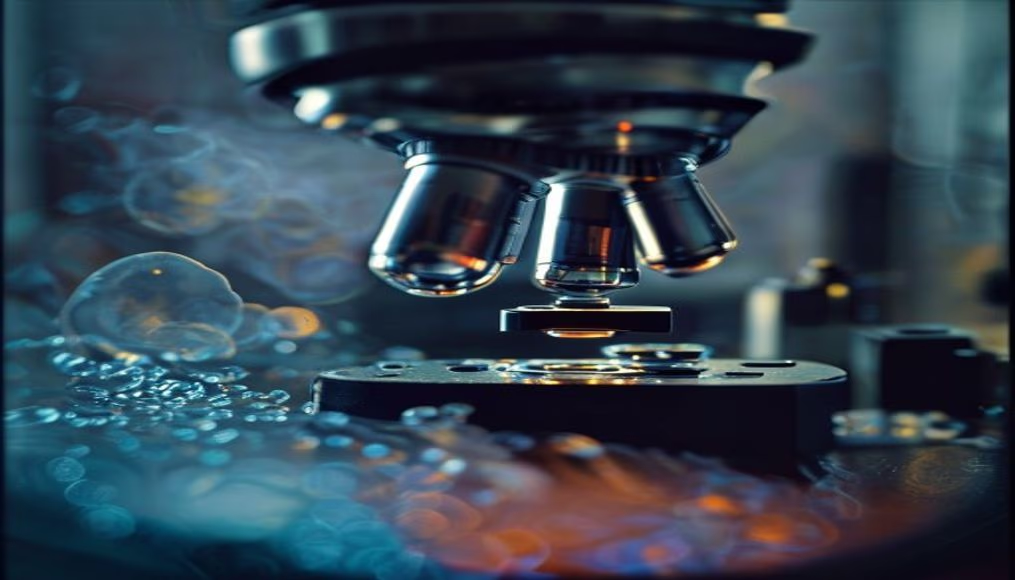
Lab technician looking through microscope
1344×768 · AVIF · CC BY 4.0
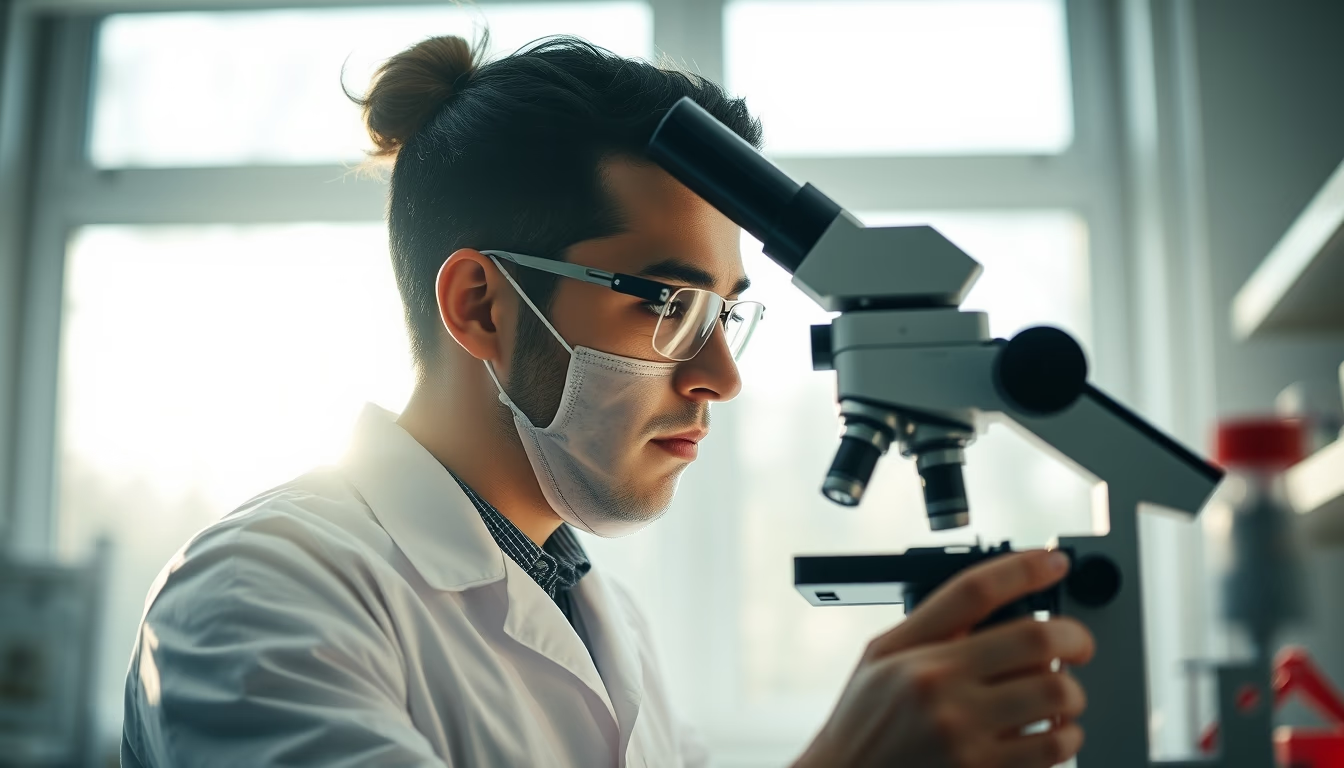
Lab technician examines samples under a microscope during a morning clinical research routine.
About this subject
The microscope is an essential tool in clinical analysis laboratories, enabling the observation of structures invisible to the naked eye, such as cells, bacteria, and parasites. In Brazil, the Unified Health System (SUS) performs about 10 billion laboratory tests per year, many of which rely on microscopy for accurate diagnoses of diseases like malaria, tuberculosis, and leishmaniasis. A lab technician's morning routine includes preparing slides, calibrating equipment, and meticulously recording observations, following strict biosafety protocols.
Training for lab technicians in Brazil typically requires a secondary-level technical course covering microbiology, hematology, and biochemistry. These professionals work in hospitals, clinics, research centers, and public health laboratories. The ability to identify morphological changes in blood cells, for example, is crucial for early diagnosis of leukemias and anemias. Studies indicate that optical microscopy remains the gold standard for many analyses, despite advances in automated techniques.
Lighting and time of day can affect the quality of microscopic observation. Morning natural light is often preferred by experienced technicians because it reduces eye strain and provides better color contrast. In well-equipped labs, microscopes with attached cameras allow image documentation for reports and telemedicine. The COVID-19 pandemic highlighted the importance of laboratories, with technicians working extra shifts to process millions of RT-PCR tests and blood exams.
Interestingly, the first compound microscope was invented in the late 16th century by Zacharias Janssen, but it was Antonie van Leeuwenhoek who improved lenses in the 17th century, enabling the visualization of bacteria. Today, confocal and electron microscopy expand possibilities, but the optical microscope remains the foundation for training new technicians. In Brazil, initiatives like the National Malaria Control Program train technicians in microscopy for diagnosis in remote Amazon regions.
Frequently Asked Questions
What training is required to become a lab technician in Brazil?
Typically, a secondary-level technical course in clinical analysis or a related field is required, lasting about two years. The professional must be registered with the regional council (CRBM or CRF).
How many lab tests does the Brazilian public health system perform per year?
The Unified Health System (SUS) performs approximately 10 billion laboratory tests annually, including microscopic, biochemical, and molecular analyses.
Why is morning light preferred for microscopy?
Morning natural light provides better color contrast and reduces eye strain for the technician, improving accuracy in identifying cellular structures.
Direct URL
https://pub-c7d6a6ea828543ac903a74a341ccb2e1.r2.dev/imagens/lab-technician-looking-through-microscope-documentary-morning.avifHow to credit
Include a visible link back to UtilizAí. Copy one of the snippets below:
<a href="https://xn--utiliza-eza.com/en/midia/imagens/lab-technician-looking-through-microscope-documentary-morning">Lab technician looking through microscope</a> by <a href="https://xn--utiliza-eza.com">UtilizAí</a>, licensed under <a href="https://creativecommons.org/licenses/by/4.0/">CC BY 4.0</a>.
[Lab technician looking through microscope](https://xn--utiliza-eza.com/en/midia/imagens/lab-technician-looking-through-microscope-documentary-morning) by [UtilizAí](https://xn--utiliza-eza.com), CC BY 4.0
License: CC-BY-4.0