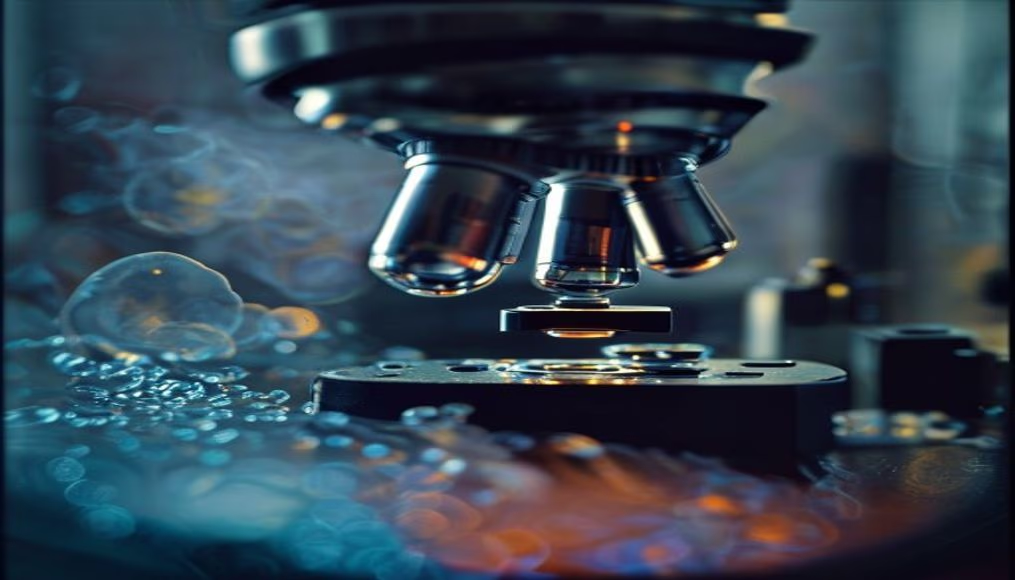
Lab technician looking through microscope
1344×768 · AVIF · CC BY 4.0
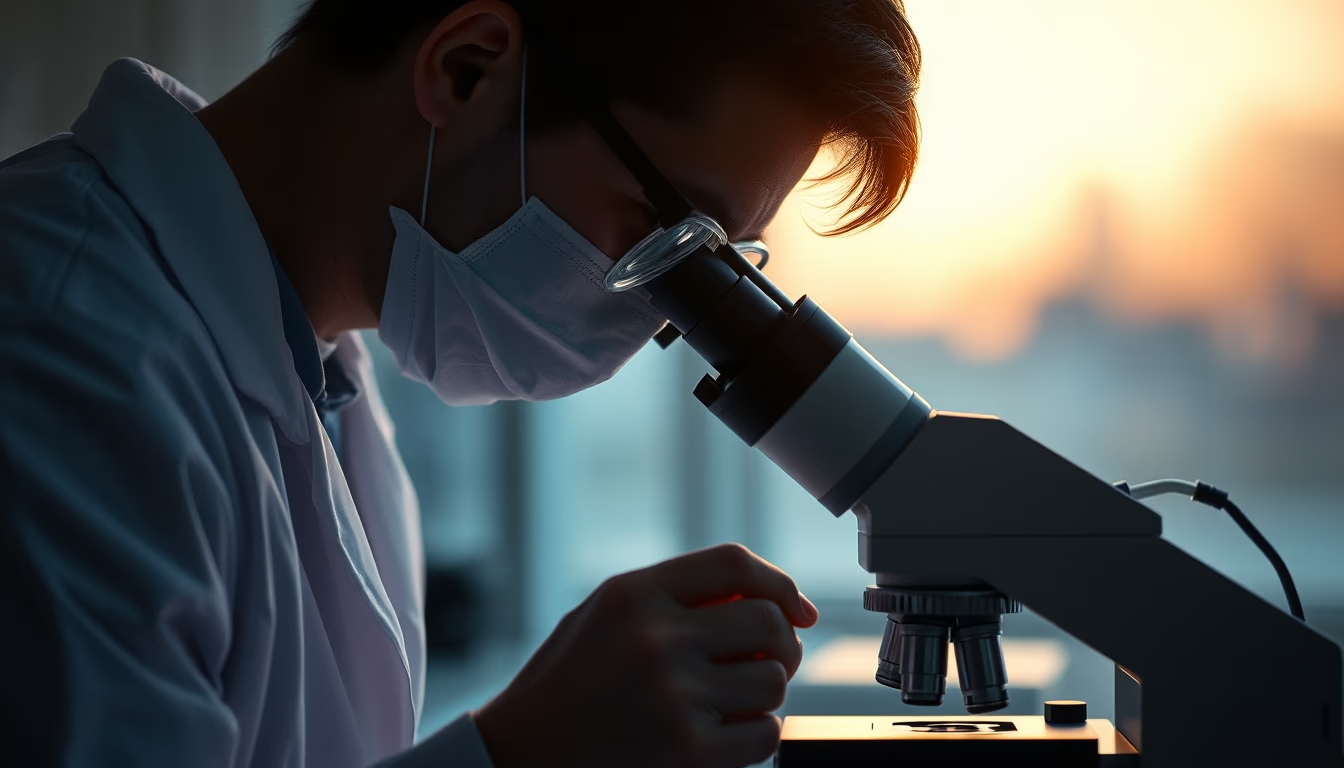
Lab technician examines a sample under a microscope during a night shift, highlighting the routine of health research.
About this subject
Microscopy is a fundamental tool in health laboratories, enabling the visualization of structures invisible to the naked eye, such as cells, bacteria, and viruses. The lab technician, while operating the microscope, plays a crucial role in disease diagnosis, new drug research, and sample quality control. During the night shift, concentration and precision are even more demanding, as many labs operate 24 hours to handle emergencies or process urgent tests.
In Brazil, the routine of clinical lab technicians is regulated by the Federal Council of Pharmacy and by standards from the National Health Surveillance Agency (ANVISA). These professionals must master techniques such as slide staining, microorganism cultivation, and interpretation of microscopic images. The twilight lighting in the image refers to the controlled artificial light environment, essential to avoid reflections and ensure observation sharpness.
Interestingly, the modern optical microscope has its roots in the 17th century with Antonie van Leeuwenhoek, but current equipment can magnify objects up to 1,000 times or more. In university hospitals, technicians also assist in research on tropical diseases like dengue and Zika, common in Brazil. The dedication of night-shift workers is vital for reports to be delivered within 24 hours, speeding up treatments.
Lab safety is another critical aspect: use of lab coats, gloves, and protective goggles, plus proper handling of biological waste. The image depicts this environment of care and precision, where every observed detail can mean the difference between a correct diagnosis and an error. The technician's work is quiet but essential for public health.
Frequently Asked Questions
What is the importance of a lab technician in healthcare?
The lab technician is responsible for preparing and analyzing biological samples, operating equipment like microscopes, and ensuring result accuracy. Their work is essential for medical diagnoses, scientific research, and quality control.
What is the routine like in a night shift laboratory?
In night shift labs, the routine includes receiving emergency samples, performing urgent tests, and maintaining equipment. The environment is quieter, requiring extra focus to avoid errors.
What types of samples are analyzed under a microscope?
Common samples include blood, urine, stool, tissues, and secretions. The microscope helps identify abnormal cells, parasites, bacteria, and other microorganisms, aiding in the diagnosis of infections and diseases.
Direct URL
https://pub-c7d6a6ea828543ac903a74a341ccb2e1.r2.dev/imagens/lab-technician-looking-through-microscope-closeup-twilight-2.avifHow to credit
Include a visible link back to UtilizAí. Copy one of the snippets below:
<a href="https://xn--utiliza-eza.com/en/midia/imagens/lab-technician-looking-through-microscope-closeup-twilight-2">Lab technician looking through microscope</a> by <a href="https://xn--utiliza-eza.com">UtilizAí</a>, licensed under <a href="https://creativecommons.org/licenses/by/4.0/">CC BY 4.0</a>.
[Lab technician looking through microscope](https://xn--utiliza-eza.com/en/midia/imagens/lab-technician-looking-through-microscope-closeup-twilight-2) by [UtilizAí](https://xn--utiliza-eza.com), CC BY 4.0
License: CC-BY-4.0