Kris malay wavy
1344×768 · AVIF · CC BY 4.0

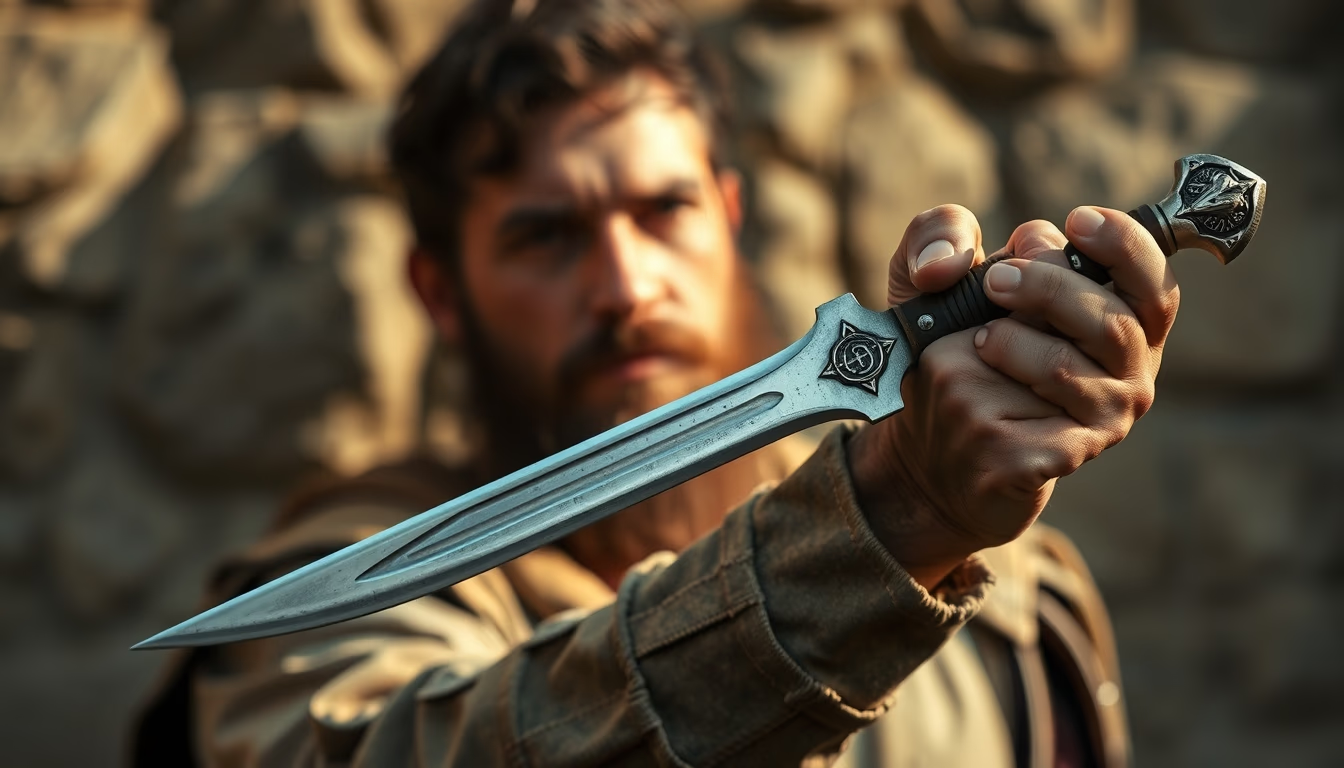
The Malay kris with a wavy blade (luk) is a ceremonial dagger from the Malay archipelago, imbued with spiritual symbolism and social status.
About this subject
The kris, also spelled keris, is an asymmetrical dagger originating from Southeast Asia, particularly Indonesia, Malaysia, Brunei, and southern Thailand. Its wavy blade, called 'luk', is not merely decorative: each wave represents elements like fire, water, and wind, and the number of curves (usually 5 or 7) carries esoteric significance. It is believed that the kris possesses spiritual strength (tuah) and serves as a pusaka (heirloom) protecting the owner and family. Historically, the kris was used as a personal defense weapon but also as a symbol of power and authority among kings and nobles. The forging process is complex: the empu (bladesmith) combines multiple layers of metals (iron, nickel, and steel) to create a damascus pattern, similar to Japanese sword techniques.
In cultural context, the kris is considered a sacred object and is often treated as a living being, with cleaning rituals and offerings. Each kris is unique; its wavy blade (luk) can vary in patterns such as 'luk tiga' (three waves) or 'luk lima' (five waves). The wavy form is particularly associated with the Malay kris, which differs from Javanese kris by its gentler curve and lack of a hook at the base. Today, the kris is mostly used in ceremonies, weddings, and as a collector's item, recognized by UNESCO as a Masterpiece of the Oral and Intangible Heritage of Humanity.
The manufacturing technique involves the empu, who is not only a smith but also a shaman performing rites to infuse the blade with spiritual power. The wavy blade is not forged by bending the metal but by carving and removing material to create the curves. The kris is often mounted with a scabbard (warangka) made of exotic wood and a carved hilt (hulu) that also carries symbolism. The fame of the kris has spread worldwide through exhibitions and collections, with antique pieces fetching high prices at auctions. The image of a kris with a wavy blade is an icon of Malay culture, representing the artistry of metallurgy and spirituality of Southeast Asia.
Frequently Asked Questions
What is the difference between a kris and a regular dagger?
The kris has an asymmetrical, wavy blade (luk) and is imbued with spiritual symbolism and social status. It is not merely a weapon but a sacred heirloom (pusaka).
How many waves (luk) does a traditional kris have?
The number of waves varies, but common ones are 5 (luk lima) or 7 (luk pitu). Each number carries spiritual meaning, such as protection or power.
Is the kris still used today?
Yes, mainly in ceremonies, weddings, and as a collector's item. It is also used in cultural and religious contexts, especially in Indonesia and Malaysia.
Direct URL
https://pub-c7d6a6ea828543ac903a74a341ccb2e1.r2.dev/imagens/kris-malay-wavy-studio-still-life-fresh10.avifHow to credit
Include a visible link back to UtilizAí. Copy one of the snippets below:
<a href="https://xn--utiliza-eza.com/en/midia/imagens/kris-malay-wavy-studio-still-life-fresh10">Kris malay wavy</a> by <a href="https://xn--utiliza-eza.com">UtilizAí</a>, licensed under <a href="https://creativecommons.org/licenses/by/4.0/">CC BY 4.0</a>.
[Kris malay wavy](https://xn--utiliza-eza.com/en/midia/imagens/kris-malay-wavy-studio-still-life-fresh10) by [UtilizAí](https://xn--utiliza-eza.com), CC BY 4.0
License: CC-BY-4.0