Kris malay wavy
1344×768 · AVIF · CC BY 4.0

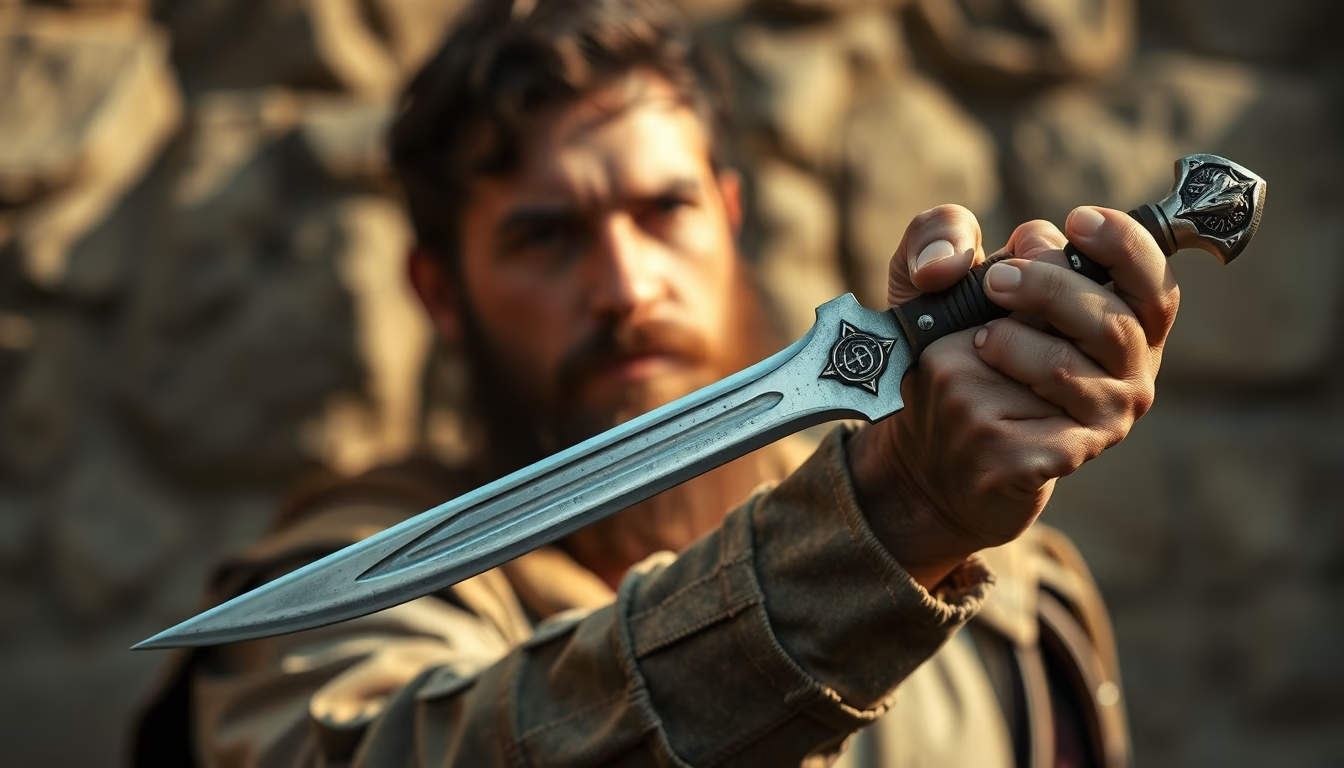
The kris is a ceremonial dagger from Southeast Asia, famous for its wavy blade and rich cultural symbolism.
About this subject
The kris is a traditional dagger originating from the Malay Archipelago, prominently found in Indonesia, Malaysia, Brunei, Thailand, and the southern Philippines. Recognized by its wavy blade (serpent-like) and ornate hilt, the kris is not merely a weapon but an object of spiritual power, social status, and cultural identity. It is believed that each kris possesses a soul or spirit, often passed down as a family heirloom.
The wavy blade, called luk, typically has between 3 and 13 waves, each with symbolic meaning. Odd numbers of waves are traditional, representing harmony between the material and spiritual realms. Forged by an empu (master smith), the kris is produced using complex metallurgical techniques, including lamination of different metals to create a pattern similar to Damascus steel. The forging process involves rituals and offerings, as the kris is thought to carry mystical powers of protection or curse.
Historically, the kris was used by warriors and nobles as a self-defense weapon and a symbol of authority. In ceremonies, it plays an essential role in weddings, funerals, and initiation rituals. During the colonial era, the kris was banned by Dutch and British authorities due to its association with resistance and rebellion. Today, it is recognized by UNESCO as a Masterpiece of the Oral and Intangible Heritage of Humanity (2005), and its traditional craftsmanship is preserved by master smiths in villages of Java and Bali.
Interesting fact: the kris can have either a straight or wavy blade, the wavy being the most iconic. The term "kris" derives from Old Javanese ngiris (to stab). Unlike Western daggers, the kris has no guard and a hilt that widens to prevent the hand from slipping onto the blade. Each region developed distinct styles, such as the Balinese kris with a demon-shaped hilt and the Patani kris with a wider blade.
Frequently Asked Questions
What is the meaning of the waves on a kris?
The waves (luk) symbolize spiritual strength and protection. The odd number of waves represents balance between the physical and spiritual worlds. Kris with 5 or 7 waves are common and considered auspicious.
Is the kris still used today?
Yes, but mainly in ceremonial, cultural contexts and as family heirlooms. In some regions, it is worn with traditional attire at weddings and rituals. It is also collected as a historical artifact.
How to distinguish an authentic kris from a replica?
Authentic kris are hand-forged by empus, exhibit visible Damascus pattern on the blade, and have fine carvings on the hilt. The weight and balance are also distinctive. Modern replicas often have stamped blades and synthetic materials.
Direct URL
https://pub-c7d6a6ea828543ac903a74a341ccb2e1.r2.dev/imagens/kris-malay-wavy-fish-eye-wide-angle-fresh13.avifHow to credit
Include a visible link back to UtilizAí. Copy one of the snippets below:
<a href="https://xn--utiliza-eza.com/en/midia/imagens/kris-malay-wavy-fish-eye-wide-angle-fresh13">Kris malay wavy</a> by <a href="https://xn--utiliza-eza.com">UtilizAí</a>, licensed under <a href="https://creativecommons.org/licenses/by/4.0/">CC BY 4.0</a>.
[Kris malay wavy](https://xn--utiliza-eza.com/en/midia/imagens/kris-malay-wavy-fish-eye-wide-angle-fresh13) by [UtilizAí](https://xn--utiliza-eza.com), CC BY 4.0
License: CC-BY-4.0