Kris malay wavy
1344×768 · AVIF · CC BY 4.0

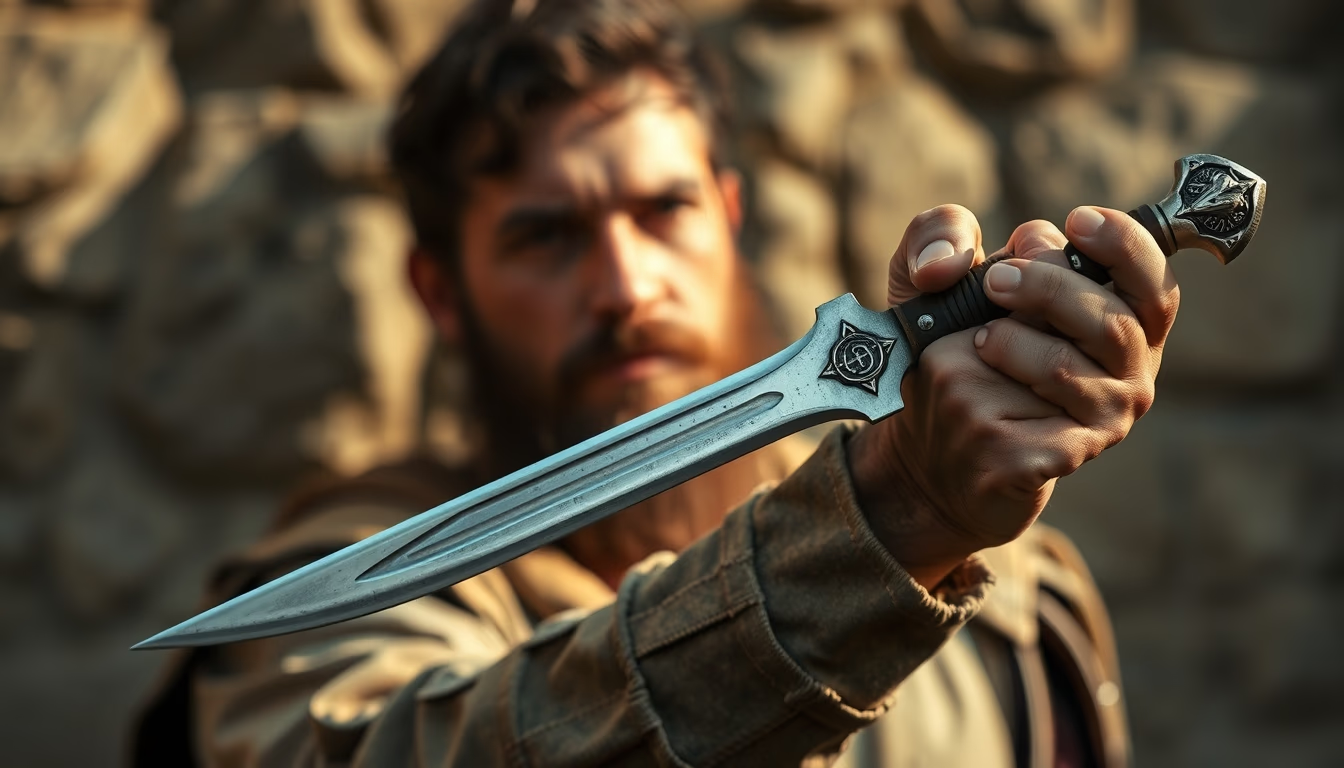
The Malay wavy-bladed kris (keris) is a ceremonial dagger and traditional weapon of Southeast Asia, recognized for its sinuous shape and spiritual value.
About this subject
The kris, also known as keris, is an asymmetrical dagger originating from Indonesia, Malaysia, Brunei, and southern Thailand. Its wavy blade, which can have 3 to 13 waves (luk), is not merely aesthetic: each wave symbolizes aspects of nature such as fire and water, and is believed to confer protective or aggressive powers to the wielder. An odd number of waves is common, with 5 and 7 being the most frequent.
The forging of a kris is a ritualistic process, often involving meteorite iron or special steel, and the hilt (hulu) is carved from wood, ivory, or bone, frequently depicting mythological figures or deities. The kris is not merely a weapon but also a status symbol, family heirloom, and spiritual talisman. In Malay and Javanese culture, the kris is considered a pusaka (inheritance) that may harbor supernatural forces.
Historically, the kris was used by warriors and nobles, and its wavy shape allowed it to cause more severe wounds upon entry and exit. During European colonization, the kris was banned in some regions but remained alive as a cultural symbol. Today, it is used in traditional ceremonies, weddings, and as a collector's item. UNESCO recognized the kris as a Masterpiece of the Oral and Intangible Heritage of Humanity in 2005, highlighting its cultural importance.
Various regional variations exist: the Javanese kris tends to have a straighter blade, while the Malay kris is more wavy. The kris also appears in myths, such as the famous kris of Empu Gandring, which cursed the Majapahit dynasty. Collectors value patina and authenticity, and each kris has a unique personality, often named and treated with respect.
Frequently Asked Questions
What is the origin of the Malay kris?
The Malay kris originated in the Malay archipelago, especially Java (Indonesia), and spread to Malaysia, Brunei, and southern Thailand. Its wavy shape is believed to be inspired by snakes or ocean waves.
What do the waves on the kris signify?
Each wave (luk) carries symbolic meaning related to natural elements, spiritual forces, or virtues. An odd number of waves is preferred, with 5 (panca) or 7 (sapta) being most common, representing balance and power.
Is the kris still used today?
Yes, the kris is used in traditional ceremonies such as weddings and royal courts, and as a collector's item. It is also a symbol of cultural identity, recognized by UNESCO as Intangible Heritage.
Direct URL
https://pub-c7d6a6ea828543ac903a74a341ccb2e1.r2.dev/imagens/kris-malay-wavy-film-grain-authentic-fresh8.avifHow to credit
Include a visible link back to UtilizAí. Copy one of the snippets below:
<a href="https://xn--utiliza-eza.com/en/midia/imagens/kris-malay-wavy-film-grain-authentic-fresh8">Kris malay wavy</a> by <a href="https://xn--utiliza-eza.com">UtilizAí</a>, licensed under <a href="https://creativecommons.org/licenses/by/4.0/">CC BY 4.0</a>.
[Kris malay wavy](https://xn--utiliza-eza.com/en/midia/imagens/kris-malay-wavy-film-grain-authentic-fresh8) by [UtilizAí](https://xn--utiliza-eza.com), CC BY 4.0
License: CC-BY-4.0