Kremlin moscow towers
1344×768 · AVIF · CC BY 4.0
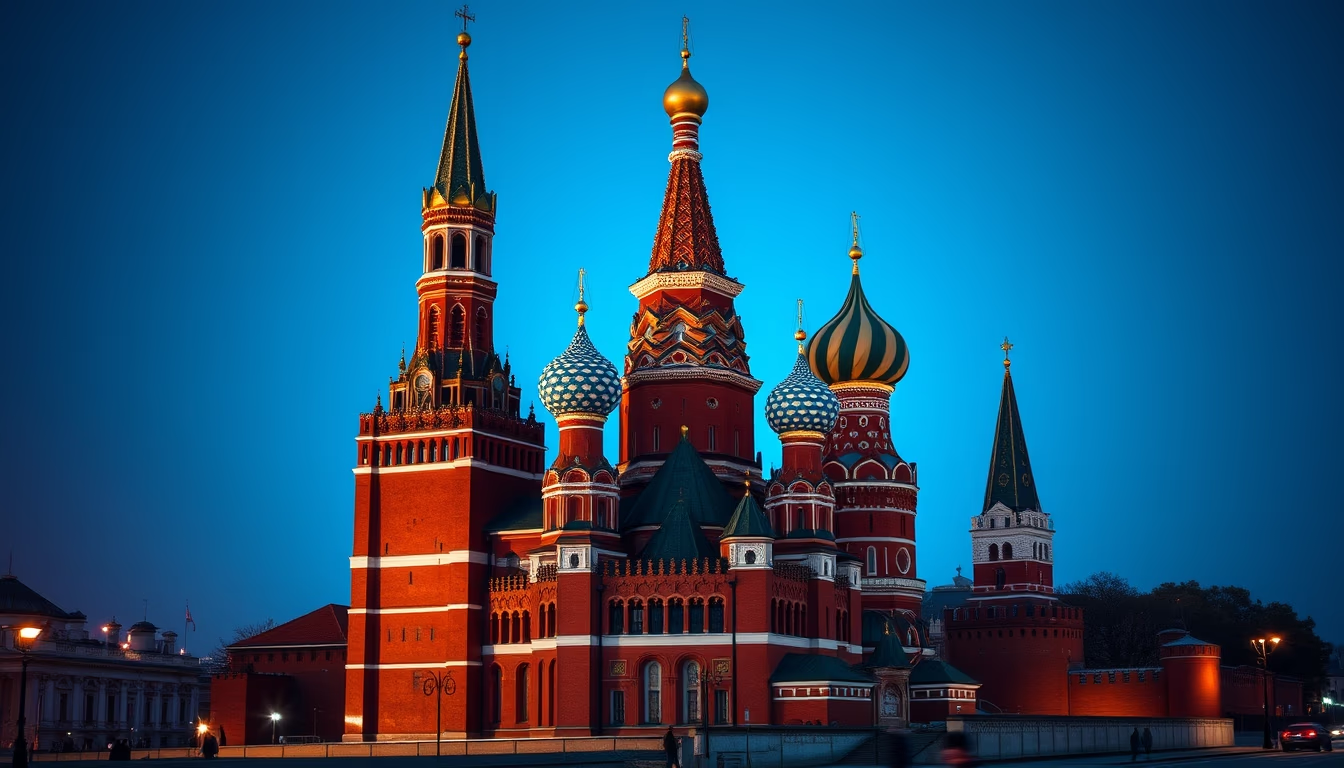
The towers of the Moscow Kremlin, symbols of Russian architecture, hold centuries of political and religious history.
About this subject
The Moscow Kremlin, a medieval fortress in the heart of the Russian capital, is famous for its imposing towers that punctuate the walls of the complex. There are 20 towers in total, built between the 15th and 17th centuries, each with a unique style and purpose. The most famous include the Spasskaya Tower, with its clock and main gate, the Savior Tower, and the Nikolskaya Tower, all decorated with red spires and ruby stars that light up at night. These structures were not only defensive: they served as ceremonial entrances, prisons, and even chapels.
The Spasskaya Tower, dating from 1491, became the most iconic symbol of the Kremlin, housing the bell that marks Russia's official time since 1936. Its ruby star, installed in 1937, replaced the tsarist double-headed eagle and became one of the emblems of Soviet power. Another important tower is the Arsenal Tower, which houses the Kremlin Museum. During the Soviet period, many towers were restored and opened to the public, consolidating the Kremlin as a UNESCO World Heritage site since 1990.
Historically, the Kremlin towers witnessed crucial events, such as the coronation of tsars, the October Revolution, and the military parades of the Stalin era. Today, they are one of the most visited tourist attractions in Moscow, with views of Red Square and the Moscow River. The average height of the towers is 40 to 80 meters, and many feature crenellations and tent-shaped roofs typical of Russian architecture. The combination of red brick and white details creates a striking contrast, especially under winter light.
A curiosity: the Kutafya Tower, the only round bastion tower of the Kremlin, served as a prison in the 16th century. The Tsar's Tower, the smallest of all, was built in the Moscow Baroque style. Each tower has its own name and history, reflecting the different phases of the Kremlin's construction, which began as a wooden fortress in the 12th century and was rebuilt in white stone in the 14th century before acquiring its current red brick in the 15th century.
Frequently Asked Questions
How many towers does the Moscow Kremlin have?
The Kremlin has 20 towers along its walls, built between the 15th and 17th centuries. The most famous are the Spasskaya, Nikolskaya, and Troitskaya towers.
What is the meaning of the red star on top of the Kremlin towers?
The ruby red stars were installed in 1937 during the Soviet period, replacing the tsarist double-headed eagles. They are illuminated and rotate, representing Soviet and later Russian power.
Are the Kremlin towers open to tourists?
Yes, some towers are open to the public, such as the Arsenal Tower, which houses the Kremlin Museum. The Spasskaya Tower is visible from Red Square, but access is restricted.
Direct URL
https://pub-c7d6a6ea828543ac903a74a341ccb2e1.r2.dev/imagens/kremlin-moscow-towers-studio-editorial-portrait-p10.avifHow to credit
Include a visible link back to UtilizAí. Copy one of the snippets below:
<a href="https://xn--utiliza-eza.com/en/midia/imagens/kremlin-moscow-towers-studio-editorial-portrait-p10">Kremlin moscow towers</a> by <a href="https://xn--utiliza-eza.com">UtilizAí</a>, licensed under <a href="https://creativecommons.org/licenses/by/4.0/">CC BY 4.0</a>.
[Kremlin moscow towers](https://xn--utiliza-eza.com/en/midia/imagens/kremlin-moscow-towers-studio-editorial-portrait-p10) by [UtilizAí](https://xn--utiliza-eza.com), CC BY 4.0
License: CC-BY-4.0