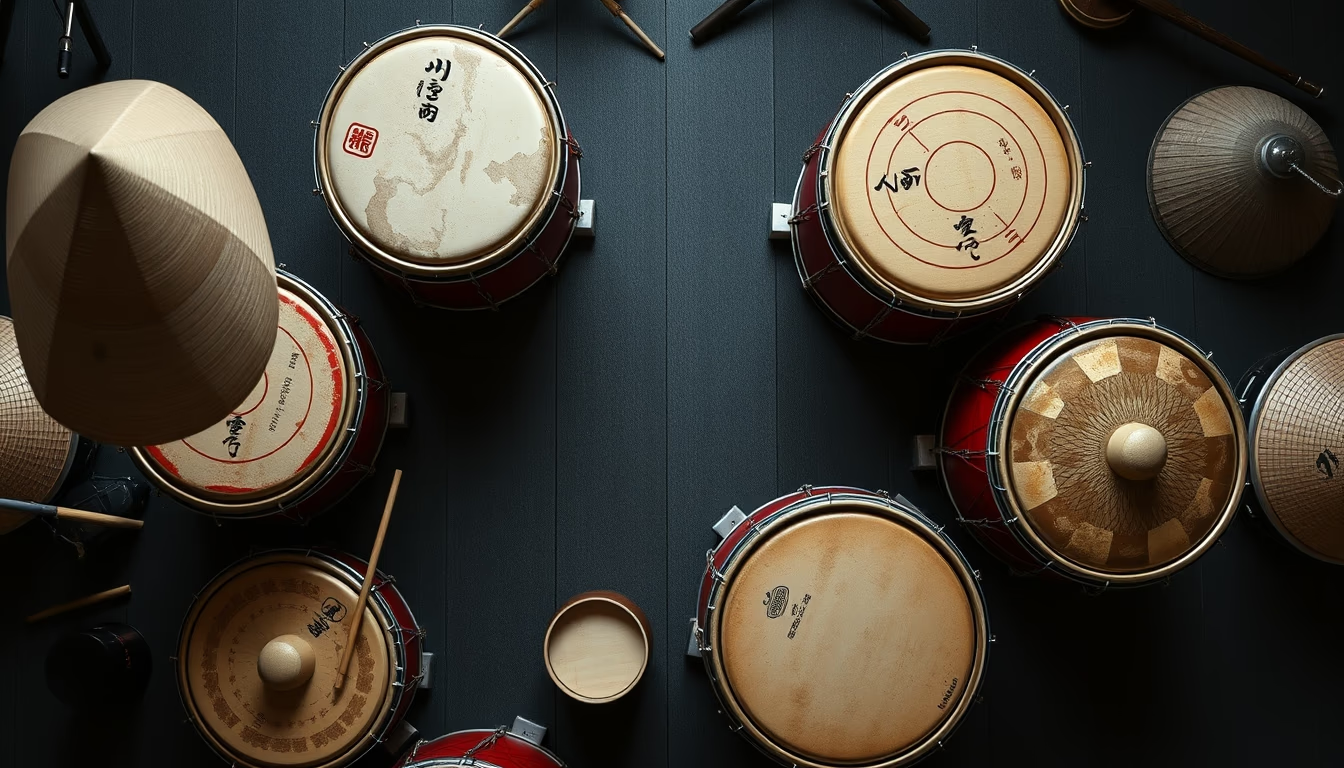
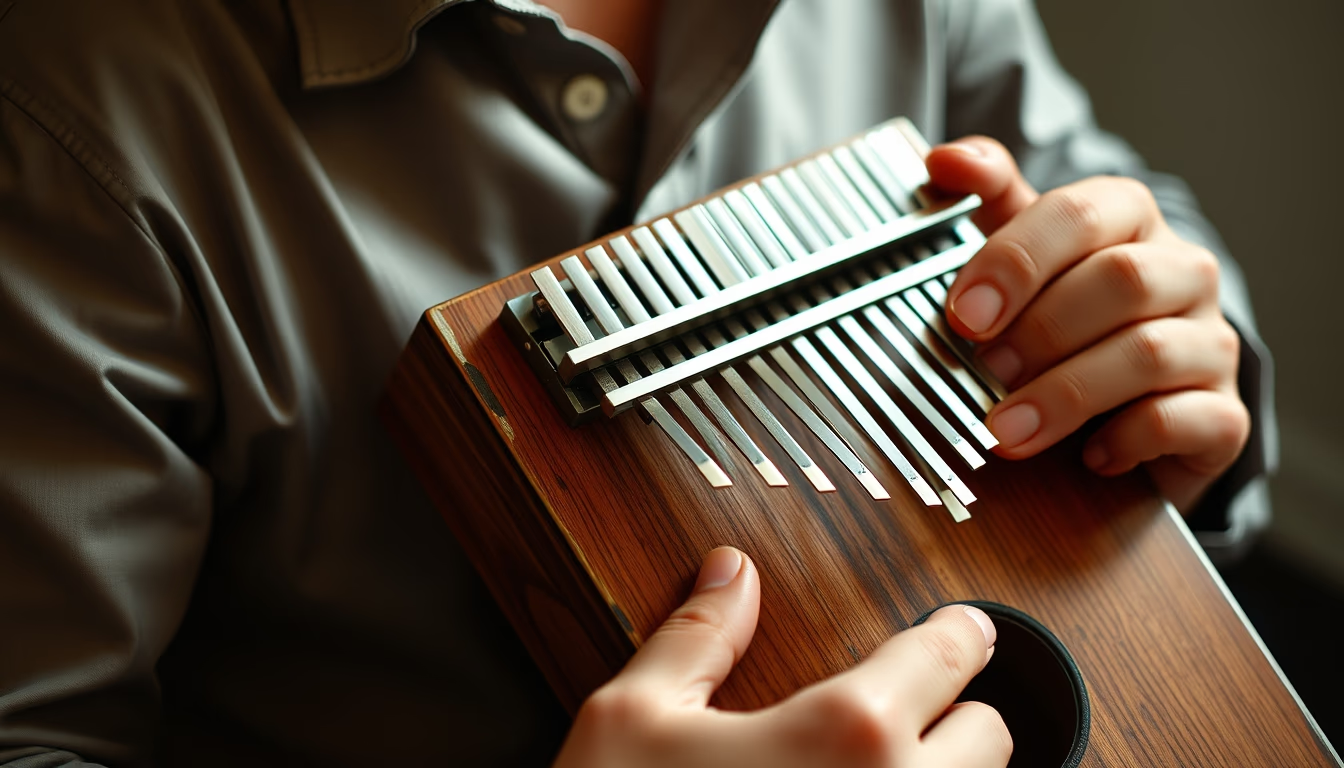
Koto japanese strings
1344×768 · AVIF · CC BY 4.0

The koto is a traditional Japanese string instrument with 13 strings and a rich history spanning over a thousand years in classical and contemporary music.
About this subject
The koto is a plucked string instrument from Japan, belonging to the zither family. It consists of a long wooden soundboard, typically made from paulownia wood, over which 13 strings (traditionally silk, now often nylon) are stretched. Each string is supported by movable bridges (ji) that allow precise tuning. The koto was introduced to Japan from China during the Nara period (8th century) and was initially used in imperial court music (gagaku). Over time, it became central to traditional Japanese music, especially in the solo genre sōkyoku, which flourished during the Edo period.
Playing technique involves the use of ivory or plastic picks (tsume) attached to the thumb, index, and middle fingers of the right hand, while the left hand presses the strings to create ornaments and pitch variations. There are different schools of koto, such as Ikuta and Yamada, each with distinct performance styles and repertoires. The instrument is also used in contemporary settings, including modern koto works with Western influences and film/anime soundtracks. The koto is often associated with elegance and refinement, serving as a cultural symbol of Japan.
Notably, the traditional koto has 13 strings, but variations exist with 17 or more strings. Paulownia wood (kiri) is prized for its lightness and resonance. The instrument is tuned to pentatonic scales, and its music is notated in a specific tablature. Koto festivals and competitions are held in Japan, keeping the tradition alive. The koto has also influenced Western composers like Henry Cowell, who wrote pieces for the instrument.
Frequently Asked Questions
How many strings does a traditional koto have?
A traditional koto has 13 strings, though modern variations may have 17 or more.
What is the origin of the koto?
The koto was introduced to Japan from China during the Nara period (8th century), initially used in imperial court music (gagaku).
How is the koto played?
The koto is played with picks (tsume) attached to the thumb, index, and middle fingers of the right hand, while the left hand presses the strings to alter pitch.
Direct URL
https://pub-c7d6a6ea828543ac903a74a341ccb2e1.r2.dev/imagens/koto-japanese-strings-high-fashion-editorial-p8.avifHow to credit
Include a visible link back to UtilizAí. Copy one of the snippets below:
<a href="https://xn--utiliza-eza.com/en/midia/imagens/koto-japanese-strings-high-fashion-editorial-p8">Koto japanese strings</a> by <a href="https://xn--utiliza-eza.com">UtilizAí</a>, licensed under <a href="https://creativecommons.org/licenses/by/4.0/">CC BY 4.0</a>.
[Koto japanese strings](https://xn--utiliza-eza.com/en/midia/imagens/koto-japanese-strings-high-fashion-editorial-p8) by [UtilizAí](https://xn--utiliza-eza.com), CC BY 4.0
License: CC-BY-4.0