Koto japanese strings
1344×768 · AVIF · CC BY 4.0
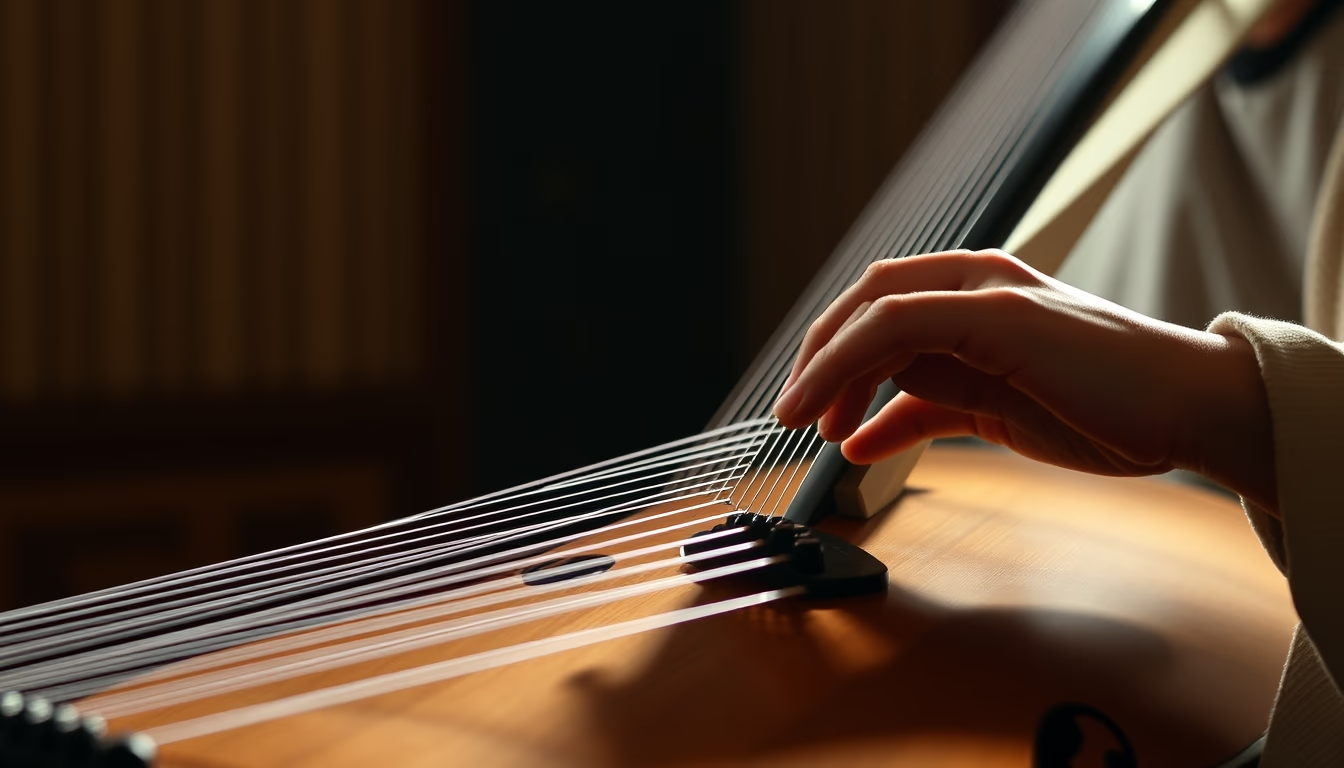
The koto is a traditional Japanese string instrument with 13 strings, dating back to the Nara period (710-794 AD). Known for its ethereal sound, it is played with finger picks and holds a central place in classical Japanese music.
About this subject
The koto is a plucked string instrument classified as a table zither. Its origins date back to the 8th century, when it was introduced to Japan from China, where similar instruments like the guzheng already existed. During the Heian period (794-1185), the koto became popular among the nobility and was associated with poetry and literature, as seen in the classic "Tale of Genji."
Traditionally, the koto has 13 silk strings stretched over a long, curved body made of paulownia wood. The strings are tuned using movable bridges called "ji," which allow adjustment of the musical scale. The player uses ivory or plastic picks, known as "tsume," attached to the thumb, index, and middle fingers of the right hand, while the left hand presses the strings to create vibrato and pitch variations.
One of the most influential composers for the modern koto was Miyagi Michio (1894-1956), who expanded its repertoire and technique, creating works like "Haru no Umi" (The Sea in Spring), often performed with the shakuhachi flute. The koto is also used in contemporary music and collaborations with Western instruments, such as in the work of the group "Koto-1" and in film soundtracks. The handcrafting of a koto requires months of work and is considered an art form in itself, with each instrument having unique acoustic characteristics.
While the traditional koto has 13 strings, modern variations exist with 17, 20, or even 25 strings, broadening its harmonic possibilities. Learning the koto typically takes place in specialized schools, following unique notation systems (koto-fu) and hereditary lineage structures (iemoto). Annual festivals, such as the "Koto Matsuri" in Kyoto, celebrate the instrument and its cultural heritage.
Frequently Asked Questions
How many strings does a traditional koto have?
A traditional koto has 13 strings, but modern variations exist with 17, 20, or 25 strings.
What is the difference between koto and guzheng?
The koto is Japanese with 13 strings and movable bridges, while the Chinese guzheng typically has 21 strings and a different playing technique. Both are table zithers but have distinct scales and repertoires.
How is the koto played?
The player uses picks (tsume) on the fingers of the right hand to pluck the strings, while the left hand presses the strings on the left side of the bridges to produce vibrato and microtonal variations.
Direct URL
https://pub-c7d6a6ea828543ac903a74a341ccb2e1.r2.dev/imagens/koto-japanese-strings-fine-art-photography-p3.avifHow to credit
Include a visible link back to UtilizAí. Copy one of the snippets below:
<a href="https://xn--utiliza-eza.com/en/midia/imagens/koto-japanese-strings-fine-art-photography-p3">Koto japanese strings</a> by <a href="https://xn--utiliza-eza.com">UtilizAí</a>, licensed under <a href="https://creativecommons.org/licenses/by/4.0/">CC BY 4.0</a>.
[Koto japanese strings](https://xn--utiliza-eza.com/en/midia/imagens/koto-japanese-strings-fine-art-photography-p3) by [UtilizAí](https://xn--utiliza-eza.com), CC BY 4.0
License: CC-BY-4.0