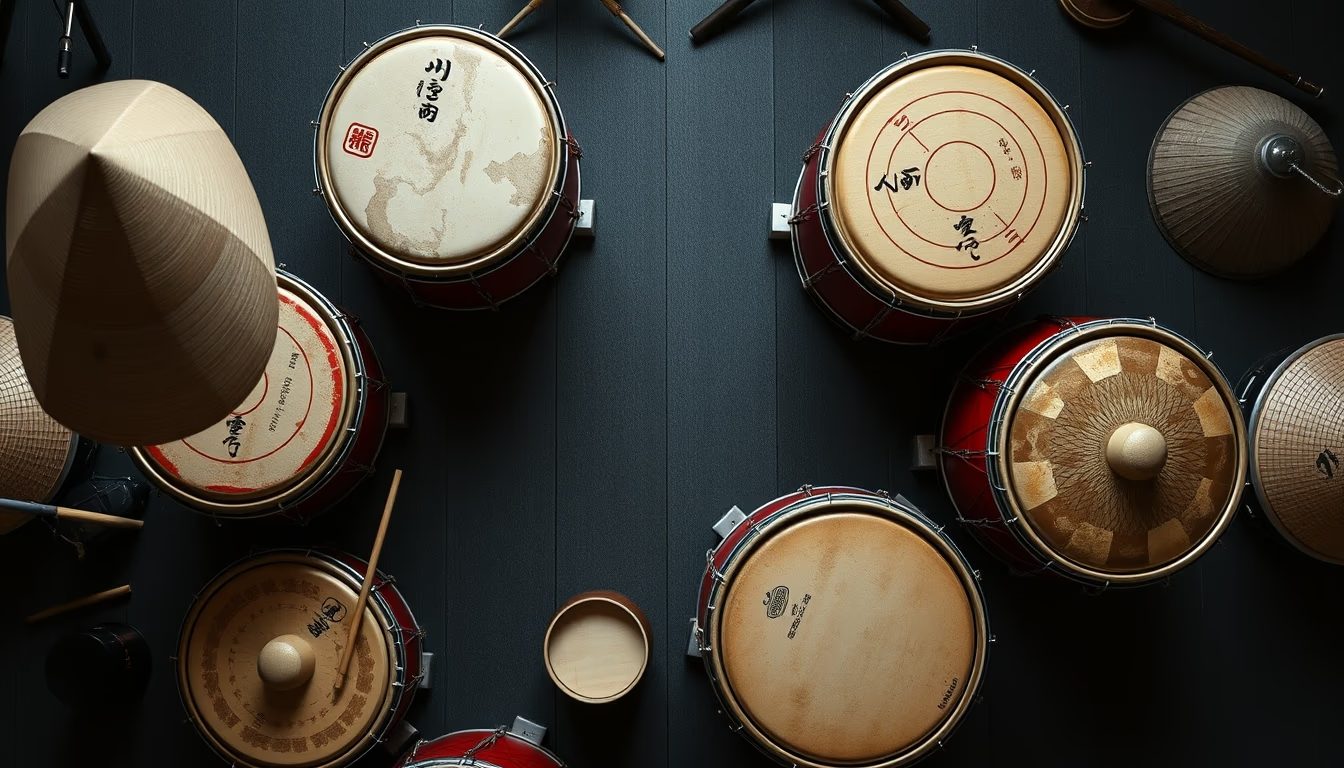
Koto japanese strings
1344×768 · AVIF · CC BY 4.0

The koto is a traditional Japanese string instrument, known for its melodic sound and rich cultural history.
About this subject
The koto is a plucked string instrument originating from China, where it is called guzheng, and was introduced to Japan during the Nara period (8th century). Made of paulownia wood, it has 13 silk or synthetic strings stretched over a long resonant box. The strings are tuned with tuning pins and supported by movable bridges (ji), allowing microtonal adjustments. It is considered Japan's national instrument and plays a central role in classical Japanese music, especially in the gagaku (court music) and sokyoku (koto music) genres.
Composers like Miyagi Michio revolutionized the repertoire in the 20th century, most notably with the piece "Haru no Umi" (The Sea in Spring), originally for koto and shakuhachi, which became one of the instrument's best-known works. Today, the koto is used both in traditional contexts and in experiments with contemporary music, jazz, and pop. Its sound evokes a serene and nostalgic atmosphere, often associated with natural landscapes and formal ceremonies.
Playing technique involves using picks made of bamboo or ivory on the thumb, index, and middle fingers of the right hand, while the left hand presses strings on the opposite side of the bridges to produce vibrato, portamento, and ornaments. The musician sits on the floor with the koto resting on the floor or a low table. Traditional musical notation is in tablature (kunkunshi), which indicates finger positions and strings.
Culturally, the koto symbolizes elegance and refinement. During the Edo period, it was considered a desirable attribute for noble women, and it is still taught in music schools and universities in Japan. It appears in historical films such as those by Akira Kurosawa and in anime, perpetuating its image as an icon of Japanese culture. Festivals like "Koto Matsuri" celebrate the instrument, and there is a large international community of practitioners.
Frequently Asked Questions
What is the origin of the koto?
The koto originated in China as the guzheng and was introduced to Japan in the 8th century during the Nara period. It was then adapted and became a central instrument in classical Japanese music.
How many strings does a koto have?
The traditional koto has 13 strings, originally made of silk but now also synthetic. The strings are tuned using movable bridges that allow microtonal adjustments.
Is the koto difficult to learn?
The koto requires practice and coordination, especially in using picks and left-hand vibrato technique. However, with dedication, it is accessible to beginners, with modern teaching methods and schools available.
Direct URL
https://pub-c7d6a6ea828543ac903a74a341ccb2e1.r2.dev/imagens/koto-japanese-strings-film-grain-authentic-p10.avifHow to credit
Include a visible link back to UtilizAí. Copy one of the snippets below:
<a href="https://xn--utiliza-eza.com/en/midia/imagens/koto-japanese-strings-film-grain-authentic-p10">Koto japanese strings</a> by <a href="https://xn--utiliza-eza.com">UtilizAí</a>, licensed under <a href="https://creativecommons.org/licenses/by/4.0/">CC BY 4.0</a>.
[Koto japanese strings](https://xn--utiliza-eza.com/en/midia/imagens/koto-japanese-strings-film-grain-authentic-p10) by [UtilizAí](https://xn--utiliza-eza.com), CC BY 4.0
License: CC-BY-4.0