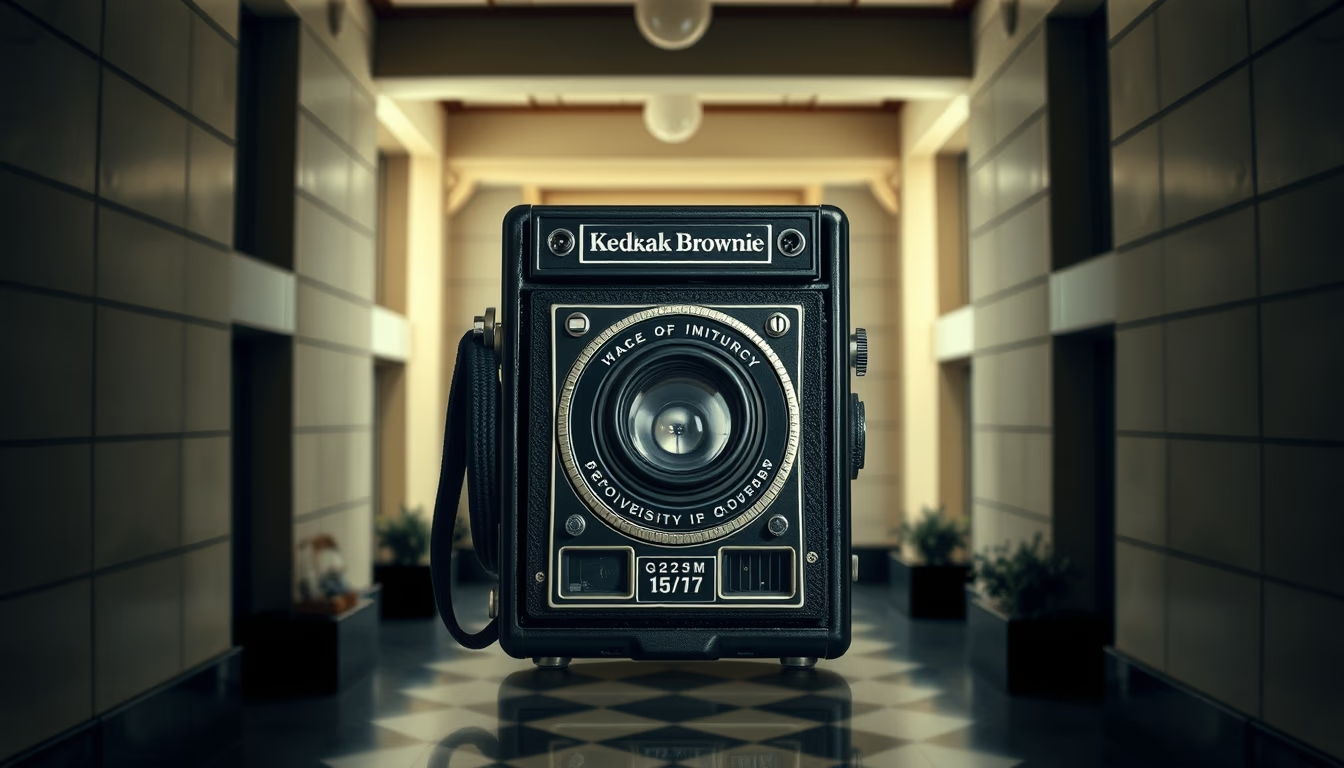
Kodak brownie box camera
1344×768 · AVIF · CC BY 4.0
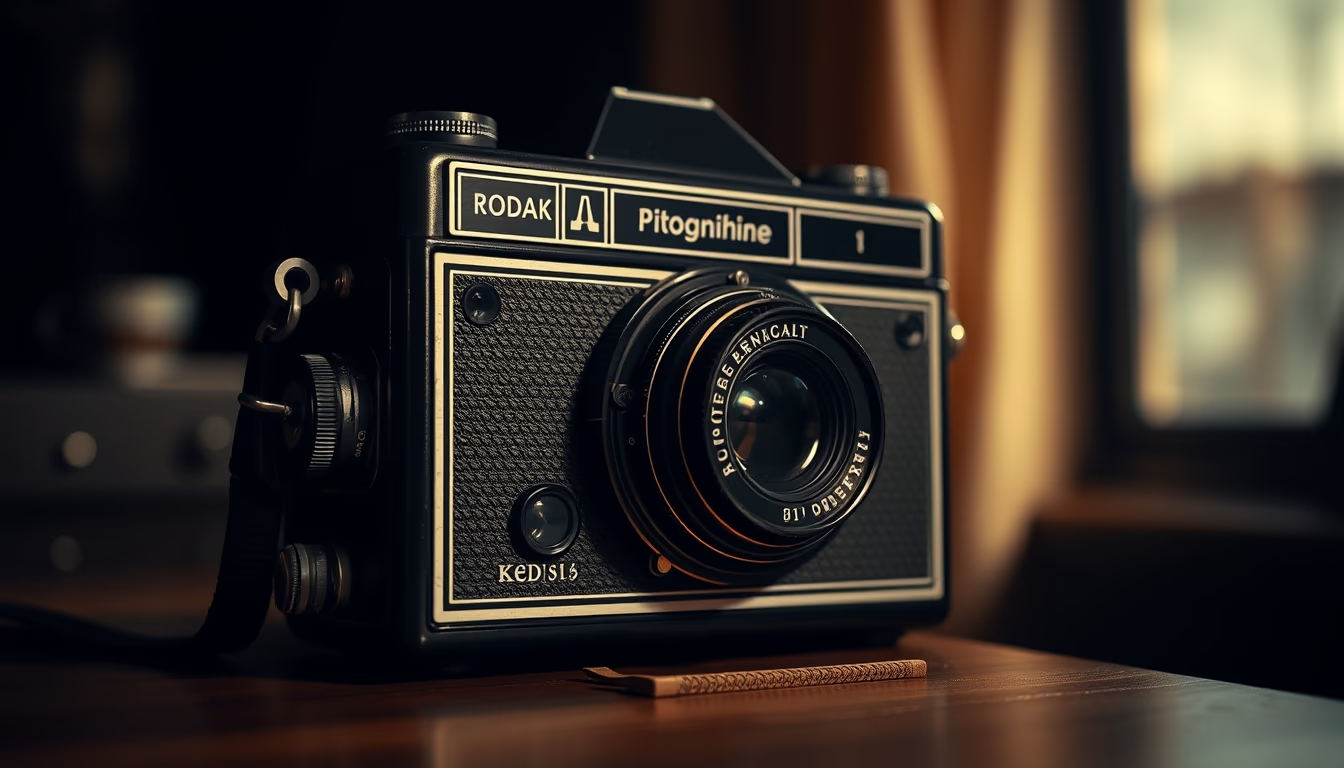
The Kodak Brownie box camera revolutionized amateur photography in the early 20th century, making photography accessible to the general public.
About this subject
Introduced in February 1900 by the Eastman Kodak Company, the Brownie was a simple box camera made of cardboard covered with leatherette and featuring a fixed-focus meniscus lens. Its price was only one dollar, while the roll film cost 15 cents, enabling virtually anyone to take photographs without expensive equipment or technical know-how. The name 'Brownie' was inspired by the fairy-tale characters created by Canadian author Palmer Cox, which were popular at the time. Kodak's marketing, especially targeting children and families, promised 'you press the button, we do the rest.'
The Brownie lacked a sophisticated viewfinder: users aimed the box toward the subject using two marks on top as guides. The film was roll film type 117 (later 120), producing 6x9 cm negatives. The camera captured black-and-white images, and processing was handled by Kodak, which returned finished prints to the customer. This integrated business model was key to the company's success.
Over the years, the Brownie saw many variations, such as the Brownie No. 2 (1901) and the Brownie Hawkeye (1949), but all retained the essence of simplicity and low cost. Production continued until the 1960s, when more modern automatic cameras replaced it. The Brownie not only democratized photography but also recorded a century of visual history, with millions of units sold worldwide. Today, it is a collector's item and a symbol of the golden age of analog photography.
Frequently Asked Questions
What is a Kodak Brownie box camera?
It is a simple box camera introduced in 1900 by Kodak, made of cardboard and very easy to use. It was the first affordable camera for the general public, costing only one dollar.
How did the Kodak Brownie work?
It had no focus or exposure adjustments. Users aimed the camera at the subject and pressed the button. The roll film captured the image, then the film was sent to Kodak for developing and printing.
Why was the Kodak Brownie important?
It democratized photography, enabling ordinary people, including children, to take photos. Its low price and simplicity created the amateur market and spurred the global photographic industry.
Direct URL
https://pub-c7d6a6ea828543ac903a74a341ccb2e1.r2.dev/imagens/kodak-brownie-box-camera-fine-art-photography-fresh13.avifHow to credit
Include a visible link back to UtilizAí. Copy one of the snippets below:
<a href="https://xn--utiliza-eza.com/en/midia/imagens/kodak-brownie-box-camera-fine-art-photography-fresh13">Kodak brownie box camera</a> by <a href="https://xn--utiliza-eza.com">UtilizAí</a>, licensed under <a href="https://creativecommons.org/licenses/by/4.0/">CC BY 4.0</a>.
[Kodak brownie box camera](https://xn--utiliza-eza.com/en/midia/imagens/kodak-brownie-box-camera-fine-art-photography-fresh13) by [UtilizAí](https://xn--utiliza-eza.com), CC BY 4.0
License: CC-BY-4.0