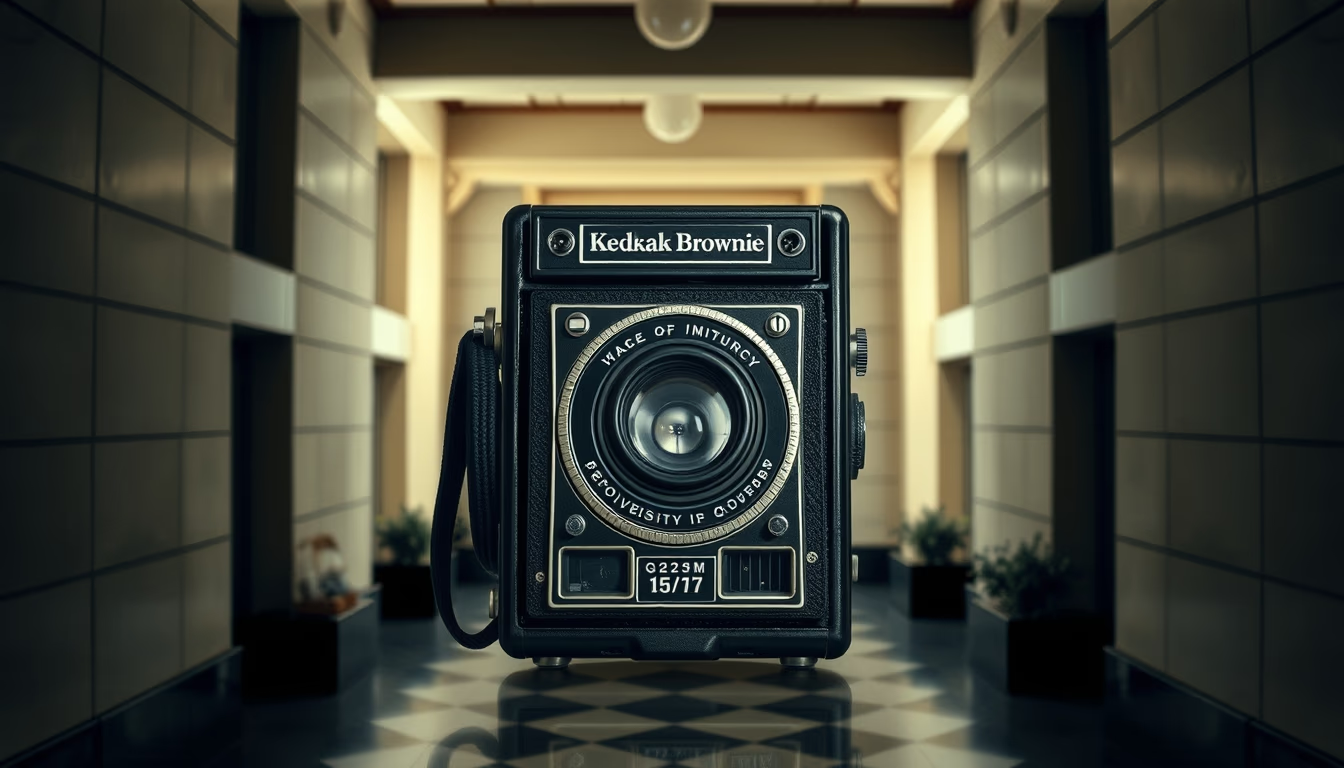
Kodak brownie box camera
1344×768 · AVIF · CC BY 4.0

The Kodak Brownie box camera, introduced in 1900, democratized photography by making visual recording accessible to amateurs and families.
About this subject
The Kodak Brownie box camera, introduced in February 1900 by the Eastman Kodak Company, was a landmark in the history of photography. Priced at only 1 dollar (equivalent to about 30 dollars today), it made photography accessible to millions who previously could not afford expensive equipment. The name "Brownie" was inspired by the childlike characters created by Canadian writer Palmer Cox, reinforcing the idea of simplicity and fun. The camera was constructed from cardboard covered with imitation leather and metal, with a simple meniscus lens and a rotary shutter. It used 117 roll film, producing 2 1/4 x 2 1/4 inch negatives (approximately 6x6 cm), yielding square images.
Its impact was profound: the Brownie popularized snapshot photography, allowing anyone to record everyday moments without advanced technical knowledge. It is estimated that in its first years, over 150,000 units were sold. Kodak's marketing campaign, with the slogan "You press the button, we do the rest," simplified the photographic process and created a new consumer market. The camera was produced in many variants over the decades, including models like the Brownie No. 2 and the Brownie Starflex, and remained popular into the 1960s.
Culturally, the Brownie Box transformed photography into a documentary habit. It recorded family life, travels, and social events, creating a visual archive of the 20th-century middle class. Many amateur photographers used the Brownie to document their surroundings, and it is often cited as a tool that influenced documentary photography and photojournalism. The camera's simplicity also inspired artistic movements such as vernacular photography and the use of disposable cameras. Today, Brownie boxes are cherished by collectors and vintage enthusiasts, remembered as icons that opened the door of photography to the world.
Frequently Asked Questions
What was the original price of the Kodak Brownie box in 1900?
The Kodak Brownie box was originally sold for 1 dollar, making it the first affordable camera for the general public.
What type of film did the Kodak Brownie box use?
It used 117 roll film, producing square negatives approximately 6x6 cm.
How did the Kodak Brownie influence documentary photography?
Being cheap and simple, the Brownie allowed amateurs to record everyday moments, helping popularize snapshots and visual documentation of common life, the basis of documentary photography.
Direct URL
https://pub-c7d6a6ea828543ac903a74a341ccb2e1.r2.dev/imagens/kodak-brownie-box-camera-documentary-photography-fresh7.avifHow to credit
Include a visible link back to UtilizAí. Copy one of the snippets below:
<a href="https://xn--utiliza-eza.com/en/midia/imagens/kodak-brownie-box-camera-documentary-photography-fresh7">Kodak brownie box camera</a> by <a href="https://xn--utiliza-eza.com">UtilizAí</a>, licensed under <a href="https://creativecommons.org/licenses/by/4.0/">CC BY 4.0</a>.
[Kodak brownie box camera](https://xn--utiliza-eza.com/en/midia/imagens/kodak-brownie-box-camera-documentary-photography-fresh7) by [UtilizAí](https://xn--utiliza-eza.com), CC BY 4.0
License: CC-BY-4.0