Kinkaku-ji golden pavilion
1344×768 · AVIF · CC BY 4.0
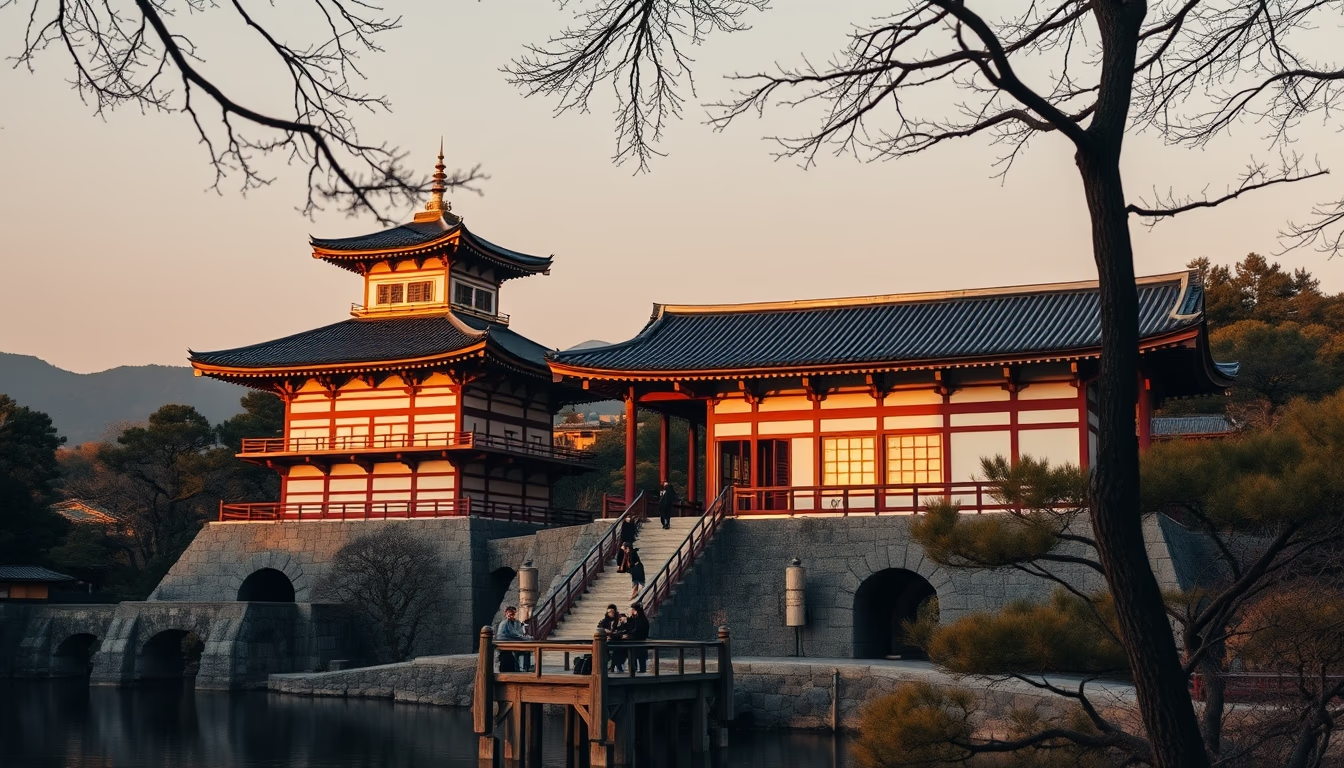
Kinkaku-ji, the Golden Pavilion of Kyoto, is a Zen temple clad in pure gold, a symbol of Japanese culture and a UNESCO World Heritage site.
About this subject
Kinkaku-ji, officially named Rokuon-ji, is one of Japan's most iconic temples, located in Kyoto. Originally built in 1397 as a retirement villa for Shogun Ashikaga Yoshimitsu, it was converted into a Zen temple after his death. The main building, the Golden Pavilion, is entirely covered in pure gold leaf, reflecting on the surrounding Kyoko-chi (Mirror Pond). The three-story structure blends architectural styles: the first floor in the shinden style (aristocratic palace), the second in the buke style (samurai), and the third in the zen style (temple). At the top, a golden phoenix ornaments the roof.
The temple was immortalized in literature by Yukio Mishima in his 1956 novel 'The Temple of the Golden Pavilion', which recounts the true story of a novice who set the temple on fire in 1950. This tragic event led to its reconstruction in 1955, with faithful replicas. In 1987, a new layer of gold was applied, and the structure was restored. Kinkaku-ji has been a UNESCO World Heritage site since 1994, part of the Historic Monuments of Ancient Kyoto.
The surrounding garden is a classic example of the Muromachi period, with a central pond, rocky islands, and carefully pruned pine trees. The serene atmosphere contrasts with the opulence of gold, creating harmony between nature and construction. The temple attracts millions of visitors annually, making it one of the most photographed tourist spots in Japan. A curiosity: the gold is not merely decorative; it symbolizes purity and enlightenment in Buddhism, and it reflects sunlight to create a radiant effect at dawn and dusk.
Frequently Asked Questions
Was Kinkaku-ji actually burned by a monk?
Yes, in 1950, a young novice named Hayashi Yoken set the pavilion on fire. This event inspired Yukio Mishima's novel 'The Temple of the Golden Pavilion'.
Is the gold on Kinkaku-ji real?
Yes, the walls are covered with pure gold leaf. The current layer was applied during the 1987 restoration.
What is the significance of the three floors?
Each floor represents a different architectural style: the first is palace style (shinden), the second is samurai style (buke), and the third is Zen temple style (zen), symbolizing a fusion of cultures.
Direct URL
https://pub-c7d6a6ea828543ac903a74a341ccb2e1.r2.dev/imagens/kinkaku-ji-golden-pavilion-magazine-editorial-p0.avifHow to credit
Include a visible link back to UtilizAí. Copy one of the snippets below:
<a href="https://xn--utiliza-eza.com/en/midia/imagens/kinkaku-ji-golden-pavilion-magazine-editorial-p0">Kinkaku-ji golden pavilion</a> by <a href="https://xn--utiliza-eza.com">UtilizAí</a>, licensed under <a href="https://creativecommons.org/licenses/by/4.0/">CC BY 4.0</a>.
[Kinkaku-ji golden pavilion](https://xn--utiliza-eza.com/en/midia/imagens/kinkaku-ji-golden-pavilion-magazine-editorial-p0) by [UtilizAí](https://xn--utiliza-eza.com), CC BY 4.0
License: CC-BY-4.0