Kinkaku-ji golden pavilion
1344×768 · AVIF · CC BY 4.0
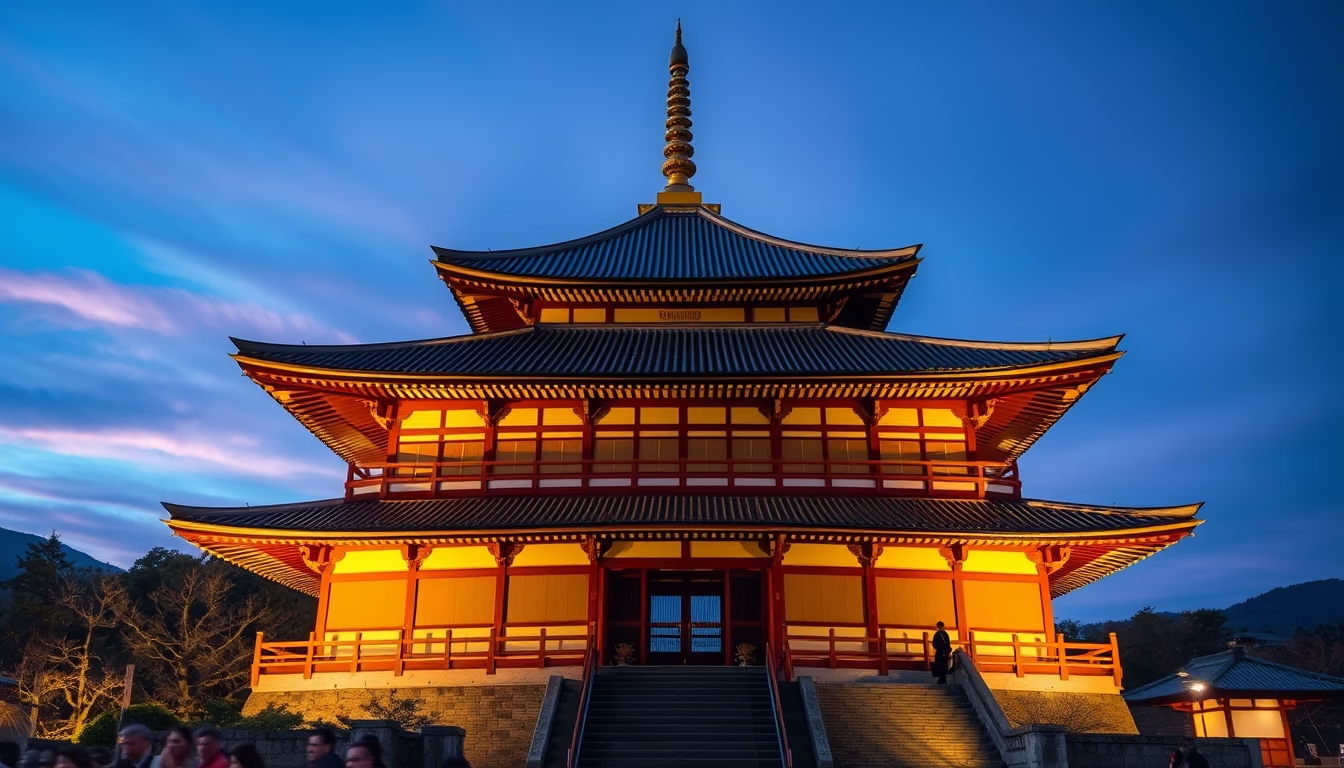
Kinkaku-ji, the Golden Pavilion in Kyoto, is a Zen Buddhist temple covered in gold leaf that reflects its beauty in the mirror-like pond Kyōko-chi.
About this subject
Kinkaku-ji, officially named Rokuon-ji, is one of Japan's most iconic temples, located in Kyoto. Originally built in 1397 as a retirement villa for shogun Ashikaga Yoshimitsu, it was converted into a Zen Buddhist temple after his death. The main pavilion, with three floors of distinct architectural styles, is entirely covered in pure gold leaf, except for the first floor which retains exposed wood. Each floor represents a different style: the first is shinden (palace style), the second is buke (samurai style), and the third is zen (Chinese temple style). At the top, a golden phoenix statue adorns the roof.
The temple sits on the edge of Kyōko-chi pond, designed so that the pavilion perfectly reflects on the water, creating a harmonious landscape. In 1950, the pavilion was tragically burned down by a novice monk in an act of arson, an event that inspired Yukio Mishima's novel 'The Temple of the Golden Pavilion.' The current structure was rebuilt in 1955, faithful to the original, and the gold leaf was reapplied in 1987 to preserve its luster. Kinkaku-ji has been a UNESCO World Heritage Site since 1994, as part of the 'Historic Monuments of Ancient Kyoto.'
Beyond its religious significance, Kinkaku-ji attracts millions of visitors annually who seek to contemplate its serene beauty, especially under different weather conditions and seasons. The surrounding garden, with winding paths and meticulously pruned pine trees, follows Japanese landscaping principles. Long exposure photography commonly used to capture the site enhances the softness of the water and the glow of the gold, but the in-person experience is even more striking due to the atmosphere of tranquility that envelops the temple.
Frequently Asked Questions
What is the best time to visit Kinkaku-ji?
The temple is beautiful in all seasons: spring with cherry blossoms, summer with lush greenery, autumn with red leaves, and winter with snow. It is open from 9:00 AM to 5:00 PM, and arriving early helps avoid crowds.
Is Kinkaku-ji actually covered in gold?
Yes, the top two floors are entirely covered in pure gold leaf. The gold was applied to purify the environment and reflect light, symbolizing Buddhist enlightenment.
What happened to the original Kinkaku-ji?
The original pavilion was burned down in 1950 by a novice monk. The incident inspired Yukio Mishima's novel 'The Temple of the Golden Pavilion.' The current replica was rebuilt in 1955 and is faithful to the original design.
Direct URL
https://pub-c7d6a6ea828543ac903a74a341ccb2e1.r2.dev/imagens/kinkaku-ji-golden-pavilion-long-exposure-p9.avifHow to credit
Include a visible link back to UtilizAí. Copy one of the snippets below:
<a href="https://xn--utiliza-eza.com/en/midia/imagens/kinkaku-ji-golden-pavilion-long-exposure-p9">Kinkaku-ji golden pavilion</a> by <a href="https://xn--utiliza-eza.com">UtilizAí</a>, licensed under <a href="https://creativecommons.org/licenses/by/4.0/">CC BY 4.0</a>.
[Kinkaku-ji golden pavilion](https://xn--utiliza-eza.com/en/midia/imagens/kinkaku-ji-golden-pavilion-long-exposure-p9) by [UtilizAí](https://xn--utiliza-eza.com), CC BY 4.0
License: CC-BY-4.0