Kinkaku-ji golden pavilion
1344×768 · AVIF · CC BY 4.0
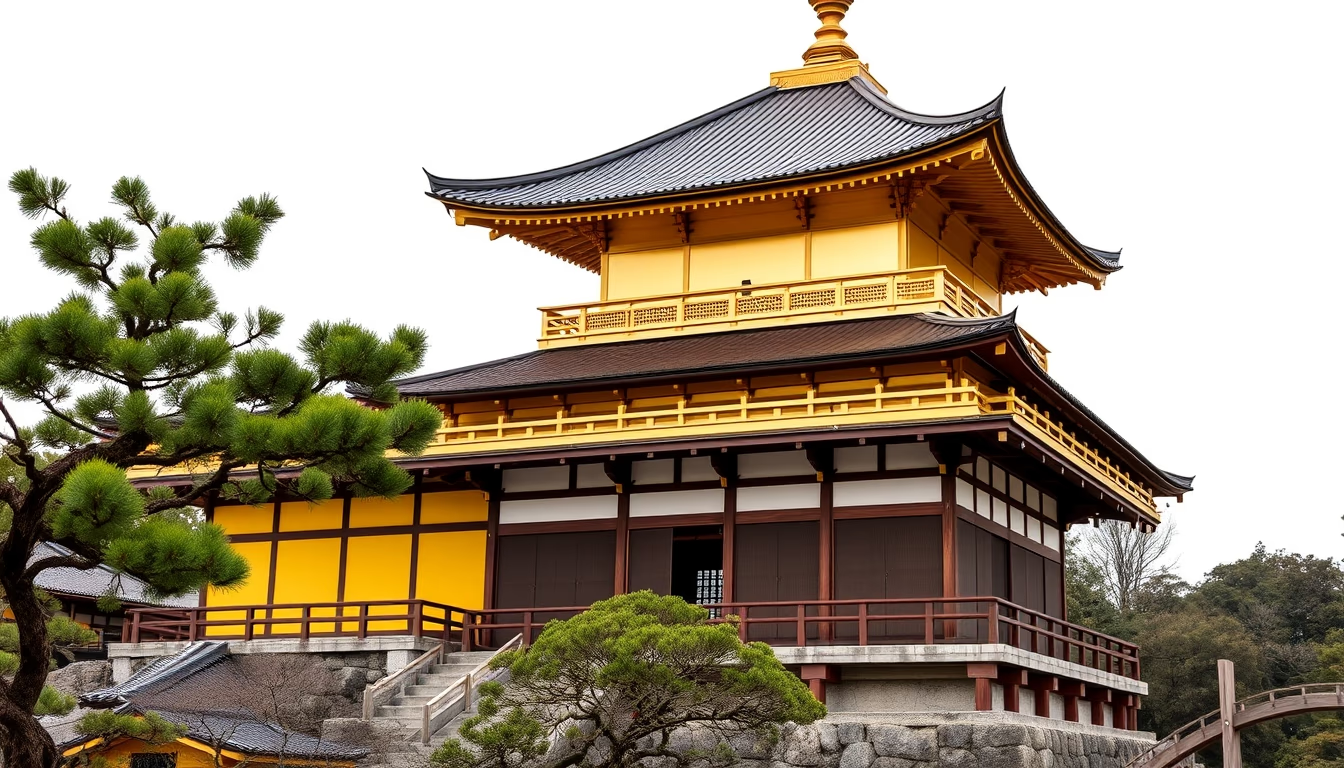
Kinkaku-ji, the Golden Pavilion, is a Zen Buddhist temple in Kyoto, Japan, entirely covered in pure gold leaf, reflected in the tranquil waters of Kyōko-chi pond.
About this subject
Kinkaku-ji, officially named Rokuon-ji, is located in Kyoto, Japan. It was originally built as a retirement villa for shogun Ashikaga Yoshimitsu in 1397. After his death, the building was converted into a Zen Buddhist temple of the Rinzai sect, as he had requested. The three-story structure is covered in pure gold leaf, a technique that symbolizes the wealth and power of the Muromachi shogunate, but also reflects the Zen aesthetic of harmony between man and nature.
The first floor, called Ho-sui-in (Dharma Water Hall), is built in the shinden-zukuri style, with wooden pillars and earthen walls, maintaining a serene atmosphere for meditation. The second floor, Chō-ondō (Hall of Sound Waves), blends samurai and Buddhist architectural elements, while the third floor, Kukkyōchō (Summit of Emptiness), adopts the Chinese Song style, topped by a pyramidal roof crowned with a golden phoenix. Each level represents a stage of life: the earthly base, the spiritual path, and enlightenment.
The temple stands on the edge of Kyōko-chi (Mirror Pond), named for the perfect reflection of the pavilion on the water. The surrounding garden is a classic example of the Muromachi period, with stones, moss, and trees carefully arranged to create a landscape inspiring contemplation. In 1950, the pavilion was tragically set on fire by a fanatical monk, an event that shocked Japan and was immortalized in Yukio Mishima's novel “The Temple of the Golden Pavilion.” The reconstruction, completed in 1955, used the same materials and techniques, and the gold leaf was reinforced with urushi lacquer for protection.
Kinkaku-ji has been a UNESCO World Heritage Site since 1994, as part of the “Historic Monuments of Ancient Kyoto.” It attracts millions of visitors annually, delighted by the sight of gold glittering under the sun or snow. The temple does not allow entry to the interior, but the external view, combined with the garden and pond, offers a unique aesthetic experience, making it one of Japan's most iconic symbols.
Frequently Asked Questions
Who built Kinkaku-ji and what was its original purpose?
Kinkaku-ji was built in 1397 by shogun Ashikaga Yoshimitsu as a retirement villa. After his death, it was converted into a Zen temple according to his will.
Was Kinkaku-ji destroyed and rebuilt?
Yes, the pavilion was burned down in 1950 by a monk and completely rebuilt in 1955, using the same original materials and techniques, including the gold leaf covering.
What does each floor of Kinkaku-ji represent?
Each floor represents a different architectural style and spiritual stage: the first floor is residential (shinden-zukuri), the second blends samurai and Buddhist elements, and the third is Chinese Song style, symbolizing enlightenment.
Direct URL
https://pub-c7d6a6ea828543ac903a74a341ccb2e1.r2.dev/imagens/kinkaku-ji-golden-pavilion-commercial-product-photography-p1.avifHow to credit
Include a visible link back to UtilizAí. Copy one of the snippets below:
<a href="https://xn--utiliza-eza.com/en/midia/imagens/kinkaku-ji-golden-pavilion-commercial-product-photography-p1">Kinkaku-ji golden pavilion</a> by <a href="https://xn--utiliza-eza.com">UtilizAí</a>, licensed under <a href="https://creativecommons.org/licenses/by/4.0/">CC BY 4.0</a>.
[Kinkaku-ji golden pavilion](https://xn--utiliza-eza.com/en/midia/imagens/kinkaku-ji-golden-pavilion-commercial-product-photography-p1) by [UtilizAí](https://xn--utiliza-eza.com), CC BY 4.0
License: CC-BY-4.0