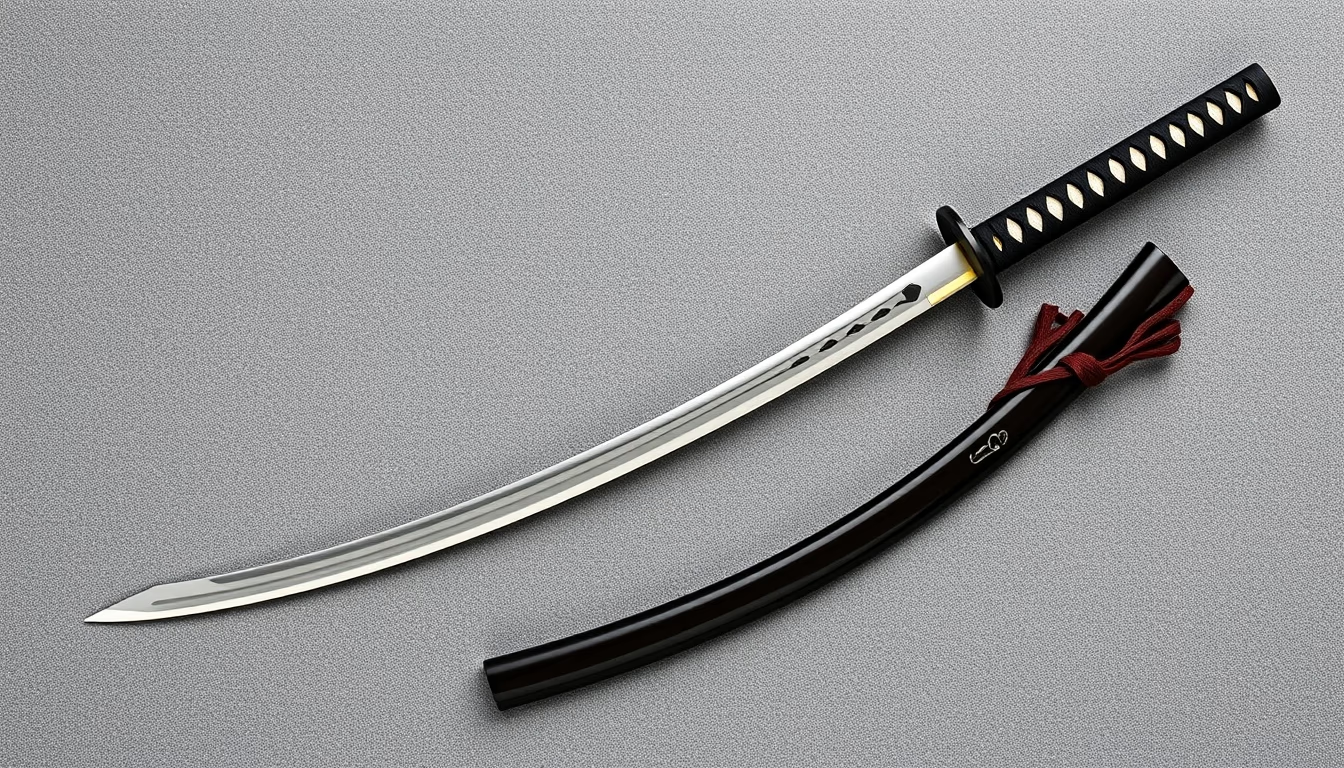
Katana japanese curved
1344×768 · AVIF · CC BY 4.0
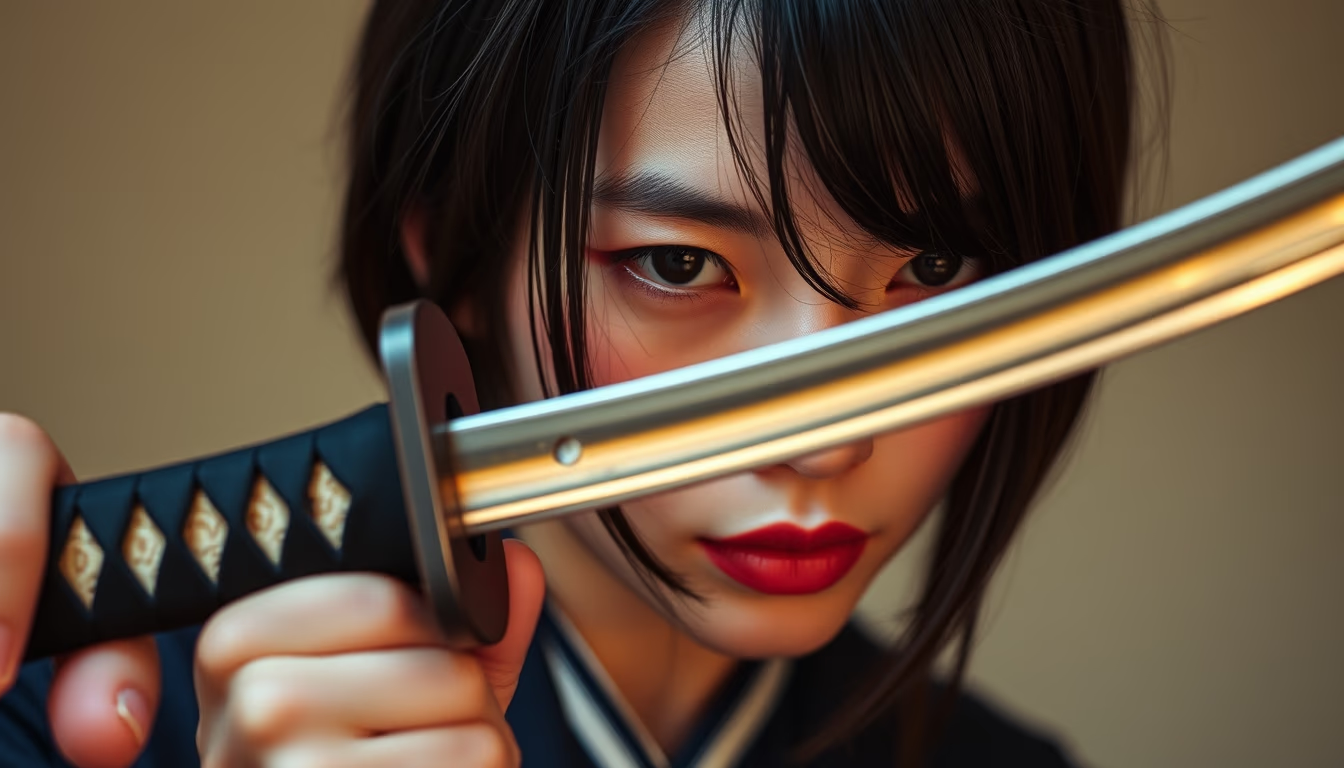
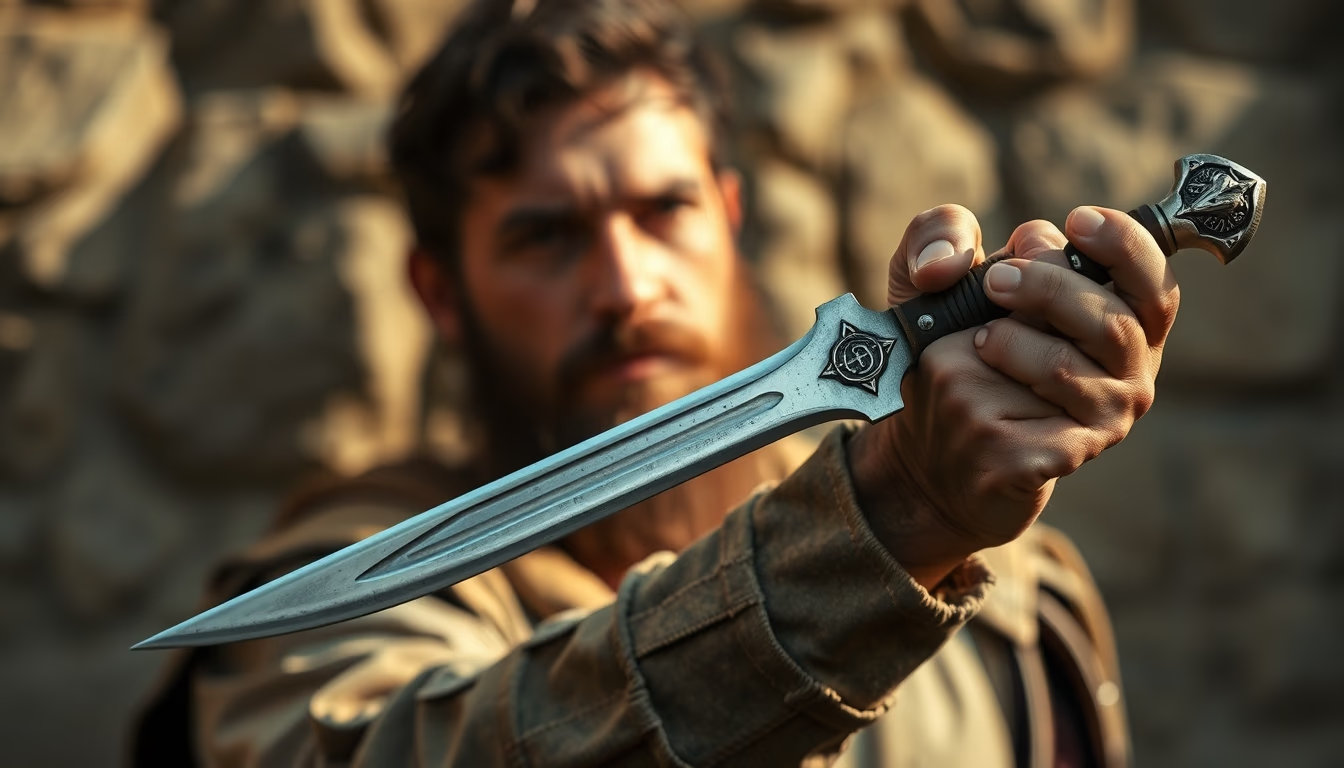
The katana, a curved Japanese sword, is an icon of samurai culture, renowned for its sharp blade and elegant design, symbolizing Japan's martial tradition.
About this subject
The katana is a Japanese sword with a curved, single-edged blade, traditionally used by samurai in feudal Japan. Its characteristic shape, with a gentle curvature (sori) and length of about 60 to 80 centimeters, was designed for swift and efficient cuts while mounted or on foot. The blade is forged from tamahagane steel, undergoing a process of folding and differential hardening that creates the temper line (hamon), resulting in an extremely hard edge and a more flexible spine to absorb shock.
Historically, the katana emerged during the Kamakura period (1185, 1333), replacing straighter swords like the tachi. It became a symbol of the samurai's status and soul, associated with the bushido code of honor and loyalty. During the Edo period (1603, 1868), katana production peaked, with schools of swordsmiths such as Bizen, Mino, and Yamato. After the abolition of the samurai class in 1876, the katana's use declined, but it remained a cultural artifact and sport in martial arts like iaido and kendo.
Today, the katana is admired worldwide for its beauty and engineering. Modern katanas are made by both traditional craftsmen (shinsakuto) and mass-produced for collectors and practitioners. The forging process was recognized as a UNESCO Intangible Cultural Heritage in 2021, highlighting the continuity of centuries-old techniques. The curvature, the smith's signature (mei), and the quality of the hamon are key factors determining the value of an antique or contemporary katana.
Frequently Asked Questions
What is the difference between a katana and a tachi?
The katana is worn with the blade facing upward in the obi (belt), while the tachi is suspended with the blade facing downward. The tachi is generally more curved and longer, used by cavalry, whereas the katana was designed for foot combat.
How is differential hardening done for a katana?
The smith coats the blade with a clay mixture, thicker on the spine and thinner on the edge. After heating, the blade is quenched in water, causing the edge to harden quickly (martensite) and the spine to cool slower, creating the curvature and the hamon.
Is the katana still used in real combat?
Modern katanas are used in martial arts like iaido (target cutting) and kendo (bamboo swords shinai), but not in actual combat. They are also collectibles and historical display pieces.
Direct URL
https://pub-c7d6a6ea828543ac903a74a341ccb2e1.r2.dev/imagens/katana-japanese-curved-lo-fi-disposable-camera-fresh14.avifHow to credit
Include a visible link back to UtilizAí. Copy one of the snippets below:
<a href="https://xn--utiliza-eza.com/en/midia/imagens/katana-japanese-curved-lo-fi-disposable-camera-fresh14">Katana japanese curved</a> by <a href="https://xn--utiliza-eza.com">UtilizAí</a>, licensed under <a href="https://creativecommons.org/licenses/by/4.0/">CC BY 4.0</a>.
[Katana japanese curved](https://xn--utiliza-eza.com/en/midia/imagens/katana-japanese-curved-lo-fi-disposable-camera-fresh14) by [UtilizAí](https://xn--utiliza-eza.com), CC BY 4.0
License: CC-BY-4.0