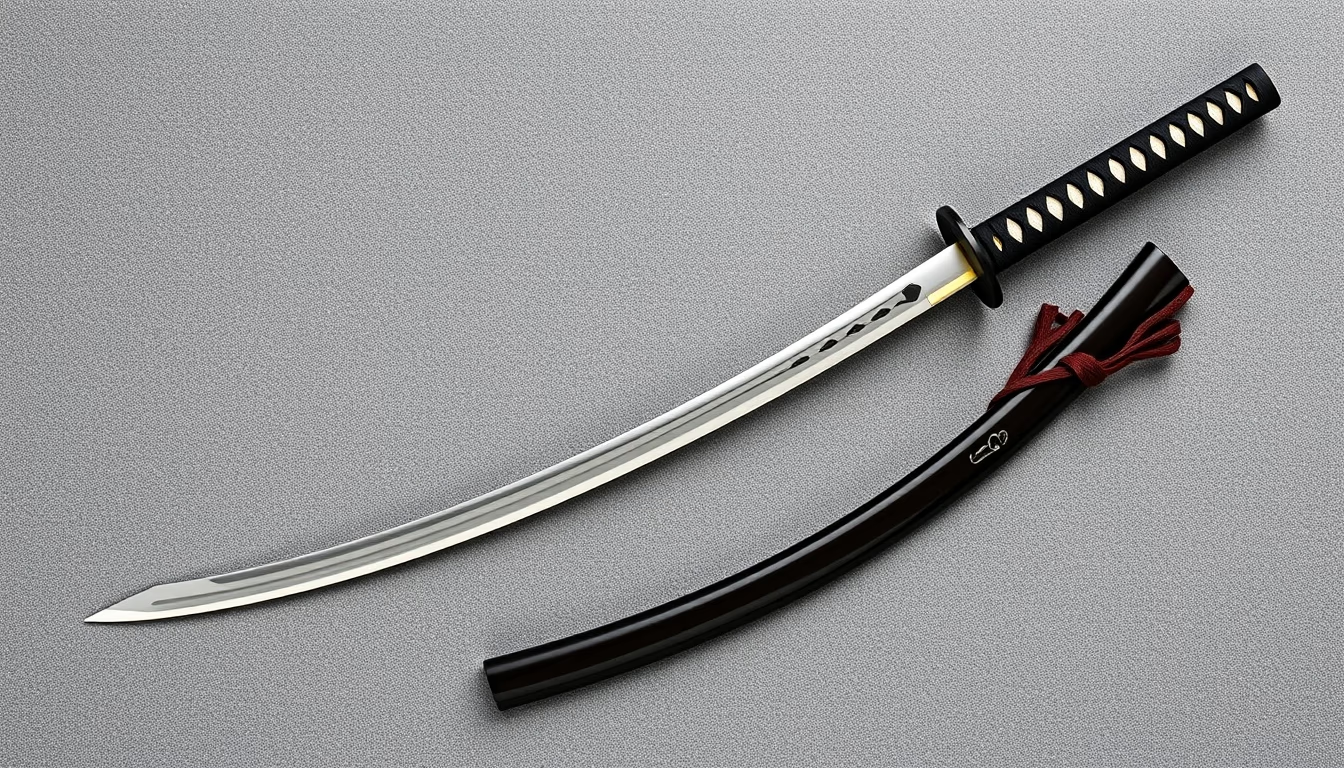
Katana japanese curved
1344×768 · AVIF · CC BY 4.0
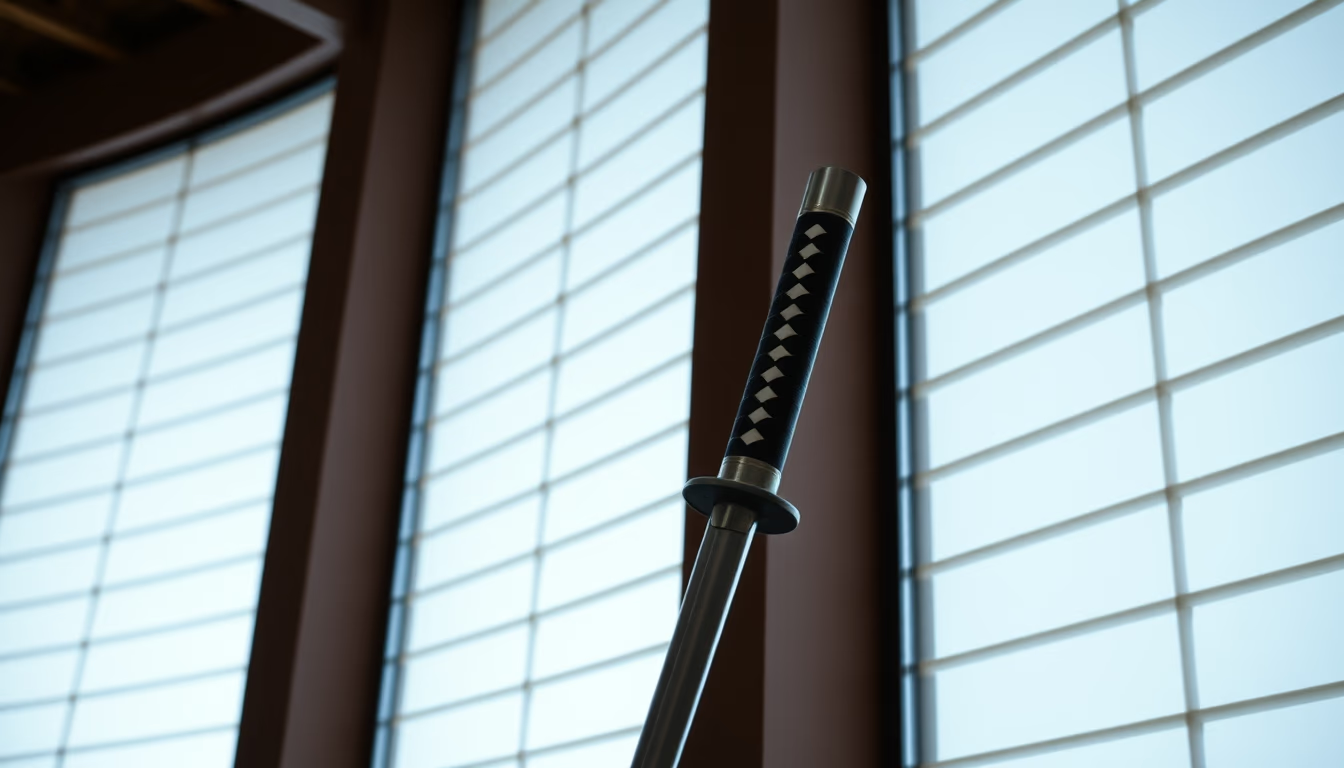
The Japanese katana is a traditional curved sword, hand-forged by master smiths over centuries.
About this subject
The katana, a Japanese long sword with a curved blade, emerged in the Kamakura period (1185, 1333) as an evolution of the earlier tachi, which was worn with the curve hanging downward. Unlike the tachi, the katana was designed to be worn with the curve facing upward, enabling faster and more lethal slashes both on horseback and on foot. Its fabrication is a ritualistic and meticulous process involving repeated folding and hammering of tamahagane steel, which purifies and distributes carbon heterogeneously. This method yields a blade with a soft core and an extremely hard edge, capable of retaining sharpness through many uses.
The distinctive curvature of the katana, known as sori, is not merely aesthetic. It results from differential heat treatment: the smith applies clay to the blade asymmetrically before quenching in water, causing the edge to contract more than the spine and thus producing the curve. This process also creates the hamon, the visible wavy pattern along the temper line, which is a key indicator of authenticity and quality. Each hamon is unique and can reveal the school or smith that forged the blade.
Culturally, the katana is far more than a weapon; it symbolizes the soul of the samurai and was regarded as an extension of his spirit. During the Edo period, only the warrior class was permitted to wear the daisho (pair of katana and wakizashi). Today, antique katanas are National Treasures in Japan, protected by strict preservation and registration laws. Practices like iaido and kendo keep the tradition of sword use alive, while collectors and enthusiasts worldwide dedicate themselves to studying and authenticating these historic blades.
Frequently Asked Questions
What is the difference between a katana and a tachi?
The main difference lies in how they are worn and the curvature. The tachi was worn with the curve downward, suspended from cords at the waist, while the katana is worn with the curve upward, thrust through the obi (sash). This reflects historical contexts: the tachi was more used by cavalry, and the katana became predominant in foot combat.
How can I identify an authentic, high-quality katana?
Examine the hamon (temper line), the presence of the smith's signature (mei) on the tang (nakago), and the natural curvature. Authentic katanas have gradual sori and are not symmetrical. Also, the blade should have no screws or welds; fixation is done with a bamboo peg (mekugi). It is advisable to consult an expert.
What does the hamon on a katana signify?
The hamon is the visible line separating the hardened edge (yakiba) from the rest of the blade. It is formed by differential heat treatment, and each smith creates unique patterns (wavy, straight, needle-like). The hamon not only beautifies the sword but also indicates its hardness and the forging tradition of the school.
Direct URL
https://pub-c7d6a6ea828543ac903a74a341ccb2e1.r2.dev/imagens/katana-japanese-curved-architectural-photography-fresh12.avifHow to credit
Include a visible link back to UtilizAí. Copy one of the snippets below:
<a href="https://xn--utiliza-eza.com/en/midia/imagens/katana-japanese-curved-architectural-photography-fresh12">Katana japanese curved</a> by <a href="https://xn--utiliza-eza.com">UtilizAí</a>, licensed under <a href="https://creativecommons.org/licenses/by/4.0/">CC BY 4.0</a>.
[Katana japanese curved](https://xn--utiliza-eza.com/en/midia/imagens/katana-japanese-curved-architectural-photography-fresh12) by [UtilizAí](https://xn--utiliza-eza.com), CC BY 4.0
License: CC-BY-4.0