Kashmir sapphire ring antique
1344×768 · AVIF · CC BY 4.0
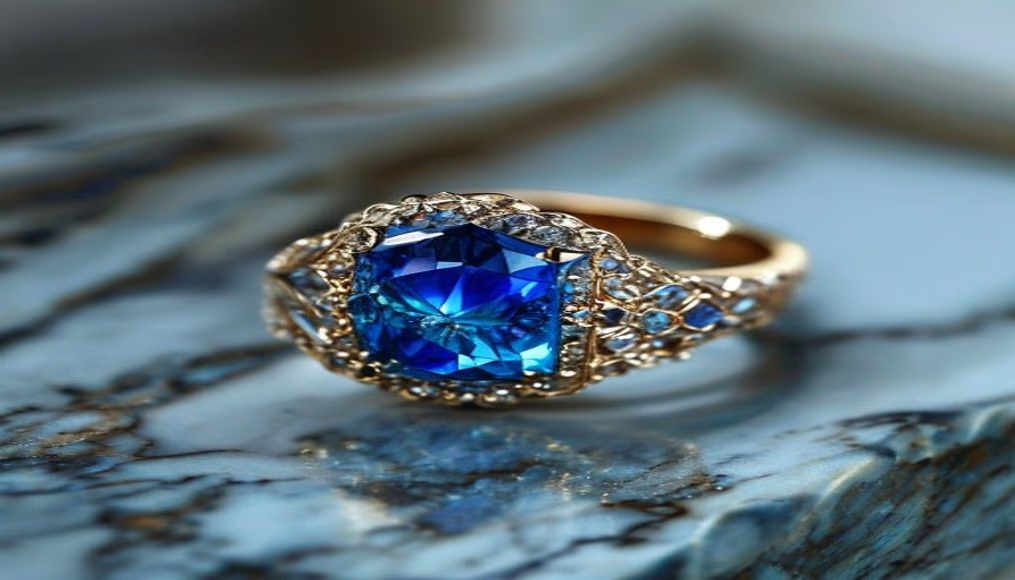
Antique ring featuring a Kashmir sapphire, one of the rarest and most coveted gems in the world, known for its velvety blue.
About this subject
Kashmir sapphires originate from a remote region in northwestern India, discovered in 1881 after a landslide. The original mine, at an altitude of about 4,500 meters, produced intensely velvety blue gems for only a few decades before being exhausted in the early 20th century. This extreme scarcity makes each authentic piece a collector's treasure, often valued higher than equivalent-sized diamonds.
The unique color of Kashmir sapphires is attributed to microscopic rutile inclusions that scatter light, creating a silky sheen. This characteristic, combined with deep blue saturation, sets them apart from sapphires from Sri Lanka or Myanmar. In antique rings like this, the gem is typically cut in a cushion or oval shape, typical of the late Victorian or Edwardian period, and set in platinum or gold with ornate details.
Provenance is crucial for authenticity: stones certified by labs such as GIA or SSEF are the only ones accepted in the high-luxury market. This ring, with its central sapphire and likely side diamonds, represents not only a personal ornament but a fragment of geological and jewelry history. Such pieces frequently appear at Sotheby's or Christie's auctions, fetching millions of dollars.
Interestingly, the term "Kashmir" has become synonymous with supreme quality among sapphires, yet less than 1% of all blue sapphires mined worldwide come from this origin. Each antique jewel with this stone is thus a relic of a depleted natural deposit, fueling its enduring fascination and value.
Frequently Asked Questions
Why are Kashmir sapphires so valuable?
Their extreme rarity, combined with a unique velvety blue color, makes them the most desired among collectors. The original mine was exhausted over a century ago, so virtually no new stones enter the market.
How to identify an authentic Kashmir sapphire?
Authenticity is confirmed by gemological labs like GIA or SSEF through inclusion analysis and spectroscopy. The velvety color and absence of heat treatment are indicators, but certification is essential.
What era is common for Kashmir sapphire rings?
Most date from the late 19th to early 20th century, coinciding with the mine's production. Edwardian and late Victorian pieces in platinum or gold are typical, often surrounded by diamonds.
Direct URL
https://pub-c7d6a6ea828543ac903a74a341ccb2e1.r2.dev/imagens/kashmir-sapphire-ring-antique-marble-surface-luxury-still-life-luxo1.avifHow to credit
Include a visible link back to UtilizAí. Copy one of the snippets below:
<a href="https://xn--utiliza-eza.com/en/midia/imagens/kashmir-sapphire-ring-antique-marble-surface-luxury-still-life-luxo1">Kashmir sapphire ring antique</a> by <a href="https://xn--utiliza-eza.com">UtilizAí</a>, licensed under <a href="https://creativecommons.org/licenses/by/4.0/">CC BY 4.0</a>.
[Kashmir sapphire ring antique](https://xn--utiliza-eza.com/en/midia/imagens/kashmir-sapphire-ring-antique-marble-surface-luxury-still-life-luxo1) by [UtilizAí](https://xn--utiliza-eza.com), CC BY 4.0
License: CC-BY-4.0