Kaaba mecca aerial
1344×768 · AVIF · CC BY 4.0
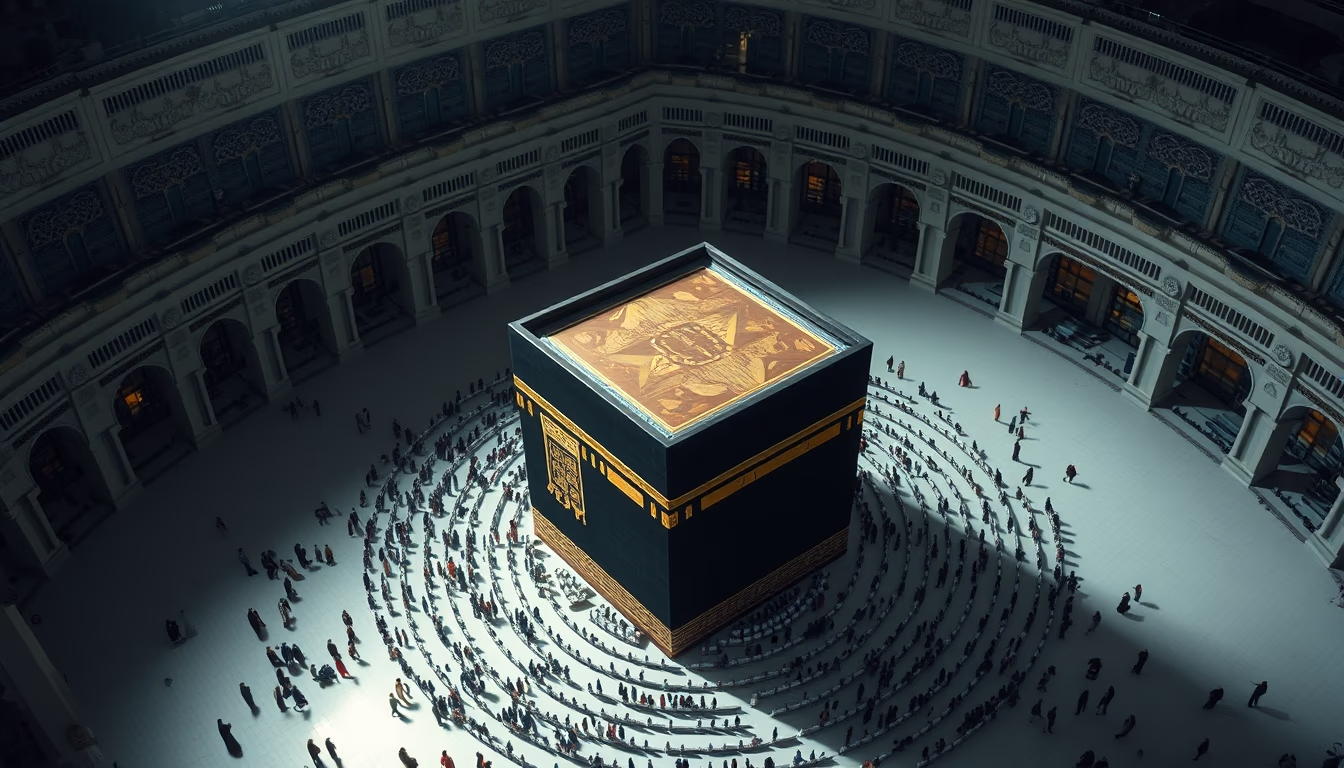
The Kaaba is the holiest site in Islam, located at the Al-Masjid al-Haram mosque in Mecca, Saudi Arabia, and serves as the focal point of the Hajj pilgrimage.
About this subject
The Kaaba, a cube-shaped structure draped in a black silk cloth called the Kiswa, lies at the heart of the Grand Mosque (Al-Masjid al-Haram) in Mecca, in the Hejaz region of Saudi Arabia. According to Islamic tradition, it was built by the prophet Abraham and his son Ishmael as the first house dedicated to the worship of one God. Muslims worldwide face the Kaaba during their daily prayers, and the annual Hajj pilgrimage, one of the Five Pillars of Islam, draws millions of faithful who circumambulate the structure seven times in a ritual known as Tawaf.
An aerial view of the Kaaba reveals the mosque's precise geometry, with its multiple wings and courtyards designed to accommodate the massive flow of pilgrims. The Kaaba itself stands about 13.1 meters tall, with sides ranging from 11.03 to 12.86 meters. Embedded in its eastern corner is the Black Stone, a meteorite or basalt stone that pilgrims kiss or salute as a symbolic act. The structure has been rebuilt several times; the current version dates from 683 CE, but the original edifice goes back to pre-Islamic times when it served as a pagan sanctuary.
The Kaaba's significance transcends religion: it is a symbol of unity for over 1.9 billion Muslims. During Hajj, the area around the mosque becomes one of the most densely populated places on Earth, with impressive security and logistics measures. In recent years, the Saudi government has undertaken expansion projects to increase capacity, reaching 2.5 million worshippers during peak pilgrimage. The aerial image thus captures not just a monument but the convergence of faith, history, and architecture on a global scale.
Frequently Asked Questions
What is the Black Stone on the Kaaba?
The Black Stone is a rock fragment, possibly a meteorite or basalt, set into the eastern corner of the Kaaba. Pilgrims try to touch or kiss it during Tawaf, following the tradition of the Prophet Muhammad.
Who can enter the Kaaba?
The Kaaba is opened only for cleaning and maintenance, and during special ceremonies. Generally, only religious authorities and royal guests are allowed inside. Ordinary pilgrims worship from outside.
Why is the Kaaba covered in black?
The black cloth, called Kiswa, is replaced annually during the Hajj. The color black has no specific theological meaning; historically, the fabric has been various colors, but black became tradition from the Abbasid period onward.
Direct URL
https://pub-c7d6a6ea828543ac903a74a341ccb2e1.r2.dev/imagens/kaaba-mecca-aerial-studio-still-life-p11.avifHow to credit
Include a visible link back to UtilizAí. Copy one of the snippets below:
<a href="https://xn--utiliza-eza.com/en/midia/imagens/kaaba-mecca-aerial-studio-still-life-p11">Kaaba mecca aerial</a> by <a href="https://xn--utiliza-eza.com">UtilizAí</a>, licensed under <a href="https://creativecommons.org/licenses/by/4.0/">CC BY 4.0</a>.
[Kaaba mecca aerial](https://xn--utiliza-eza.com/en/midia/imagens/kaaba-mecca-aerial-studio-still-life-p11) by [UtilizAí](https://xn--utiliza-eza.com), CC BY 4.0
License: CC-BY-4.0