Jellyfish glowing in dark
1344×768 · AVIF · CC BY 4.0
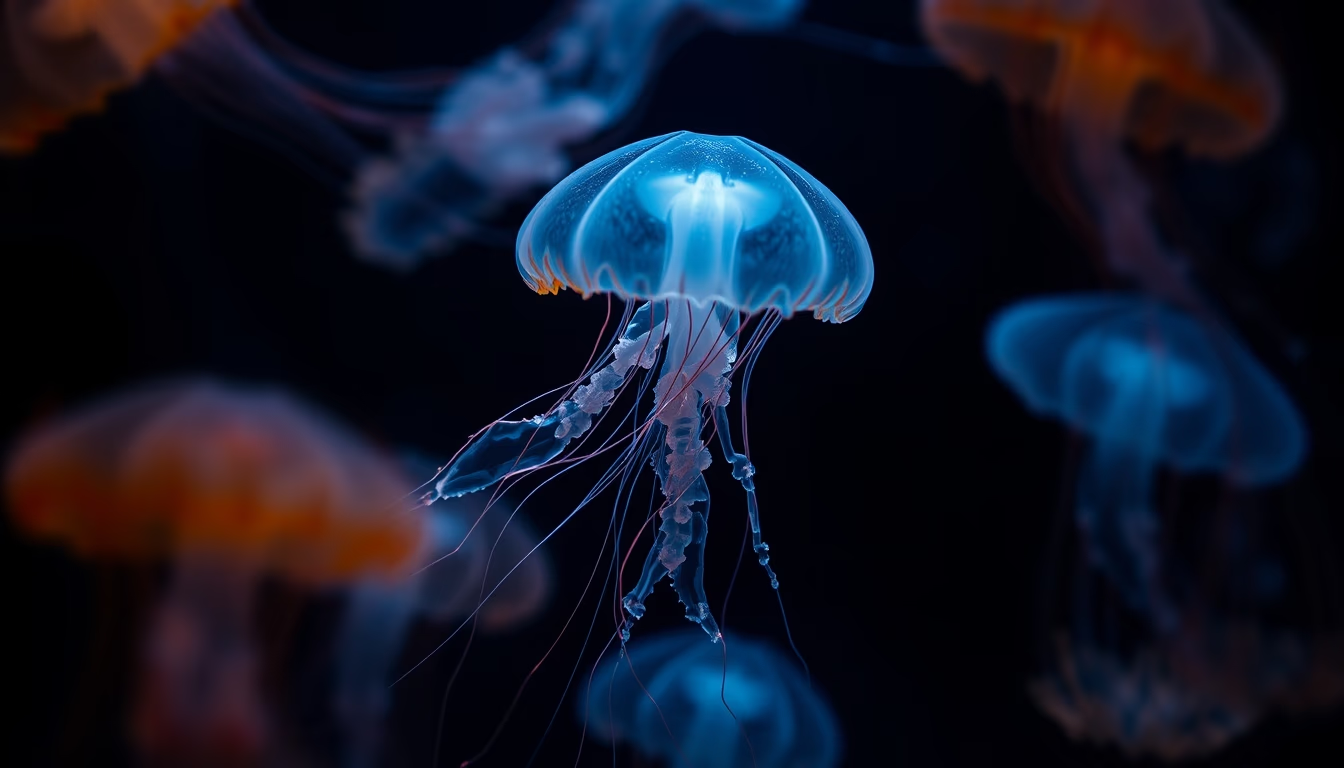
The bioluminescence of deep-sea jellyfish in darkness highlights an ecosystem under threat from climate change.
About this subject
Bioluminescent jellyfish, such as Atolla wyvillei, emit blue-violet light through chemical reactions in light-producing cells called photophores. This phenomenon serves both to attract prey and to signal predators of their presence. In depths exceeding 500 meters, where sunlight cannot penetrate, bioluminescence is a critical survival mechanism. Studies show that up to 75% of deep-sea species possess some form of light emission capability.
The emission of light in specific patterns, such as the rhythmic pulses observed in some species, also functions as communication between individuals or disorientation of predators. Along Japan's coast, the Pelagia noctiluca jellyfish is renowned for creating "light rains" during breeding seasons. These luminous particles can travel kilometers, affecting coastal ecosystem productivity.
Bioluminescence has inspired scientific advances like fluorescence techniques in biomedical research. However, changes in ocean currents and microplastic pollution are reducing habitable areas for these creatures. A 2022 UN report noted a 40% increase in invasive jellyfish species in temperate regions, linked to global warming.
Frequently Asked Questions
How do bioluminescent jellyfish produce light?
They use cells called photophores containing luciferin (an organic molecule) and luciferase (an enzyme). When luciferin reacts with oxygen in the presence of luciferase, it emits light without generating heat.
Which jellyfish species is most known for bioluminescence?
The Atolla wyvillei is famous for its pulsating light patterns, commonly observed along the northern Pacific coast.
Does bioluminescence affect marine ecosystems?
Yes, the light emitted by jellyfish can alter food chains by attracting planktonic organisms and influencing species distribution in deep waters.
Direct URL
https://pub-c7d6a6ea828543ac903a74a341ccb2e1.r2.dev/imagens/jellyfish-glowing-in-dark-magazine-editorial-v8.avifHow to credit
Include a visible link back to UtilizAí. Copy one of the snippets below:
<a href="https://xn--utiliza-eza.com/en/midia/imagens/jellyfish-glowing-in-dark-magazine-editorial-v8">Jellyfish glowing in dark</a> by <a href="https://xn--utiliza-eza.com">UtilizAí</a>, licensed under <a href="https://creativecommons.org/licenses/by/4.0/">CC BY 4.0</a>.
[Jellyfish glowing in dark](https://xn--utiliza-eza.com/en/midia/imagens/jellyfish-glowing-in-dark-magazine-editorial-v8) by [UtilizAí](https://xn--utiliza-eza.com), CC BY 4.0
License: CC-BY-4.0