Jazz double bass
1344×768 · AVIF · CC BY 4.0
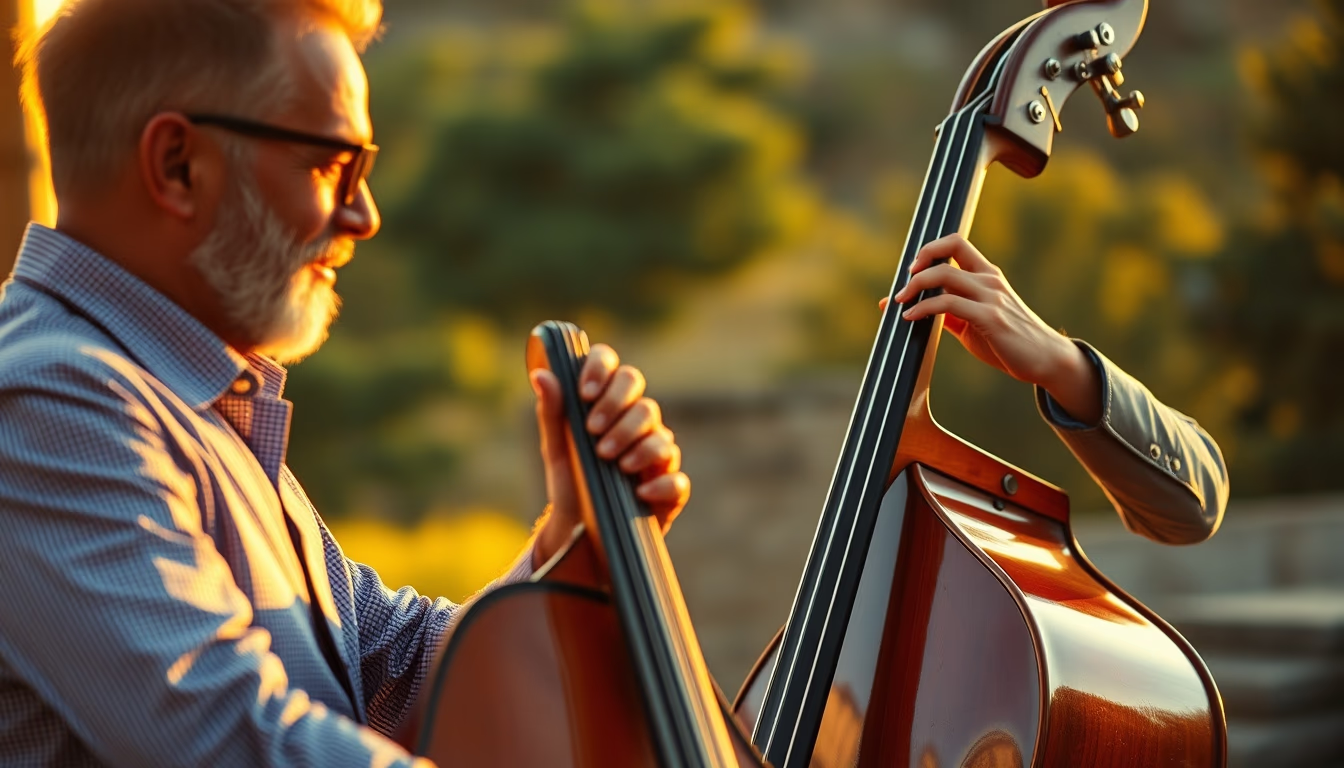
The acoustic double bass is a cornerstone of jazz, providing harmonic foundation and rhythmic pulse with its deep, resonant tone.
About this subject
The acoustic double bass, also known as upright bass, is a string instrument played with a bow (arco) or plucked (pizzicato). It is the largest and lowest-pitched instrument in the violin family, typically tuned in fourths (E, A, D, G). Its deep, woody tone is the backbone of jazz ensembles, providing both harmonic support and rhythmic momentum.
Jazz double bass evolved from a timekeeping role in early New Orleans jazz (early 1900s) to a soloistic voice in the hands of pioneers like Jimmy Blanton (Duke Ellington's bassist), who introduced melodic walking lines and bowed solos. Later, Charles Mingus blended classical technique, blues, and gospel into his compositions, while Paul Chambers defined the hard bop groove with his impeccable time feel. Other greats include Scott LaFaro, who revolutionized free interaction with the piano trio, and Ron Carter, whose versatility made him a staple on hundreds of classic Blue Note records.
Construction involves hand-carved backs and tops from spruce and maple, with ebony fingerboards. The full body without amplified pickup gives a warm, acoustic sound that fills small clubs but can be challenging in large halls. In jazz, the bassist often plays a walking bass line, a quarter-note pattern that outlines chord changes, as heard in Miles Davis's "So What" (1959) or John Coltrane's "Giant Steps" (1960).
The instrument also thrives in other genres: from rockabilly slap bass (e.g., Brian Setzer's Stray Cats) to classical orchestral works. Its unique timbre means that even a simple pedal tone can create deep emotional resonance, making the double bass an irreplaceable component of jazz's expressive vocabulary.
Frequently Asked Questions
What is the difference between an acoustic double bass and an electric bass in jazz?
The acoustic double bass relies on its wooden body to amplify the strings, producing a warm, complex tone ideal for jazz. The electric bass is smaller, more portable, and uses magnetic pickups for a more direct sound. In jazz, the upright is favored for its natural timbre and bowing capabilities.
What are the main playing techniques for jazz double bass?
Pizzicato (plucking the strings) is common for walking bass lines and grooves. Arco (using the bow) allows for sustained, singing tones and is often used in solos or slower ballads. Slap bass (percussive technique) is rare in mainstream jazz but appears in some modern contexts.
Who is the most influential jazz double bassist?
Charles Mingus is widely considered a transformative figure, blending technical mastery with profound emotional expression and complex compositions. Other legends include Ray Brown, Paul Chambers, Ron Carter, and Scott LaFaro, each reshaping the bass's role in jazz.
Direct URL
https://pub-c7d6a6ea828543ac903a74a341ccb2e1.r2.dev/imagens/jazz-double-bass-travel-photography-p11.avifHow to credit
Include a visible link back to UtilizAí. Copy one of the snippets below:
<a href="https://xn--utiliza-eza.com/en/midia/imagens/jazz-double-bass-travel-photography-p11">Jazz double bass</a> by <a href="https://xn--utiliza-eza.com">UtilizAí</a>, licensed under <a href="https://creativecommons.org/licenses/by/4.0/">CC BY 4.0</a>.
[Jazz double bass](https://xn--utiliza-eza.com/en/midia/imagens/jazz-double-bass-travel-photography-p11) by [UtilizAí](https://xn--utiliza-eza.com), CC BY 4.0
License: CC-BY-4.0