Jazz double bass
1344×768 · AVIF · CC BY 4.0
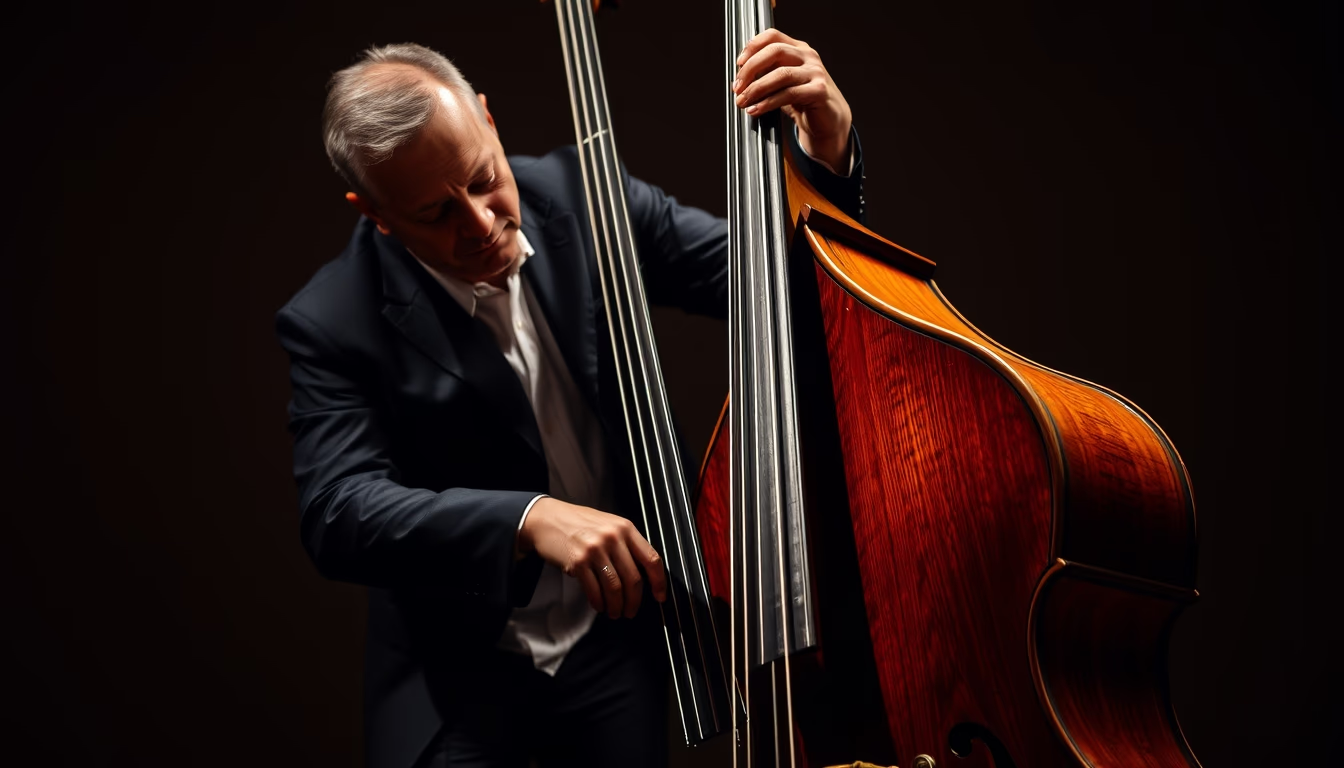
The double bass is the rhythmic and harmonic foundation of jazz, responsible for the walking bass line that drives swing.
About this subject
The double bass, also called the acoustic bass or upright bass, is a bowed string instrument that plays a central role in jazz music. Unlike the electric bass, its hollow body and low strings produce a warm, resonant tone ideal for walking bass lines, rhythmic patterns that connect chords and maintain the pulse of swing. In jazz, the double bass not only keeps time but also dialogues with the drummer and soloists, creating a dynamic foundation.
The history of the double bass in jazz dates back to early 20th-century New Orleans, where string instruments like the cello and double bass were used in ragtime and Dixieland bands. As jazz evolved into swing and bebop, the double bass gained prominence as a solo instrument, thanks to musicians like Charles Mingus and Ray Brown. Mingus, in particular, expanded the instrument's technical and expressive possibilities, incorporating extended techniques and complex compositions. In the 1940s and 1950s, the double bass became a staple in jazz quintets, alongside piano, drums, saxophone, and trumpet.
The construction of the double bass requires specific woods, such as maple and spruce, and its long fingerboard allows for deep low notes. Techniques like pizzicato (plucking) and arco (using a horsehair bow) are employed for different textures: pizzicato produces a dry, percussive walking line; arco yields a sustained, lyrical sound, common in ballads and improvisations. In contemporary jazz, players like Christian McBride and Linda Oh continue to innovate, blending tradition with influences from other genres. The double bass also appears in jazz fusion, Brazilian music, and classical contexts, showcasing its versatility.
A curious fact: the double bass is one of the few orchestral instruments that never underwent standardization in size, leading to variations in scale length and tone among luthiers. Additionally, the acoustic bass is often mistaken for the cello, but its tuning (in fourths: E, A, D, G) and size set it apart. In jazz, the instrument is almost always amplified via a piezoelectric pickup or microphone, as its acoustic projection is limited in large venues. This technological adaptation has allowed the double bass to maintain its leading role in live performances and recordings.
Frequently Asked Questions
What is the difference between an acoustic double bass and an electric bass in jazz?
The acoustic double bass has a hollow body and gut or steel strings, producing a natural, full tone, while the electric bass is solid and amplified. In traditional jazz, the double bass is preferred for its organic sound and ability to produce walking bass with subtle nuances.
What is 'walking bass' in jazz?
Walking bass is a continuous bass line, usually in quarter notes, that moves chromatically or by arpeggios, connecting the chords of the harmonic progression. It is the rhythmic foundation of swing and requires harmonic knowledge and a strong sense of pulse from the bassist.
Who are the greatest double bassists in jazz history?
Among the most influential are Charles Mingus, Ray Brown, Paul Chambers, Ron Carter, and more recently Christian McBride. Each contributed technical and stylistic innovations, expanding the instrument's role in jazz.
Direct URL
https://pub-c7d6a6ea828543ac903a74a341ccb2e1.r2.dev/imagens/jazz-double-bass-magazine-editorial-p9.avifHow to credit
Include a visible link back to UtilizAí. Copy one of the snippets below:
<a href="https://xn--utiliza-eza.com/en/midia/imagens/jazz-double-bass-magazine-editorial-p9">Jazz double bass</a> by <a href="https://xn--utiliza-eza.com">UtilizAí</a>, licensed under <a href="https://creativecommons.org/licenses/by/4.0/">CC BY 4.0</a>.
[Jazz double bass](https://xn--utiliza-eza.com/en/midia/imagens/jazz-double-bass-magazine-editorial-p9) by [UtilizAí](https://xn--utiliza-eza.com), CC BY 4.0
License: CC-BY-4.0