Jazz double bass
1344×768 · AVIF · CC BY 4.0
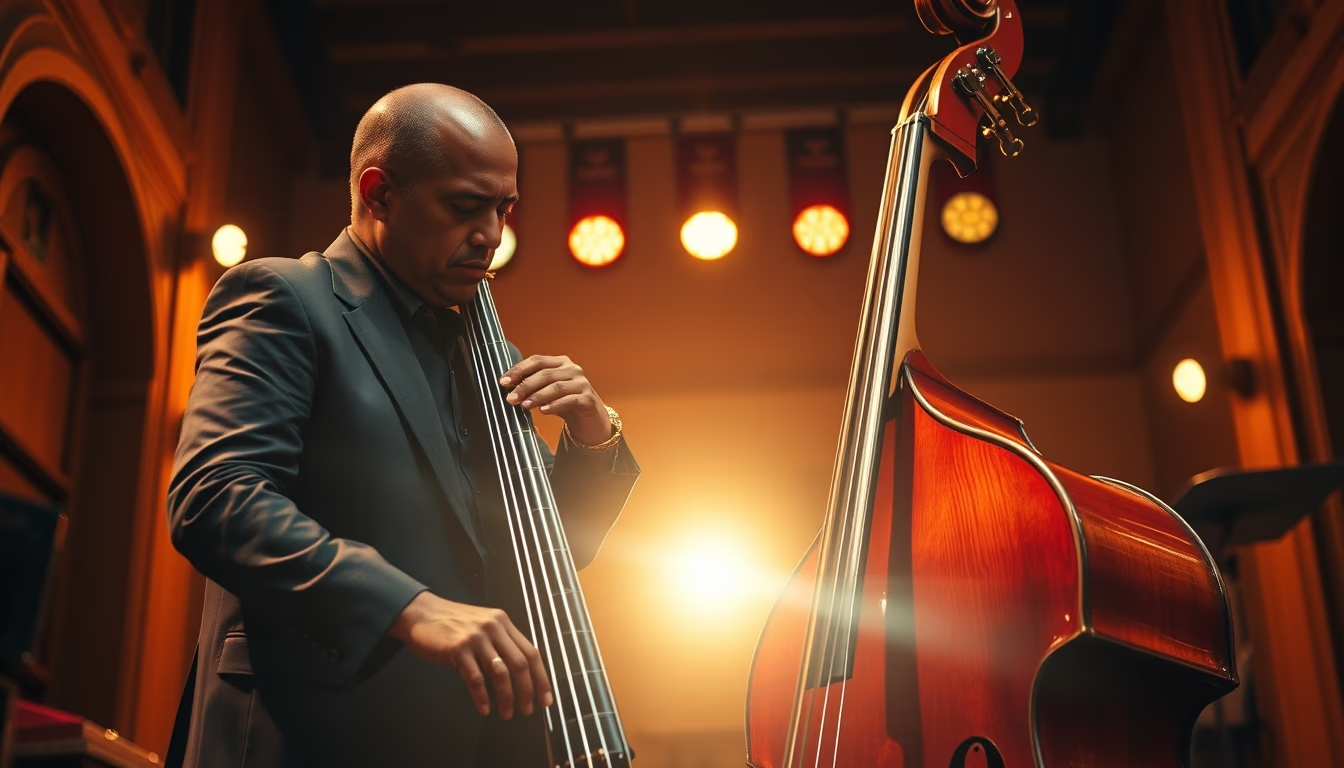
The double bass is the backbone of jazz, providing the rhythmic and harmonic foundation that has defined the genre since its origins in New Orleans.
About this subject
The double bass, also known as the acoustic bass, is a bowed string instrument that plays a central role in jazz. Unlike the cello, it is tuned in fourths (E, A, D, G) and produces a deep, rich tone that supports the harmony and rhythm of the ensemble. In jazz, the double bass evolved from a purely rhythmic function in early Dixieland to a prominent solo instrument starting with bebop.
The playing techniques in jazz include pizzicato (plucking) and arco (bowing). Musicians like Charles Mingus, Paul Chambers, and Ray Brown expanded the instrument's possibilities, using it for complex bass lines and melodic improvisation. In Brazil, the double bass is essential in choro and bossa nova, with notable players such as Zé Menezes and Jorge Degas.
Historically, the double bass replaced the sousaphone in jazz bands around 1920, offering greater agility and a cleaner sound. From the 1950s, the electric bass began to complement or replace the double bass in some contexts, but the acoustic instrument maintains its prestige in traditional and contemporary styles. The handcrafted construction of the double bass, typically in maple and spruce, directly influences its sound.
For the record: the double bass is one of the oldest instruments still in use in jazz, originating from the Renaissance violone. Its presence on iconic recordings such as Miles Davis's "Kind of Blue" demonstrates its timeless importance in improvised music.
Frequently Asked Questions
What is the difference between the double bass and the electric bass in jazz?
The double bass produces sound through vibration of strings over a resonant body, while the electric bass uses pickups and amplification. In jazz, the double bass is preferred for its natural timbre and versatility in pizzicato and arco.
Who are the main double bass players in Brazilian jazz?
Notable names include Zé Menezes, Jorge Degas, Arismar do Espírito Santo, and Sizão Machado. They helped establish the instrument in choro, samba, and bossa nova.
How is the double bass tuned in jazz?
The double bass is tuned in fourths: E (lowest string), A, D, G, one octave below the cello. This tuning facilitates playing bass lines and chords.
Direct URL
https://pub-c7d6a6ea828543ac903a74a341ccb2e1.r2.dev/imagens/jazz-double-bass-cinematic-wide-shot-p3.avifHow to credit
Include a visible link back to UtilizAí. Copy one of the snippets below:
<a href="https://xn--utiliza-eza.com/en/midia/imagens/jazz-double-bass-cinematic-wide-shot-p3">Jazz double bass</a> by <a href="https://xn--utiliza-eza.com">UtilizAí</a>, licensed under <a href="https://creativecommons.org/licenses/by/4.0/">CC BY 4.0</a>.
[Jazz double bass](https://xn--utiliza-eza.com/en/midia/imagens/jazz-double-bass-cinematic-wide-shot-p3) by [UtilizAí](https://xn--utiliza-eza.com), CC BY 4.0
License: CC-BY-4.0