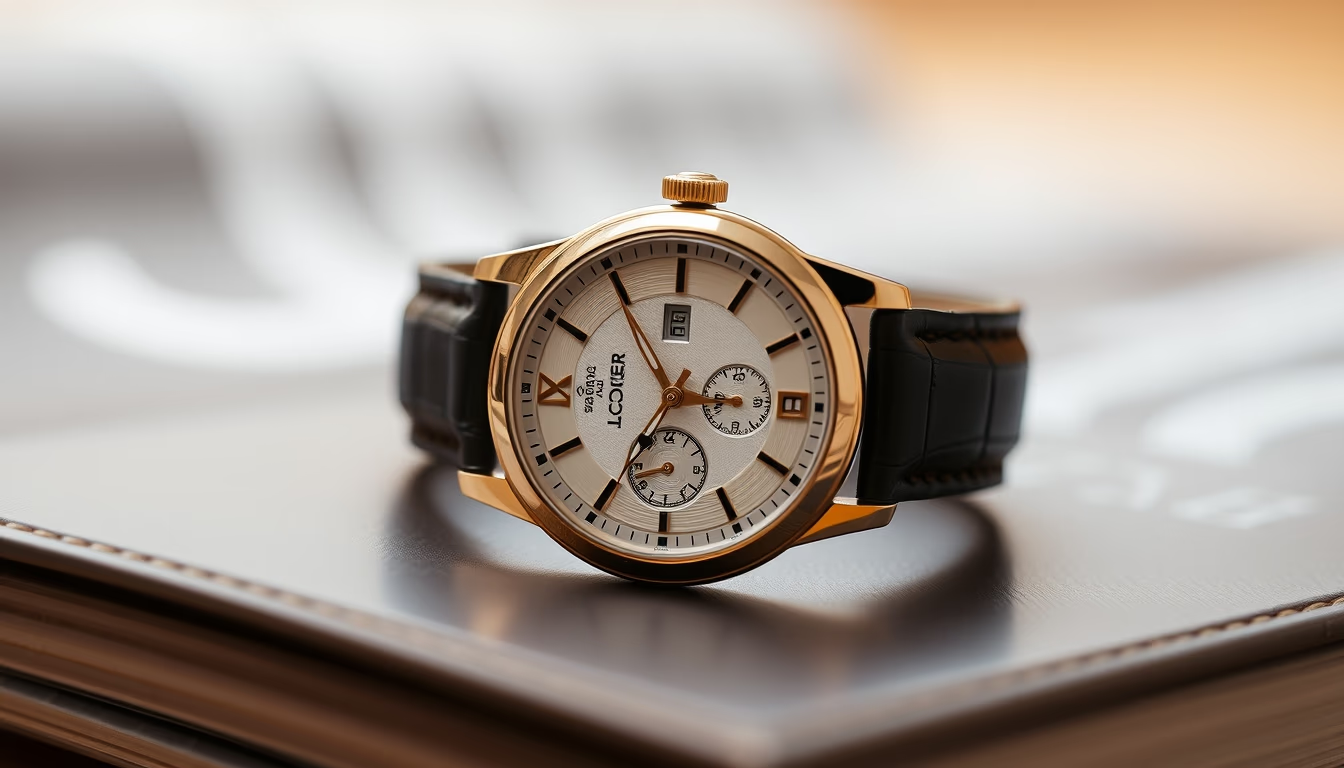
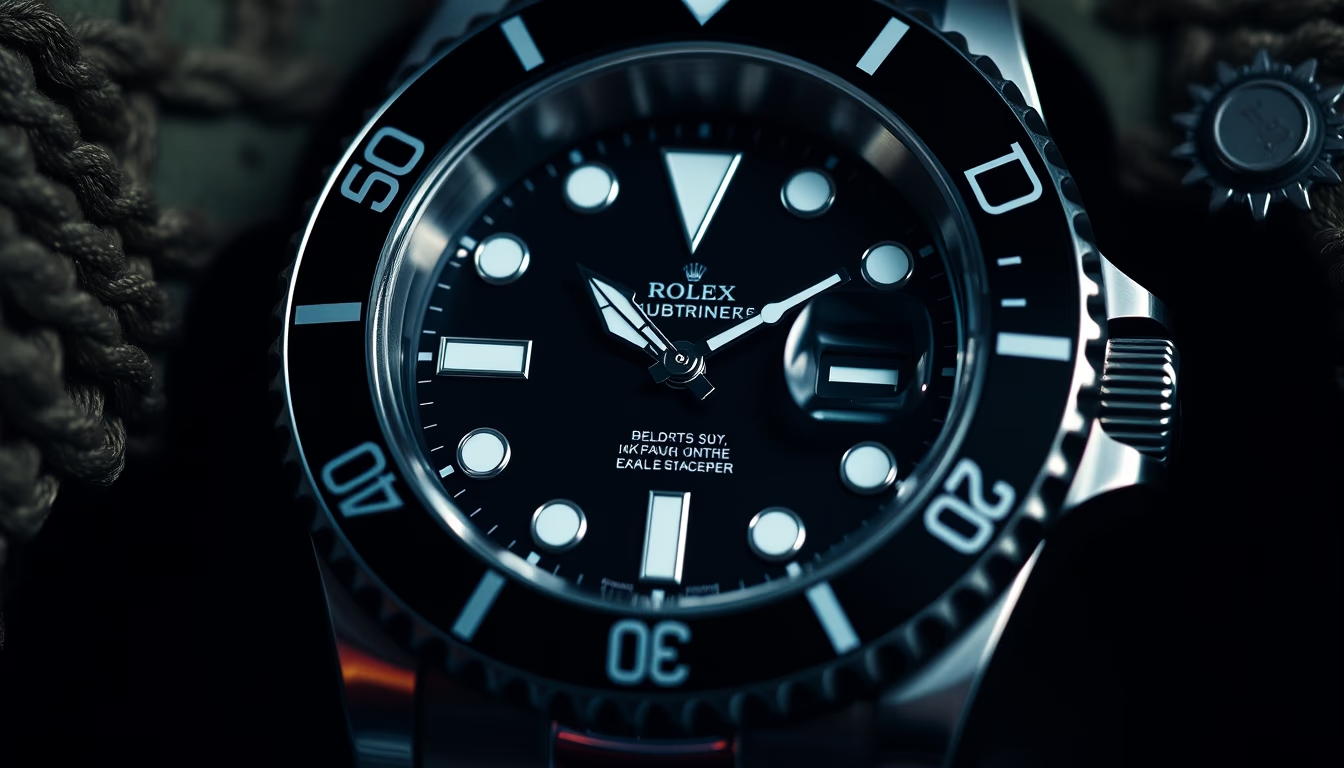
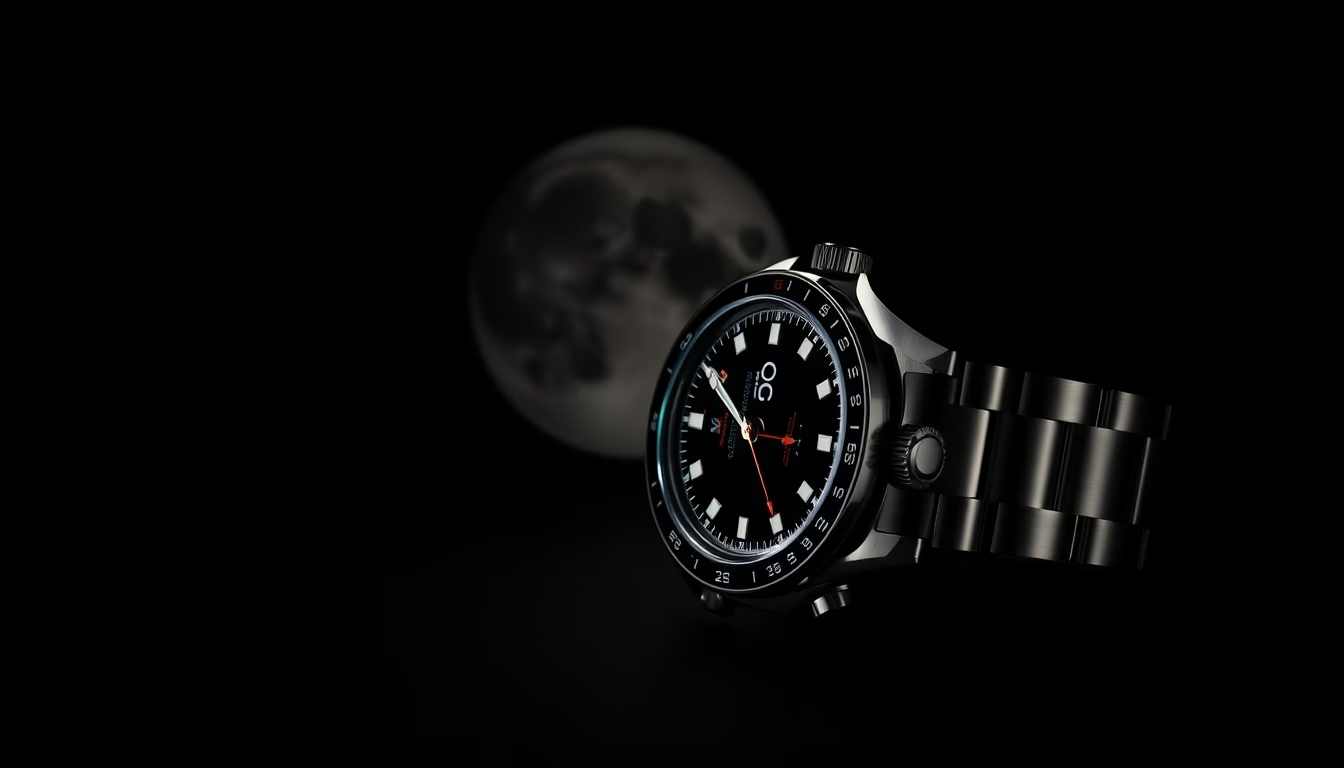
Jaeger lecoultre reverso
1344×768 · AVIF · CC BY 4.0

The Jaeger-LeCoultre Reverso is an iconic watch since 1931, renowned for its reversible case designed to protect the crystal during polo matches.
About this subject
The Jaeger-LeCoultre Reverso was introduced in 1931 as a response to a challenge from British officers stationed in India: to create a watch that could withstand the impacts of polo matches. The solution came from French designer René-Alfred Chauvot, who patented a sliding mechanism that allows the case to flip, exposing the metal back and protecting the crystal. This Art Deco design, with straight lines and a rectangular dial, became an enduring classic.
Manufactured in Le Sentier, Switzerland, the Reverso is one of the few reversible-case watches still in continuous production. Over the decades, Jaeger-LeCoultre expanded the line with complications such as chronographs, tourbillons, and skeletonized dials, as well as artistic collaborations that allow personalization of the reverse side with engravings or enamels. The original model used the manual-wind Jaeger-LeCoultre caliber 822, while modern versions include automatic movements and complications like the perpetual calendar.
Culturally, the Reverso has transcended sport to become a symbol of elegance and engineering. It has been worn by figures such as the Duke of Windsor and actor Steve McQueen. In 2011, the brand celebrated the model's 80th anniversary with limited editions, including the Reverso à Éclat, which highlights the movement through the dial. The watch is also renowned for its versatility: it can be worn with the dial facing inward or outward, and even with interchangeable straps.
Interestingly, the Reverso inspired other manufacturers to create reversible designs, but few achieved the same recognition. The reversing mechanism consists of a stainless steel framework that slides on rails, allowing the case to rotate 180 degrees. Water resistance varies by model, but many offer up to 30 meters. With over 90 years of history, the Reverso remains one of the most iconic watches in Swiss horology.
Frequently Asked Questions
Why was the Jaeger-LeCoultre Reverso created?
It was created in 1931 to meet the needs of British officers playing polo in India: a watch that wouldn't break from the impacts of the sport. The solution was a case that slides and flips, protecting the crystal.
Is the Reverso movement automatic or manual?
Original models used manual winding. Today, the line includes both automatic and manual versions, depending on the complication. For example, the Reverso Classic uses the manual caliber 822, while the Reverso Tribute Chronograph uses the automatic 860.
Can the back of the Reverso be engraved?
Yes, one of its distinctive features is the ability to personalize the metal back with engravings, enamels, or even paintings. Jaeger-LeCoultre offers customization services, including monograms and artwork.
Direct URL
https://pub-c7d6a6ea828543ac903a74a341ccb2e1.r2.dev/imagens/jaeger-lecoultre-reverso-documentary-nature-style-fresh8.avifHow to credit
Include a visible link back to UtilizAí. Copy one of the snippets below:
<a href="https://xn--utiliza-eza.com/en/midia/imagens/jaeger-lecoultre-reverso-documentary-nature-style-fresh8">Jaeger lecoultre reverso</a> by <a href="https://xn--utiliza-eza.com">UtilizAí</a>, licensed under <a href="https://creativecommons.org/licenses/by/4.0/">CC BY 4.0</a>.
[Jaeger lecoultre reverso](https://xn--utiliza-eza.com/en/midia/imagens/jaeger-lecoultre-reverso-documentary-nature-style-fresh8) by [UtilizAí](https://xn--utiliza-eza.com), CC BY 4.0
License: CC-BY-4.0