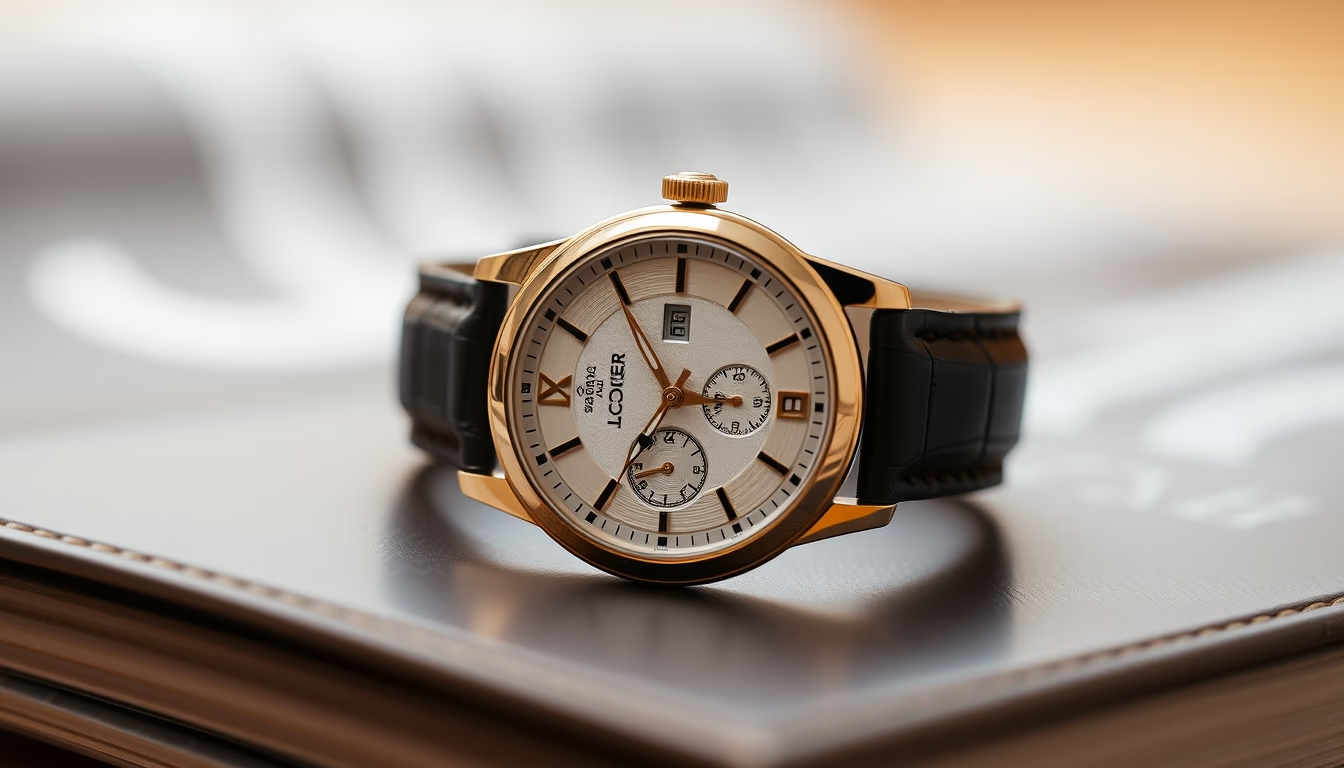
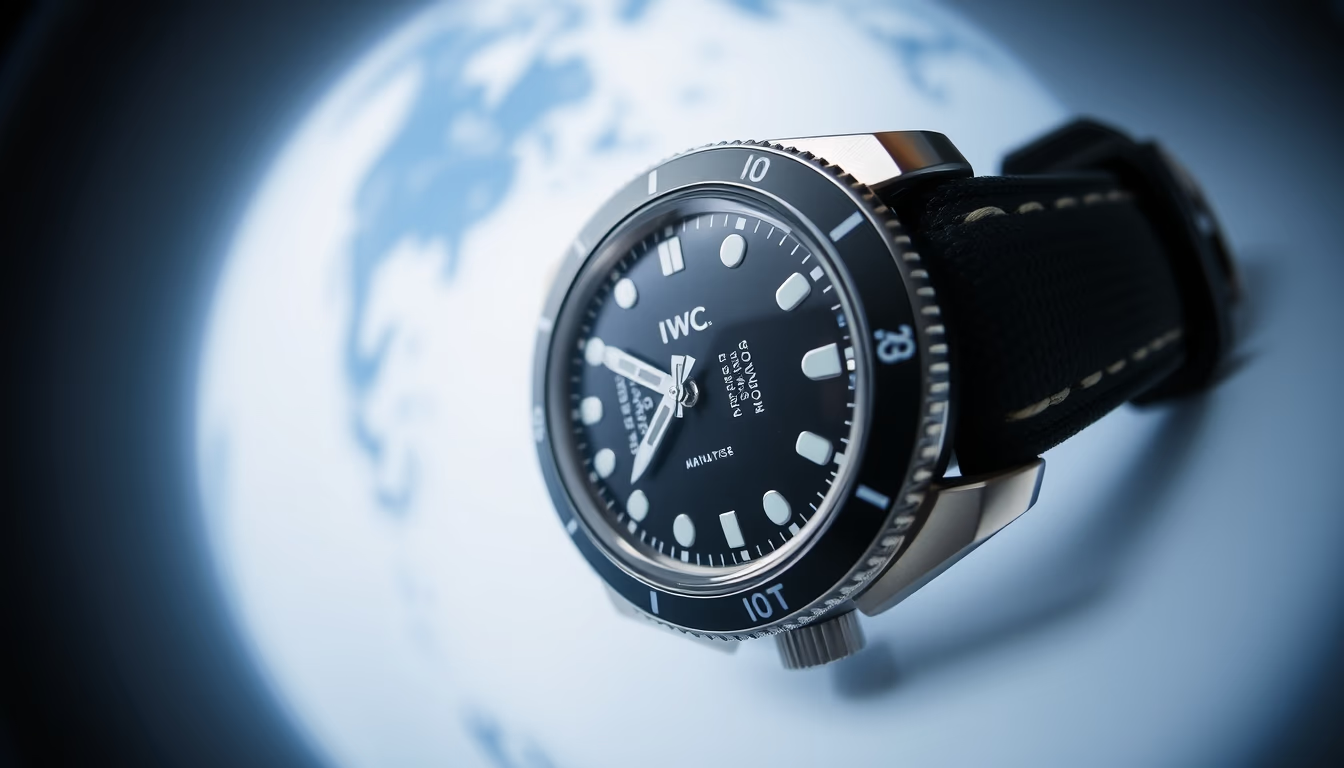
Iwc pilot watch
1344×768 · AVIF · CC BY 4.0

The IWC Pilot watch exemplifies Swiss watchmaking tradition with functional design for aviators, combining precision and robustness since the 1930s.
About this subject
The IWC Pilot watch line originated in the 1930s when the Swiss brand responded to military demands for precise, legible chronographs. The most iconic model is the Mark XI, supplied to the British Royal Air Force (RAF) from 1949. These watches were designed for harsh conditions, with high-contrast dials, oversized crowns for gloved use, and large cases protecting the movement against shocks and magnetic fields.
Key models include the Big Pilot, Mark XVIII, and Spitfire. The Big Pilot, originally launched in 1940 for Luftwaffe aviators, features an easily readable dial and a seven-day power reserve. The Spitfire line honors British WWII fighter planes with brushed steel finishes and vintage details. All modern versions retain the instrument DNA: luminous hands, sapphire crystal, and cases in stainless steel, titanium, or ceramic.
Technically, IWC invests in high-performance manufacture movements. The caliber 52010, for instance, offers 168 hours of power reserve (seven days) using two spring barrels. The caliber 32111 powers automatic three-hand models. To resist magnetic fields, a common issue in cockpits, many Pilot Watches use an inner soft-iron cage that protects the movement without compromising aesthetics.
The IWC Pilot legacy goes beyond its original function. Collectors and enthusiasts value these watches for their rugged design, military history, and certified precision. The brand maintains collaborations with the U.S. Navy (Top Gun) and the Antoine de Saint-Exupéry Foundation, issuing limited editions that reinforce the link between aviation and luxury. Today, the IWC Pilot watch stands as a tool watch that evolved into a style icon without losing its functional essence.
Frequently Asked Questions
What characterizes an IWC Pilot watch?
IWC Pilot watches are recognized by their instrument design: high-contrast dials, oversized crowns for gloved use, robust cases, and movements protected against magnetic fields. They are tool watches prioritizing legibility and durability.
What is the historical significance of the Mark XI?
The Mark XI was supplied to the British Royal Air Force from 1949 and became a benchmark for pilot watches. Its chronometric precision, shock resistance, and functional design set the standards for the entire aviation watch category.
How is the movement of IWC Pilot watches protected against magnetic fields?
IWC uses an inner soft-iron cage that surrounds the movement. This shield diverts magnetic fields without affecting operation, ensuring accuracy even in cockpits with electronic equipment.
Direct URL
https://pub-c7d6a6ea828543ac903a74a341ccb2e1.r2.dev/imagens/iwc-pilot-watch-fine-art-photography-fresh6.avifHow to credit
Include a visible link back to UtilizAí. Copy one of the snippets below:
<a href="https://xn--utiliza-eza.com/en/midia/imagens/iwc-pilot-watch-fine-art-photography-fresh6">Iwc pilot watch</a> by <a href="https://xn--utiliza-eza.com">UtilizAí</a>, licensed under <a href="https://creativecommons.org/licenses/by/4.0/">CC BY 4.0</a>.
[Iwc pilot watch](https://xn--utiliza-eza.com/en/midia/imagens/iwc-pilot-watch-fine-art-photography-fresh6) by [UtilizAí](https://xn--utiliza-eza.com), CC BY 4.0
License: CC-BY-4.0