Incense sticks burning
1344×768 · AVIF · CC BY 4.0
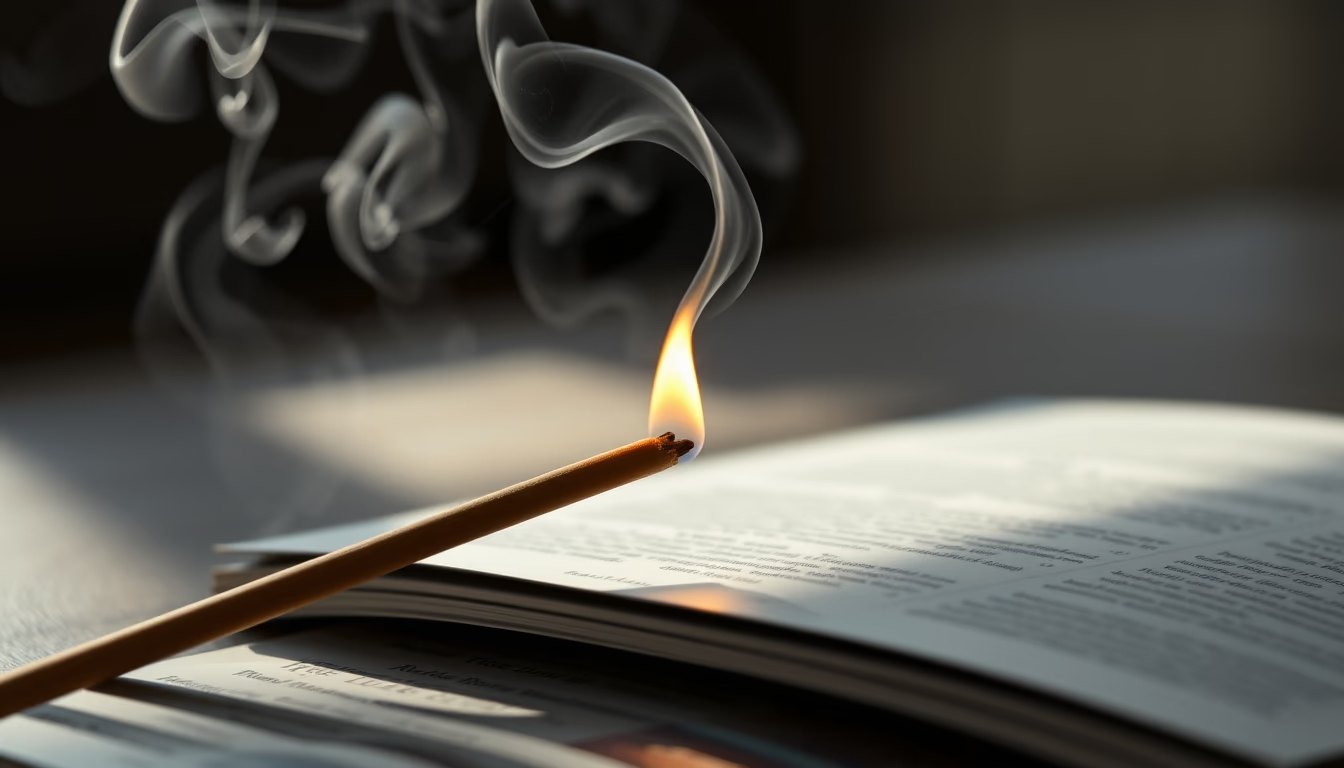
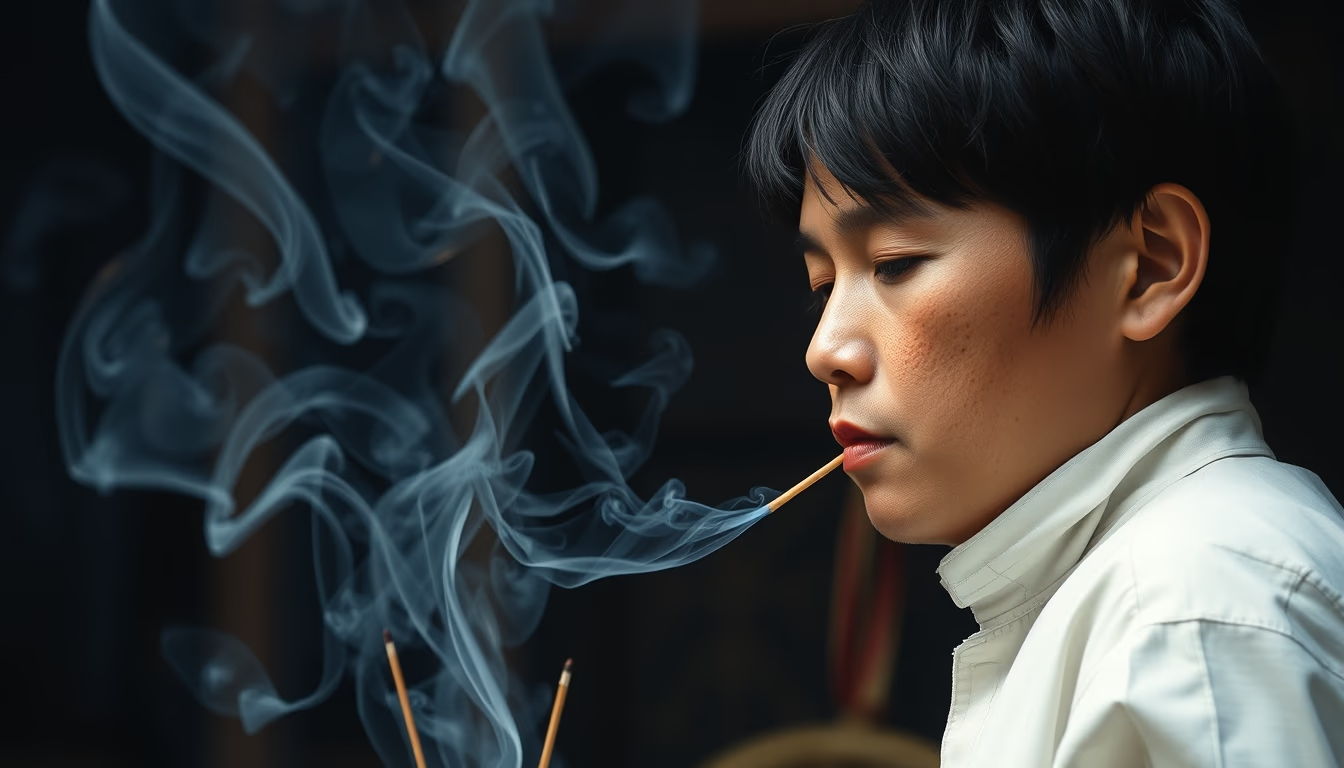
Incense sticks, used for millennia in spiritual practices and scenting spaces, combine resins, woods, and essential oils in a global artisanal tradition.
About this subject
Incense sticks are made from a base of wood powder (such as bamboo or sandalwood) mixed with aromatic ingredients: resins (frankincense, myrrh), herbs (sage, lavender), spices (cinnamon, clove), and essential oils. This paste is rolled around a thin stick and sun-dried. Their origins trace back to religious practices in ancient China (circa 2000 BCE), spreading via Buddhism to Japan and Korea. In India, the Vedas already mentioned agarbatti (incense) in rituals. Today, incense is integral to Hindu, Buddhist, and Catholic ceremonies, as well as meditation and aromatherapy.
Culturally, incense transcends borders: in Japan, the kōdō ceremony (art of appreciating aroma) is a refined practice. In the Middle East, resinous incenses like frankincense are burned on special occasions. In Brazil, incense is used in Afro-Brazilian religions and esoteric practices, with scents like lavender and patchouli. Global production is dominated by India (over 80% of world production), with hubs in Mysore and Bangalore. China and Indonesia are also major exporters.
The incense trade moves billions of dollars annually, with varieties ranging from masala incense (traditional Indian, charcoal-based) to Japanese incense (without a stick, burned as cones or thin sticks). Quality varies by ingredient purity: synthetic incenses may contain solvents and artificial fragrances, while artisanal ones use pure oils and natural resins. Scent influences mood: sandalwood is calming, jasmine is aphrodisiac, and eucalyptus is purifying.
Interestingly, burning incense releases fine particles and compounds like benzene, sparking debates about safety in enclosed spaces. Thus, ventilation and moderation are recommended. Despite this, incense remains a symbol of transcendence, connecting cultures in a perfumed smoke that spans centuries.
Frequently Asked Questions
How to choose good quality incense sticks?
Look for artisanal incense made with natural ingredients like resins, herbs, and pure essential oils. Avoid synthetic fragrances and solvents. Indian masala and Japanese incense are typically high quality.
What is the difference between Indian and Japanese incense?
Indian incense (masala) uses charcoal and is denser and sweeter, burned on thick sticks. Japanese incense is subtler, often stickless (cones or thin sticks), and emphasizes natural scents like sandalwood and cypress.
Can incense be harmful to health?
Burning incense releases fine particles and compounds like benzene and formaldehyde. In enclosed, unventilated spaces, it can irritate the respiratory tract. Use in moderation and in well-ventilated areas.
Direct URL
https://pub-c7d6a6ea828543ac903a74a341ccb2e1.r2.dev/imagens/incense-sticks-burning-magazine-editorial-fresh12.avifHow to credit
Include a visible link back to UtilizAí. Copy one of the snippets below:
<a href="https://xn--utiliza-eza.com/en/midia/imagens/incense-sticks-burning-magazine-editorial-fresh12">Incense sticks burning</a> by <a href="https://xn--utiliza-eza.com">UtilizAí</a>, licensed under <a href="https://creativecommons.org/licenses/by/4.0/">CC BY 4.0</a>.
[Incense sticks burning](https://xn--utiliza-eza.com/en/midia/imagens/incense-sticks-burning-magazine-editorial-fresh12) by [UtilizAí](https://xn--utiliza-eza.com), CC BY 4.0
License: CC-BY-4.0