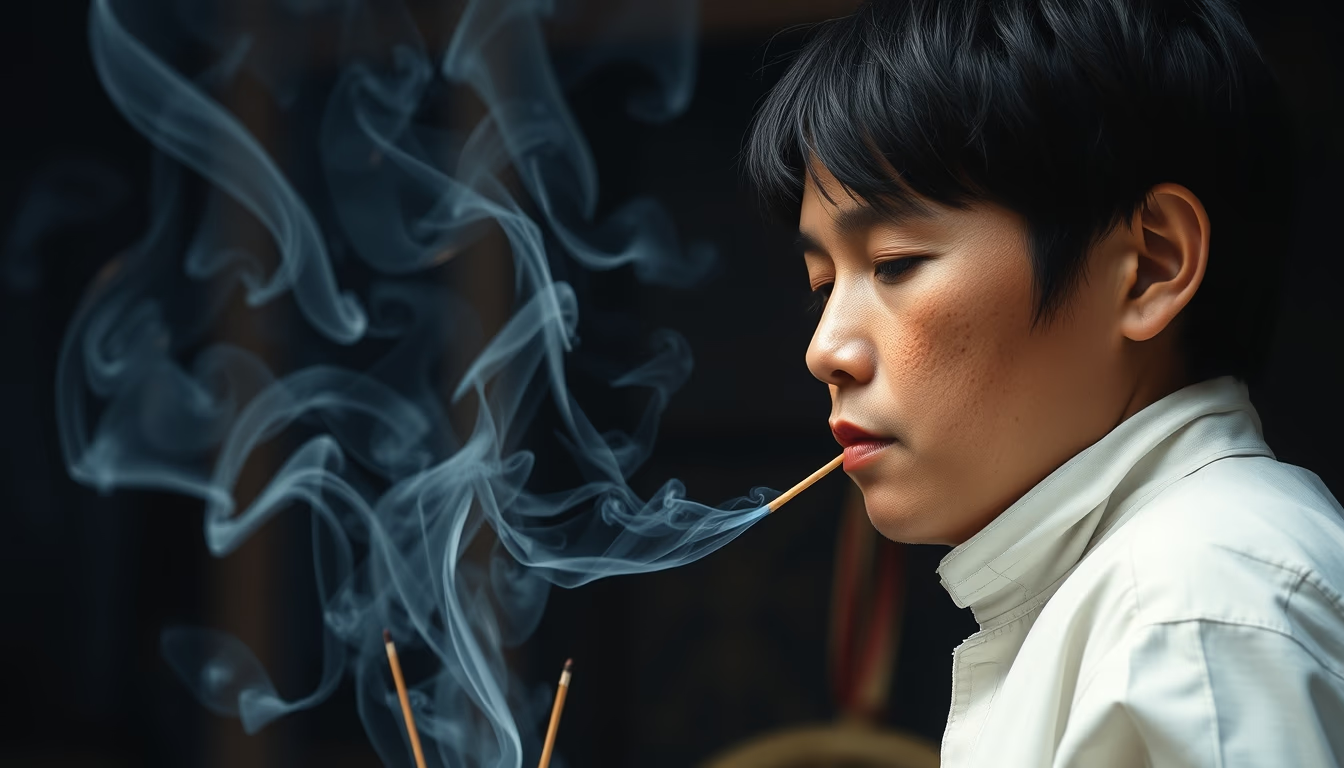
Incense sticks burning
1344×768 · AVIF · CC BY 4.0
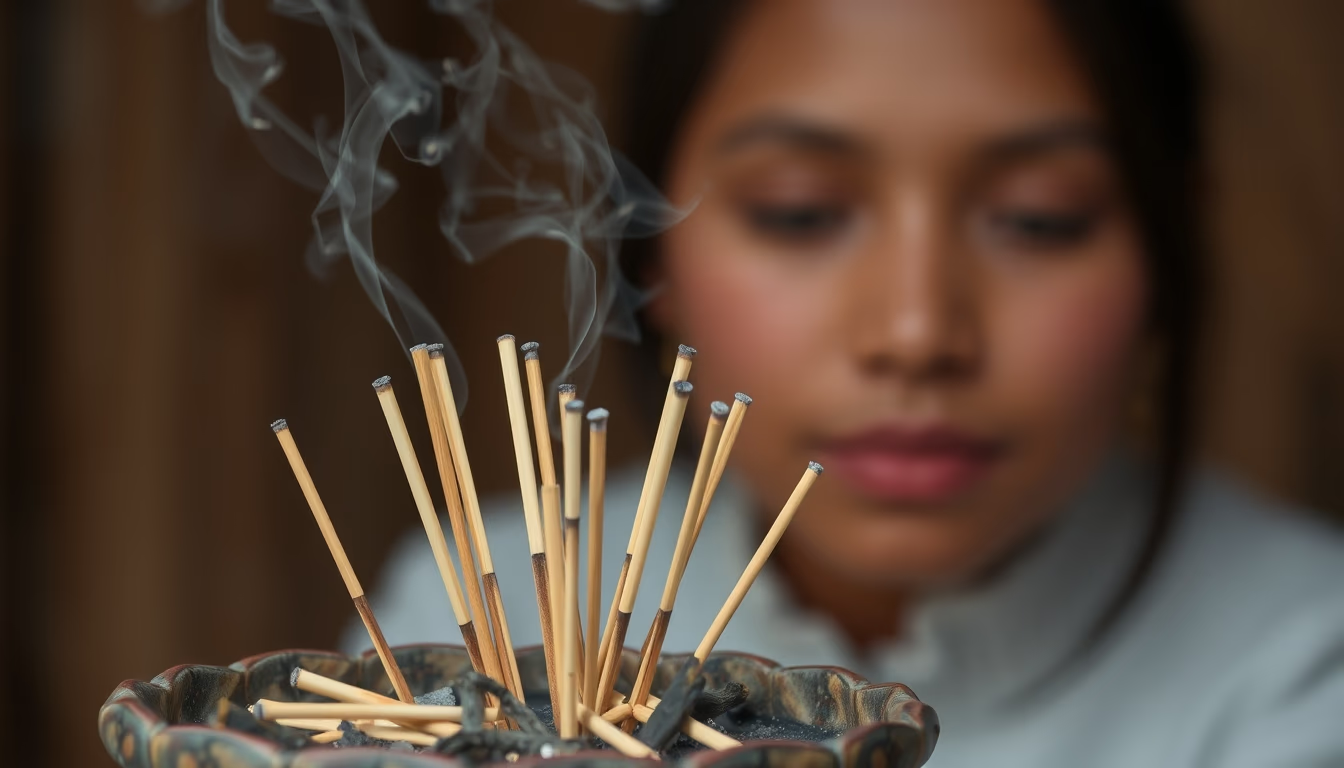
Incense sticks are burned worldwide in religious rituals, meditation, and aromatherapy, with ancient origins in Asia.
About this subject
Incense sticks are made from a blend of aromatic resins, essential oils, herbs, and ground woods, bound on a bamboo or charcoal core. Slow combustion releases fragrant smoke used for millennia in spiritual practices such as Buddhism, Hinduism, and Eastern Christianity. In India, incense is integral to religious ceremonies and daily life, with production hubs like Mysore and Bangalore. Japan developed Koh-do, the art of incense appreciation, dating back to the 6th century.
Globally, the incense market is worth billions of dollars annually. China and India are the largest producers, exporting to Western countries where incense is used to create relaxing atmospheres. The chemical composition of the smoke includes compounds like linalool and benzyl acetate, which may have calming effects. However, prolonged exposure to low-quality incense smoke can release fine particles and potentially harmful hydrocarbons, according to World Health Organization studies.
Beyond religious uses, incense sticks are burned in aromatherapy for stress relief, focus improvement, or space purification. Popular varieties include sandalwood, lavender, and frankincense. Artisanal production follows traditional methods, with master blenders mixing ingredients by hand, preserving centuries-old recipes. In contrast, industrial production standardizes fragrances and uses machines to roll sticks, achieving larger scale and lower cost.
Frequently Asked Questions
What is the origin of incense sticks?
Incense sticks have ancient origins in Asia, with records in India and China dating back over 3,000 years. They were used in religious and medicinal rituals.
What are the main uses of incense today?
They are used in meditation, prayer, aromatherapy, to create relaxing environments, and in religious ceremonies such as Hinduism, Buddhism, and Christianity.
Is making incense at home safe?
Yes, as long as natural ingredients are used and proper ventilation is ensured. Burning low-quality incense can release toxic substances.
Direct URL
https://pub-c7d6a6ea828543ac903a74a341ccb2e1.r2.dev/imagens/incense-sticks-burning-documentary-nature-style-fresh14.avifHow to credit
Include a visible link back to UtilizAí. Copy one of the snippets below:
<a href="https://xn--utiliza-eza.com/en/midia/imagens/incense-sticks-burning-documentary-nature-style-fresh14">Incense sticks burning</a> by <a href="https://xn--utiliza-eza.com">UtilizAí</a>, licensed under <a href="https://creativecommons.org/licenses/by/4.0/">CC BY 4.0</a>.
[Incense sticks burning](https://xn--utiliza-eza.com/en/midia/imagens/incense-sticks-burning-documentary-nature-style-fresh14) by [UtilizAí](https://xn--utiliza-eza.com), CC BY 4.0
License: CC-BY-4.0