Iceland glacier ice cave blue
1344×768 · AVIF · CC BY 4.0
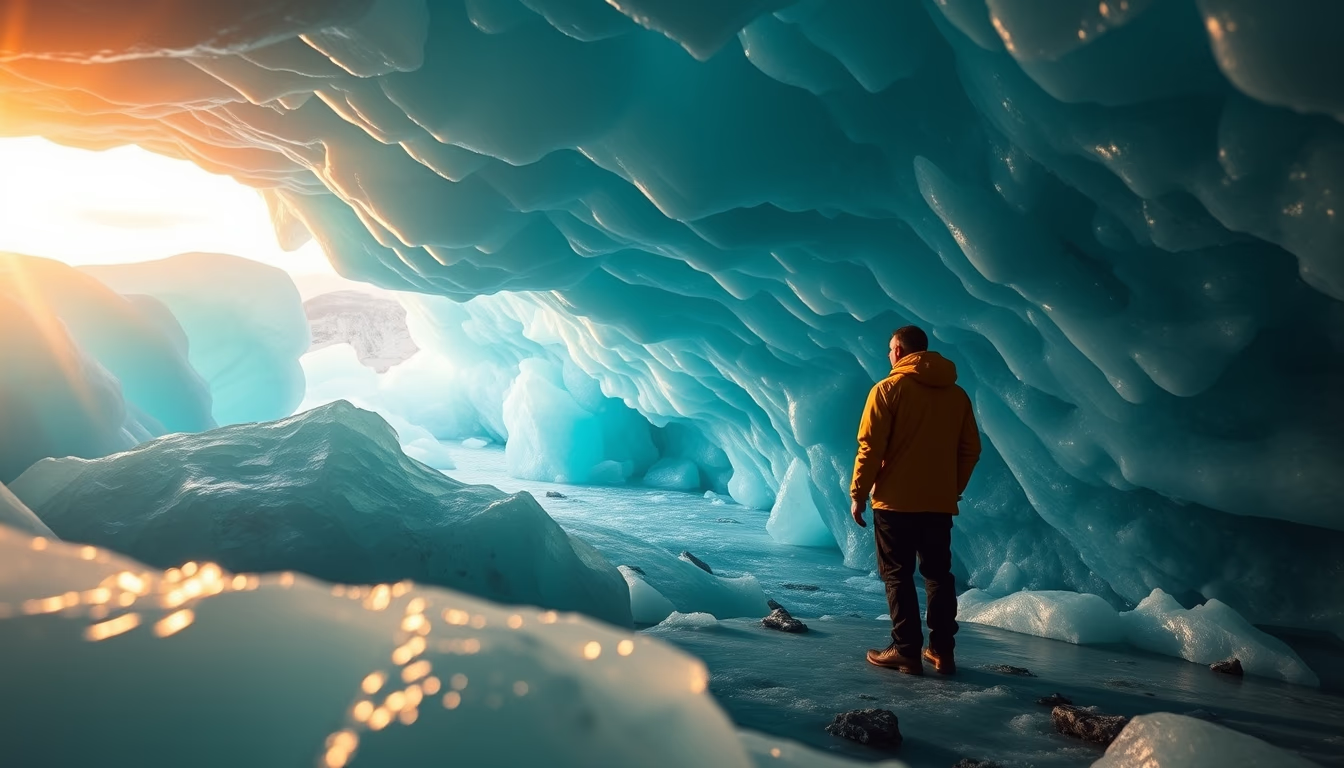
Blue ice caves in Iceland, formed inside glaciers like Vatnajökull, reveal an ephemeral and stunning natural spectacle.
About this subject
Iceland's blue ice caves are seasonal natural formations inside glaciers, particularly in the Vatnajökull region, Europe's largest glacier. They form when compacted snow transforms into glacial ice, expelling air bubbles and creating a crystalline structure that absorbs all colors of the light spectrum except blue. This optical phenomenon, known as Rayleigh scattering, is the same reason the sky appears blue. The caves typically open during winter, when the glacier surface freezes and allows safe access to its interior, and disappear in summer with the melt.
Vatnajökull glacier covers about 8% of Iceland's territory and reaches up to 1,000 meters in thickness. Ice caves mainly form in glacial tongues like Breiðamerkurjökull, near the Jökulsárlón glacial lagoon. The intense blue hue varies with ice density: the more compact, the deeper the shade. Some caves reach up to 50 meters in length and 10 meters in height, but they are extremely unstable, requiring specialized guides and safety equipment.
Culturally, ice caves are an icon of Icelandic tourism, attracting visitors worldwide for unique photography. However, climate change threatens these formations: Iceland's glaciers are retreating, losing about 11 billion tons of ice annually, reducing cave stability and duration. The visiting season, from November to March, requires careful planning and respect for harsh weather conditions.
Trivia: the most famous ice cave in Iceland, called Crystal Ice Cave, is located in Vatnajökull National Park and is only accessible with a guide. The ice can be over a thousand years old, as pressure from upper layers compacts snow over centuries. The blue color is so vivid it seems unreal, but it is completely natural, a result of purity and the molecular structure of ice.
Frequently Asked Questions
What is the best time to visit ice caves in Iceland?
The best time is between November and March, when temperatures are low enough to keep the ice stable and caves accessible. During summer, melting makes caves unstable and dangerous.
Is it safe to explore ice caves without a guide?
No. Ice caves are extremely unstable and can collapse at any time. Visits must be done exclusively with experienced guides and proper safety equipment.
Why is the ice in Icelandic caves blue?
Glacial ice is very dense and compressed, eliminating air bubbles. Sunlight penetrates the ice, and ice molecules absorb red wavelengths, leaving only blue to be reflected, a phenomenon called Rayleigh scattering.
Direct URL
https://pub-c7d6a6ea828543ac903a74a341ccb2e1.r2.dev/imagens/iceland-glacier-ice-cave-blue-travel-photography.avifHow to credit
Include a visible link back to UtilizAí. Copy one of the snippets below:
<a href="https://xn--utiliza-eza.com/en/midia/imagens/iceland-glacier-ice-cave-blue-travel-photography">Iceland glacier ice cave blue</a> by <a href="https://xn--utiliza-eza.com">UtilizAí</a>, licensed under <a href="https://creativecommons.org/licenses/by/4.0/">CC BY 4.0</a>.
[Iceland glacier ice cave blue](https://xn--utiliza-eza.com/en/midia/imagens/iceland-glacier-ice-cave-blue-travel-photography) by [UtilizAí](https://xn--utiliza-eza.com), CC BY 4.0
License: CC-BY-4.0