Iceland glacier ice cave blue
1344×768 · AVIF · CC BY 4.0
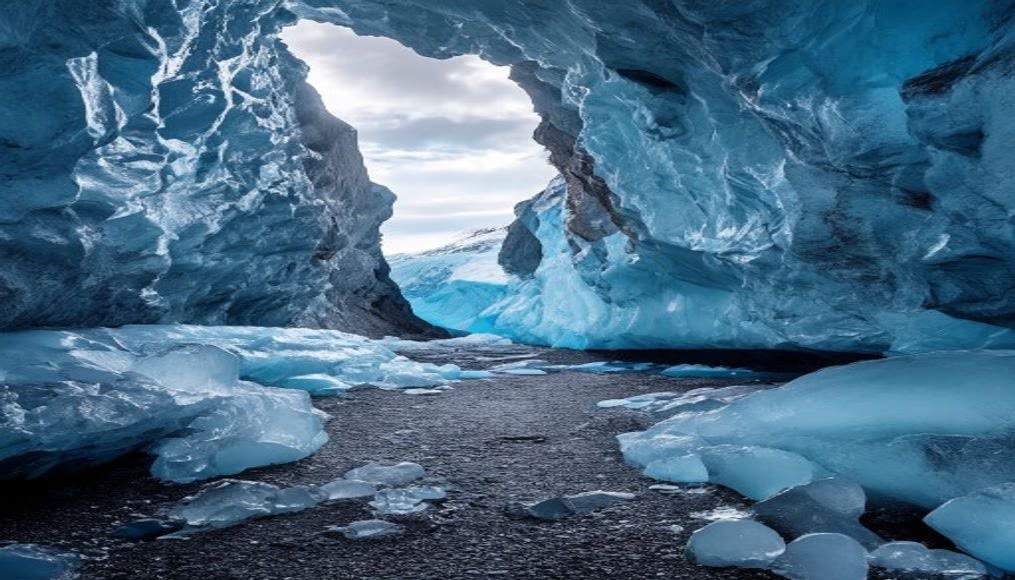
Glacial ice caves in Iceland, such as those in Vatnajökull, form intense blue chambers due to compressed ice.
About this subject
Iceland's blue ice caves are ephemeral natural formations found inside glaciers, primarily in Vatnajökull, Europe's largest ice cap. The ice takes on a vivid blue hue because air bubbles have been squeezed out over centuries of compression, causing the ice to absorb red wavelengths and reflect blue. The color is so pure it looks surreal, drawing photographers and tourists from around the globe.
These caves are not permanent. They form and collapse every winter, as meltwater carves paths through the glacier and refreezes. Access is limited to cold months (November to March), when structures stabilize, and it is mandatory to go with certified guides due to collapse risk. The caves are spread across different glacial tongues, such as Breiðamerkurjökull and Fjallsárlón, each with its unique topography.
The importance of ice caves goes beyond tourism. They are sensitive indicators of global warming, as melting accelerates their formation and destruction. Glaciologists monitor these formations to understand Iceland's glacier dynamics, which have lost hundreds of square kilometers in recent decades. The short lifespan of each cave makes the experience even more special: every visit witnesses a natural artwork that will soon vanish.
Inside the cave, visitors encounter profound silence and a soft, diffused light that seems to emanate from the ice itself. Photography requires gear suited for low light, as flashes can wash out the blue. Although guided tours are costly (€150, 300), the experience is considered one of Iceland's most impactful, a true immersion into the heart of a glacier.
Frequently Asked Questions
Are blue ice caves safe to visit?
Yes, as long as you go with certified guides. Tours include helmets, crampons, and basic safety instructions. The main risk is collapse, but guides monitor conditions constantly. Independent visits are prohibited.
What is the best time to visit ice caves in Iceland?
Between November and March, when temperatures are low enough to stabilize the ice. Some caves may be accessible in late October or early April, depending on weather conditions.
How do ice caves get their blue color?
The intense blue occurs because glacial ice has lost air bubbles due to pressure. The ice absorbs red light and reflects blue light, giving the characteristic hue. The purer and more compact the ice, the bluer it appears.
Direct URL
https://pub-c7d6a6ea828543ac903a74a341ccb2e1.r2.dev/imagens/iceland-glacier-ice-cave-blue-street-photography-v11.avifHow to credit
Include a visible link back to UtilizAí. Copy one of the snippets below:
<a href="https://xn--utiliza-eza.com/en/midia/imagens/iceland-glacier-ice-cave-blue-street-photography-v11">Iceland glacier ice cave blue</a> by <a href="https://xn--utiliza-eza.com">UtilizAí</a>, licensed under <a href="https://creativecommons.org/licenses/by/4.0/">CC BY 4.0</a>.
[Iceland glacier ice cave blue](https://xn--utiliza-eza.com/en/midia/imagens/iceland-glacier-ice-cave-blue-street-photography-v11) by [UtilizAí](https://xn--utiliza-eza.com), CC BY 4.0
License: CC-BY-4.0