Humanoid robot in clean white lab
1344×768 · AVIF · CC BY 4.0
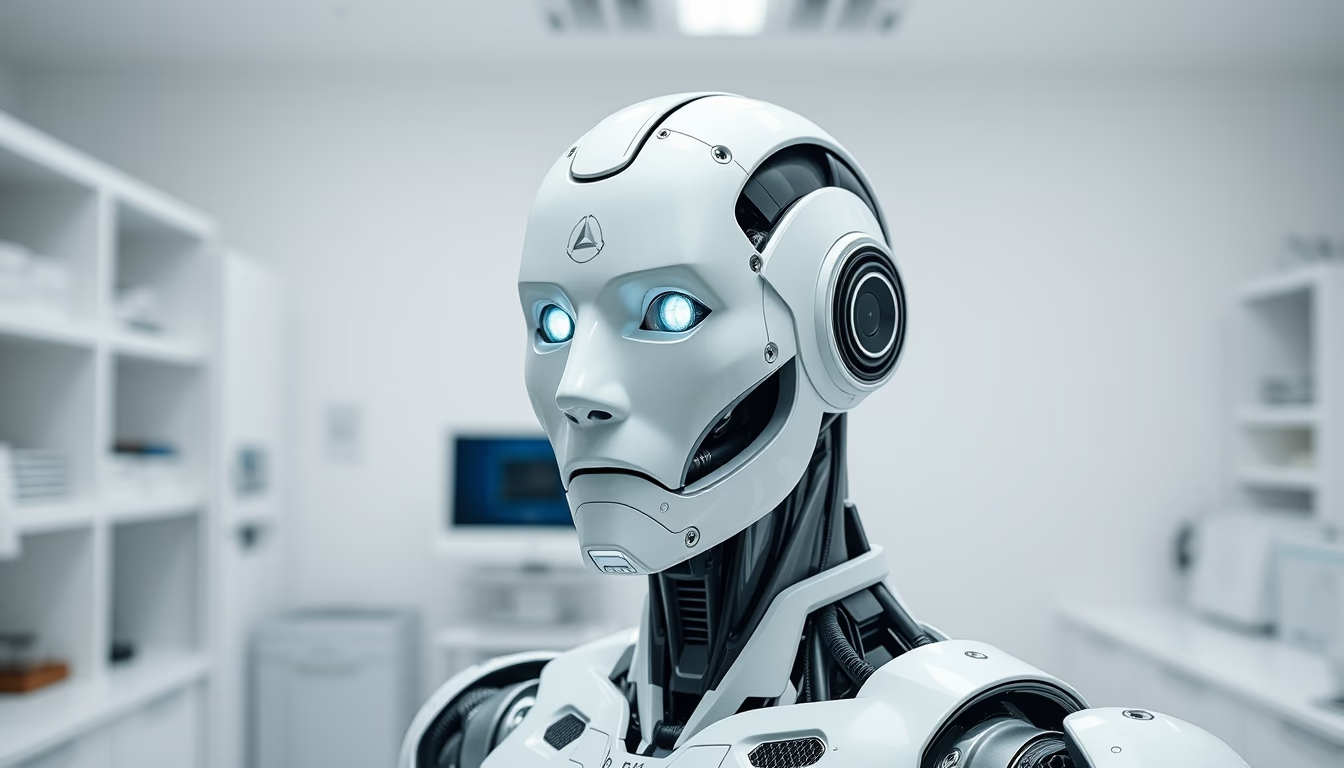
Humanoid robots represent the pinnacle of robotic engineering, combining artificial intelligence and biomimetic design to interact with the human world.
About this subject
Humanoid robots are machines designed to mimic human form and, in some cases, behavior. Unlike industrial robots that perform repetitive tasks on assembly lines, humanoids are developed for unstructured environments such as homes, hospitals, or offices. Companies like Boston Dynamics with Atlas and Hanson Robotics with Sophia have popularized the concept, but there are dozens of projects worldwide, including Toyota's T-HR3 and Honda's ASIMO, the latter retired in 2022 after two decades of research.
Building a humanoid robot involves significant challenges in balance, locomotion, and manipulation. Sensors such as LIDAR, stereo cameras, and inertial measurement units (IMUs) provide real-time data for control algorithms. Electric or hydraulic actuators enable smooth and precise movements. Artificial intelligence, especially reinforcement learning, has been crucial for teaching these robots to walk, run, and even perform acrobatics. In Japan, humanoid robots are used in human-robot interaction research and elderly care, while in China they are seen as a symbol of technological innovation.
Culturally, humanoids provoke both fascination and apprehension. They are a recurring theme in science fiction, from the robot Maria in Metropolis (1927) to the replicants in Blade Runner. In practice, robots like SoftBank's Pepper already work as receptionists and assistants in stores and airports. The global service robotics market, which includes humanoids, is expected to reach $170 billion by 2030, according to the International Federation of Robotics. Despite progress, we are still far from fully autonomous and versatile robots as portrayed in cinema.
Frequently Asked Questions
What are the main challenges in building humanoid robots?
Key challenges include dynamic balance, bipedal locomotion, fine object manipulation, and sensor integration for environment perception. Real-time control algorithms and powerful actuators are essential.
Where are humanoid robots currently used?
They are used in academic research, customer service (as receptionists), elderly care in Japan, and as AI development platforms. Examples include Pepper in stores and Atlas in advanced mobility tests.
What is the difference between a humanoid robot and an industrial robot?
Industrial robots are fixed or mobile-based, designed for repetitive tasks in controlled environments. Humanoids are mobile, bipedal, and designed to interact in human spaces, offering greater versatility and adaptability.
Direct URL
https://pub-c7d6a6ea828543ac903a74a341ccb2e1.r2.dev/imagens/humanoid-robot-in-clean-white-lab-studio-editorial-portrait-v3.avifHow to credit
Include a visible link back to UtilizAí. Copy one of the snippets below:
<a href="https://xn--utiliza-eza.com/en/midia/imagens/humanoid-robot-in-clean-white-lab-studio-editorial-portrait-v3">Humanoid robot in clean white lab</a> by <a href="https://xn--utiliza-eza.com">UtilizAí</a>, licensed under <a href="https://creativecommons.org/licenses/by/4.0/">CC BY 4.0</a>.
[Humanoid robot in clean white lab](https://xn--utiliza-eza.com/en/midia/imagens/humanoid-robot-in-clean-white-lab-studio-editorial-portrait-v3) by [UtilizAí](https://xn--utiliza-eza.com), CC BY 4.0
License: CC-BY-4.0