Honeycomb hexagonal pattern
1344×768 · AVIF · CC BY 4.0
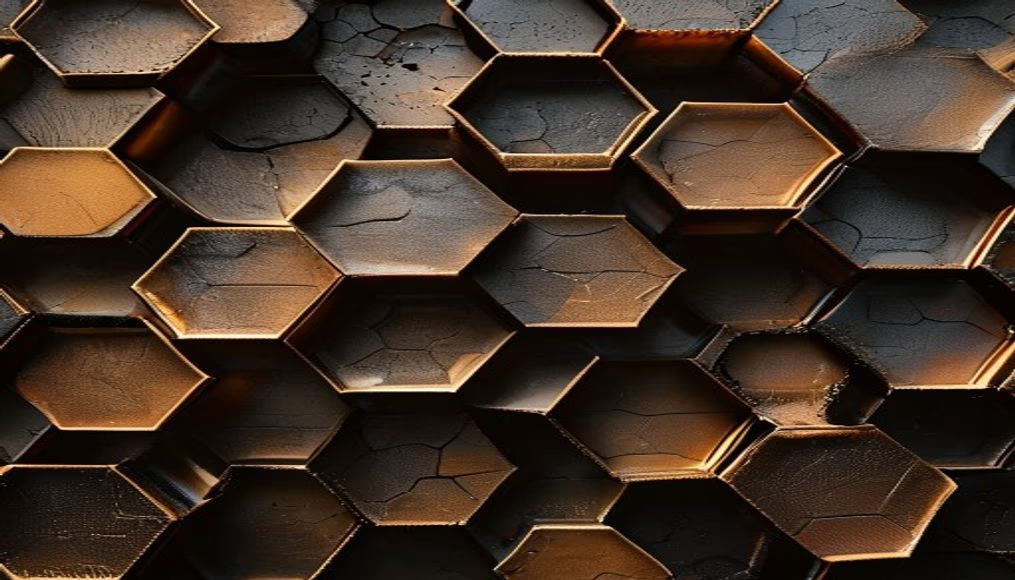
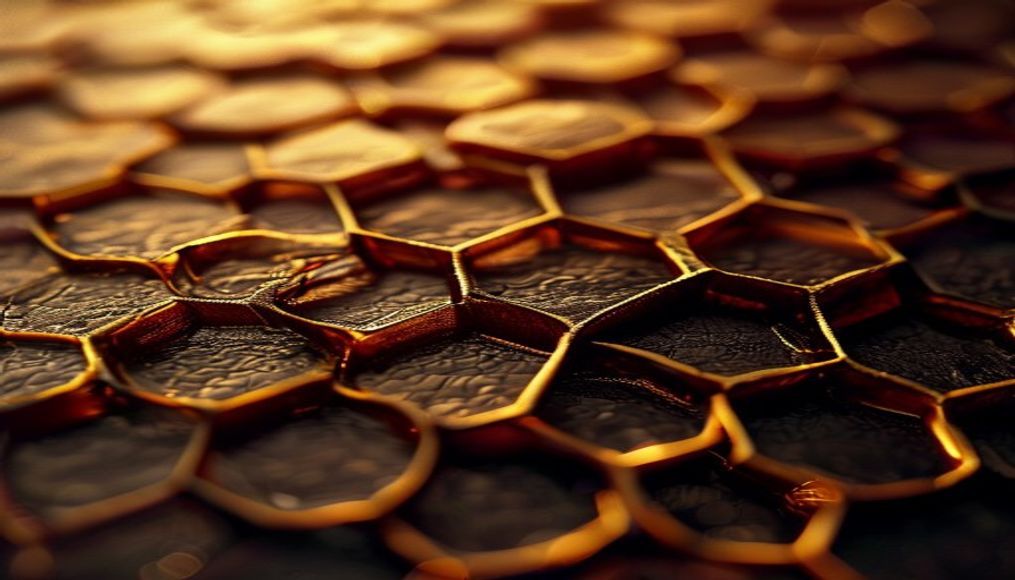
The hexagonal pattern of honeycombs is a natural engineering marvel, combining structural efficiency and wax economy by bees.
About this subject
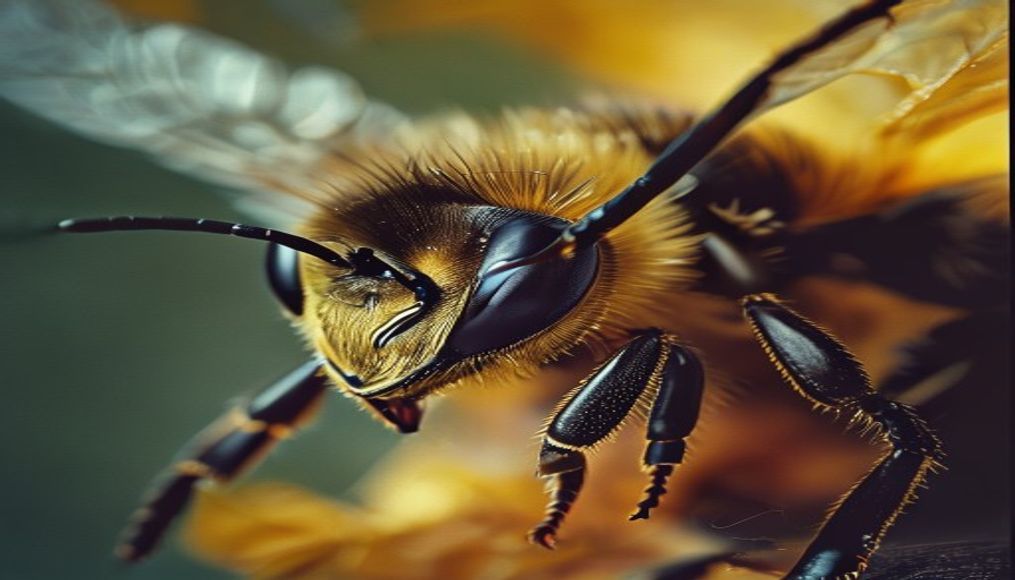
The honeycomb, built by Apis mellifera bees, consists of thousands of perfectly aligned hexagonal cells. This geometry is no accident: the hexagon maximizes storage volume while minimizing wax, a costly material for bees to produce. Mathematical studies, from ancient Greeks like Plato to Johannes Kepler, have highlighted the hexagon's efficiency in tessellating the plane without gaps, making it the ideal shape for storage structures in nature.
The construction of honeycombs is a collective and precise process. Worker bees secrete small wax flakes from abdominal glands, which are chewed and molded with their mandibles. The hive temperature, maintained around 35°C, softens the wax, aiding manipulation. Cells start as circles but are transformed into regular hexagons through surface tension and bee activity. Each cell has walls angled at approximately 109.5° to prevent honey from leaking.
In beekeeping, combs are vital for honey production, pollen storage, and brood rearing. Beekeepers use movable frames with embossed wax sheets to guide orderly construction. After harvest, combs can be reused, saving energy for the bees. Interestingly, the hexagonal pattern extends beyond bees: it appears in geological formations like the Giant's Causeway in Ireland, in ice crystals, and in synthetic materials such as graphene, demonstrating the universality of geometric optimization.
Frequently Asked Questions
Why do bees build hexagonal honeycombs?
The hexagon maximizes storage space while minimizing wax usage, providing structural efficiency and material economy.
How do bees produce wax for the combs?
Worker bees secrete wax from abdominal glands in thin flakes, which are chewed and molded to form hexagonal cells.
What happens to the combs after honey extraction?
Combs can be reused by bees for storing new honey or pollen, or melted down for beeswax used in candles and cosmetics.
Direct URL
https://pub-c7d6a6ea828543ac903a74a341ccb2e1.r2.dev/imagens/honeycomb-hexagonal-pattern-studio-editorial-portrait-p0.avifHow to credit
Include a visible link back to UtilizAí. Copy one of the snippets below:
<a href="https://xn--utiliza-eza.com/en/midia/imagens/honeycomb-hexagonal-pattern-studio-editorial-portrait-p0">Honeycomb hexagonal pattern</a> by <a href="https://xn--utiliza-eza.com">UtilizAí</a>, licensed under <a href="https://creativecommons.org/licenses/by/4.0/">CC BY 4.0</a>.
[Honeycomb hexagonal pattern](https://xn--utiliza-eza.com/en/midia/imagens/honeycomb-hexagonal-pattern-studio-editorial-portrait-p0) by [UtilizAí](https://xn--utiliza-eza.com), CC BY 4.0
License: CC-BY-4.0