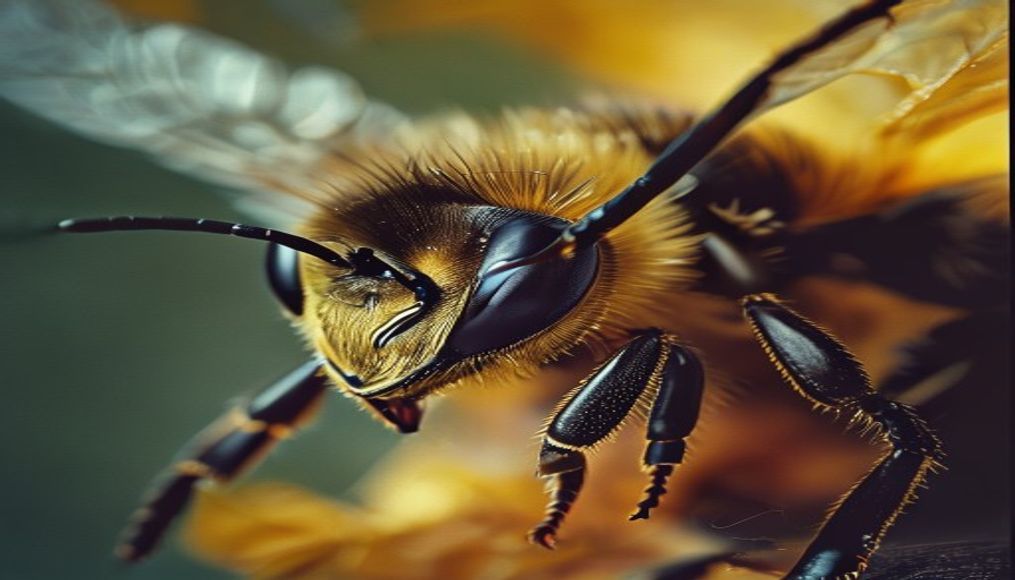
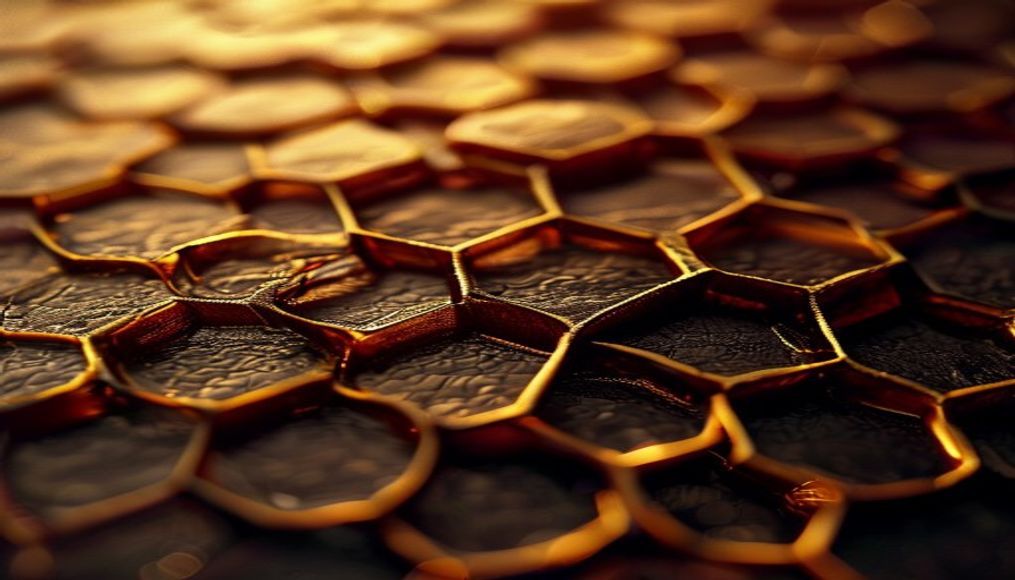
Honeycomb hexagonal pattern
1344×768 · AVIF · CC BY 4.0
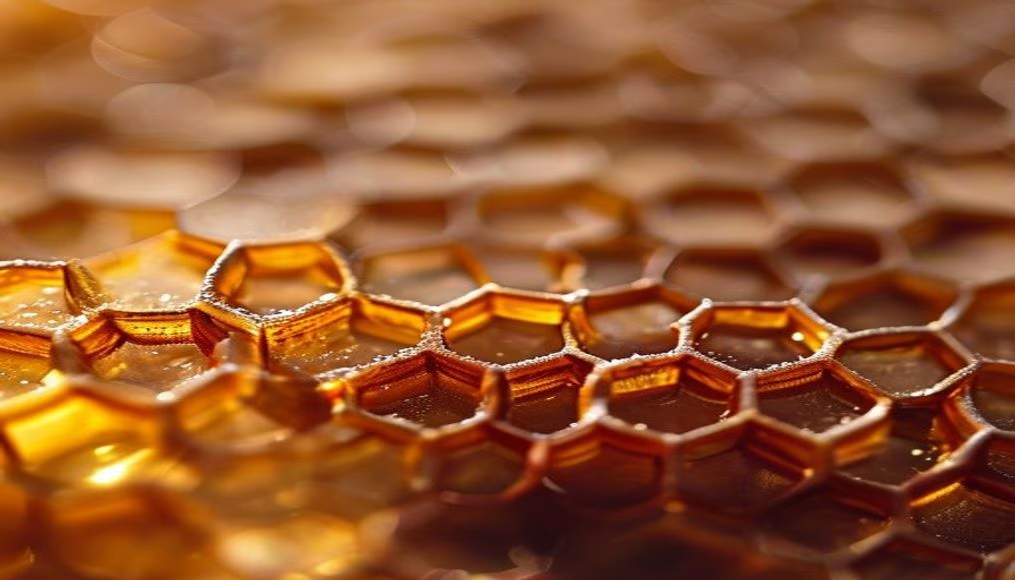
Honeycomb with perfect hexagonal pattern, a natural structure that maximizes storage and efficiency in the hive.
About this subject
Honeycomb is one of nature's most fascinating structures, built by worker bees from the wax they produce themselves. The hexagonal pattern is not random: it is the geometric shape that allows the greatest storage volume with the least amount of wax, an energetically expensive material for bees. Mathematical and physical studies confirm that the hexagon is the ideal figure to fill a surface without gaps, with internal angles of 120 degrees that evenly distribute the pressure of honey and the weight of bees.
In beekeeping, combs are often built on movable frames, facilitating handling and honey extraction. Each comb can contain thousands of cells, which serve both to store honey and pollen and to raise new bees. Brood cells are slightly different from honey cells, but all follow the same incredibly precise hexagonal pattern. The thickness of the wax walls is only 0.1 millimeter, demonstrating construction efficiency.
Interestingly, bees do not build perfectly hexagonal combs from the start; they begin with cylindrical cells, and as the wax is molded and heated, surface tension naturally transforms the cylinders into hexagons. This phenomenon was described by Darwin as the most admirable instinctive skill of bees. The ideal temperature for wax production is between 33°C and 36°C, maintained by the body heat of the clustered bees.
In the global context of pollination, combs are essential for hive survival and, by extension, for agriculture. They represent one of the clearest examples of natural optimization, inspiring lightweight and strong structures such as honeycomb panels used in aviation and construction.
Frequently Asked Questions
Why do bees build hexagonal honeycombs?
The hexagonal shape is the most efficient: it maximizes storage of honey and brood while minimizing wax usage, and shared walls save material and energy.
How do bees produce the wax for combs?
Worker bees secrete wax from special glands on their abdomen. They manipulate it with their mandibles, warming it to the ideal molding temperature.
How much honey can a comb store?
A typical Langstroth frame comb can hold about 2 to 3 kg of honey, depending on hive size and season.
Direct URL
https://pub-c7d6a6ea828543ac903a74a341ccb2e1.r2.dev/imagens/honeycomb-hexagonal-pattern-macro-closeup-p2.avifHow to credit
Include a visible link back to UtilizAí. Copy one of the snippets below:
<a href="https://xn--utiliza-eza.com/en/midia/imagens/honeycomb-hexagonal-pattern-macro-closeup-p2">Honeycomb hexagonal pattern</a> by <a href="https://xn--utiliza-eza.com">UtilizAí</a>, licensed under <a href="https://creativecommons.org/licenses/by/4.0/">CC BY 4.0</a>.
[Honeycomb hexagonal pattern](https://xn--utiliza-eza.com/en/midia/imagens/honeycomb-hexagonal-pattern-macro-closeup-p2) by [UtilizAí](https://xn--utiliza-eza.com), CC BY 4.0
License: CC-BY-4.0