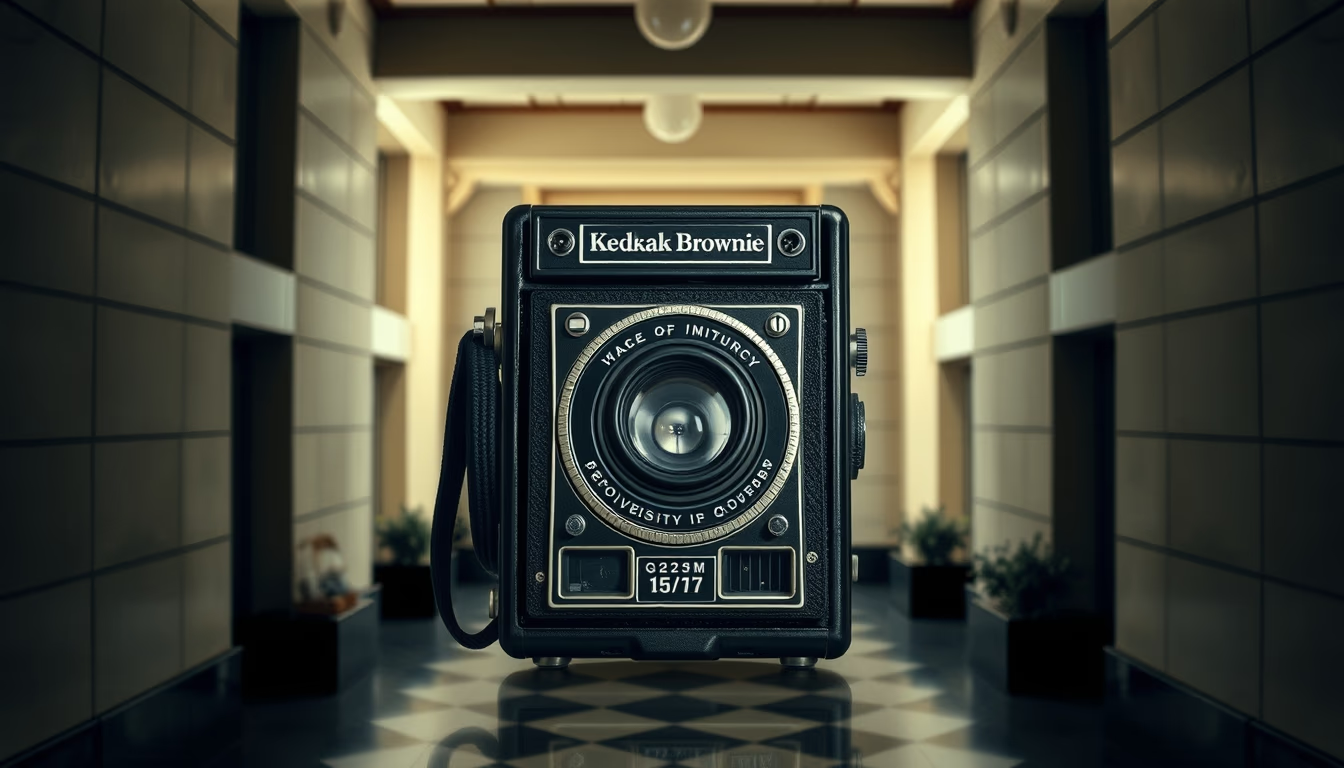
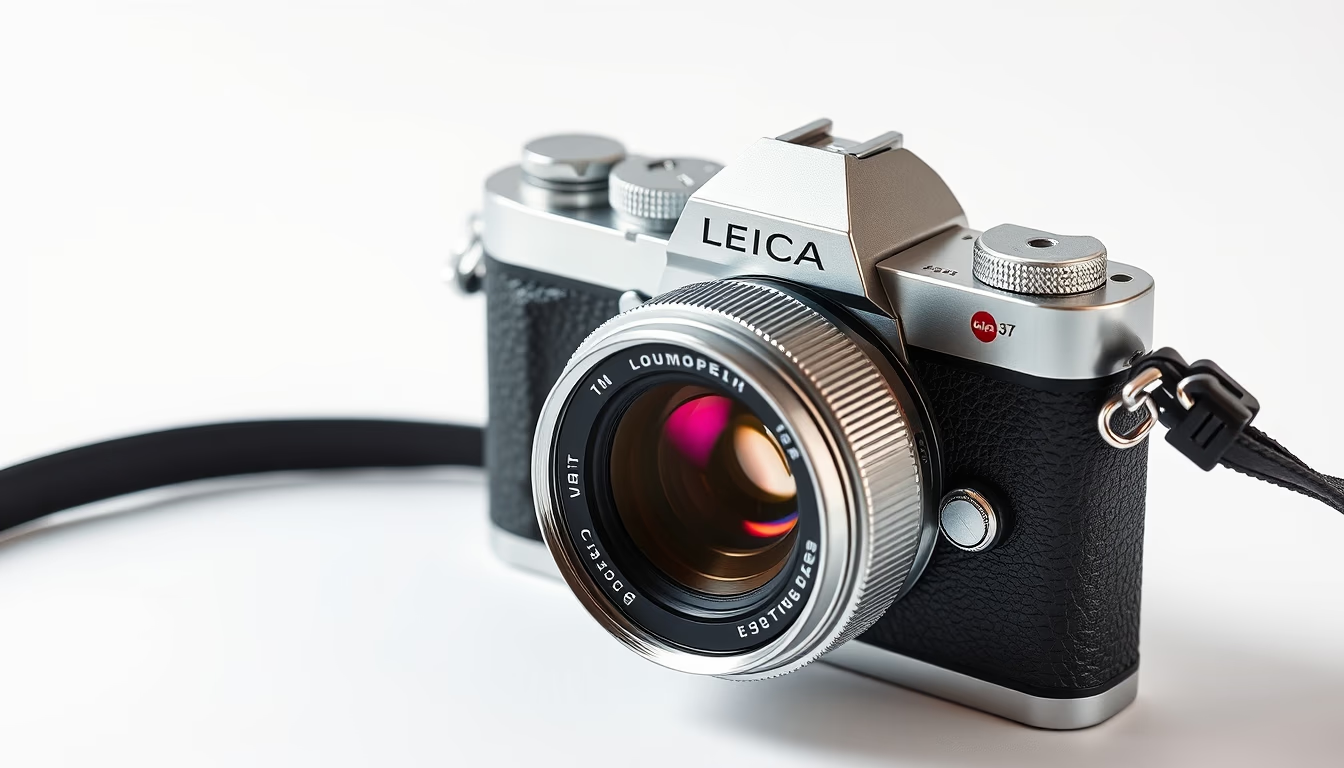
Hasselblad 500c medium
1344×768 · AVIF · CC BY 4.0

The Hasselblad 500C is a medium format camera released in 1957, renowned for its modular design and historic use in space.
About this subject
The Hasselblad 500C was a milestone in medium format photography. Introduced in 1957 by Swedish manufacturer Victor Hasselblad, it featured a revolutionary modular system: the body, film backs, and viewfinders could be swapped according to the photographer's needs. Unlike 35mm cameras, the 500C used 120 film, producing 6x6 cm negatives, roughly four times larger than full frame, resulting in extremely high detail and texture. It became the standard for fashion studios, portraits, and editorial photography during the 1960s and 1970s. Its focal-plane shutter, synchronized with electronic flashes, allowed speeds from 1s to 1/500s, and its Carl Zeiss Planar 80mm f/2.8 lens was praised for sharpness and smooth rendering.
The 500C gained worldwide fame when adapted by NASA for the Mercury and Apollo programs. The cameras were modified to operate in vacuum and carry special 70mm film, capturing iconic images such as Buzz Aldrin's footprint on the Moon. Decades later, the 500C remains one of the most sought-after cameras among collectors and analog photographers. Its sturdy construction, metal body with leather covering, and mechanical reliability make it a tool that ages gracefully. For film enthusiasts, owning and using a 500C is an experience that connects the photographer to the fundamentals of image-making: manipulating light, the anticipation of development, and the authentic grain that only medium format provides.
Beyond the technical aspects, the 500C represents a golden age of Swedish industrial design. Every component is crafted for ergonomics and durability, with precise adjustments that still work perfectly today. The culture surrounding this camera has influenced generations of photographers and manufacturers, and its legacy persists in digital medium format cameras that try to replicate the film look. The characteristic grain texture, arising from chemical emulsion, is one of the most valued attributes by those seeking an image with 'soul', something the Hasselblad 500C delivers masterfully.
Frequently Asked Questions
What is the difference between the Hasselblad 500C and the 500C/M?
The 500C/M is a later version (1970) that allows viewfinder swapping without tools, whereas the 500C requires screws. Both share the same body and lens system.
What type of film does the Hasselblad 500C use?
It uses 120 film, producing 6x6 cm negatives (12 exposures per roll). There are also backs for 220 film (24 exposures) and formats like 6x4.5.
Is the Hasselblad 500C still used by professional photographers today?
Yes, many analog photographers and artists use it for its image quality and robust build. Parts and repairs are still available, and the charm of medium format analog attracts new users.
Direct URL
https://pub-c7d6a6ea828543ac903a74a341ccb2e1.r2.dev/imagens/hasselblad-500c-medium-film-grain-authentic-fresh1.avifHow to credit
Include a visible link back to UtilizAí. Copy one of the snippets below:
<a href="https://xn--utiliza-eza.com/en/midia/imagens/hasselblad-500c-medium-film-grain-authentic-fresh1">Hasselblad 500c medium</a> by <a href="https://xn--utiliza-eza.com">UtilizAí</a>, licensed under <a href="https://creativecommons.org/licenses/by/4.0/">CC BY 4.0</a>.
[Hasselblad 500c medium](https://xn--utiliza-eza.com/en/midia/imagens/hasselblad-500c-medium-film-grain-authentic-fresh1) by [UtilizAí](https://xn--utiliza-eza.com), CC BY 4.0
License: CC-BY-4.0