Harpsichord baroque
1344×768 · AVIF · CC BY 4.0
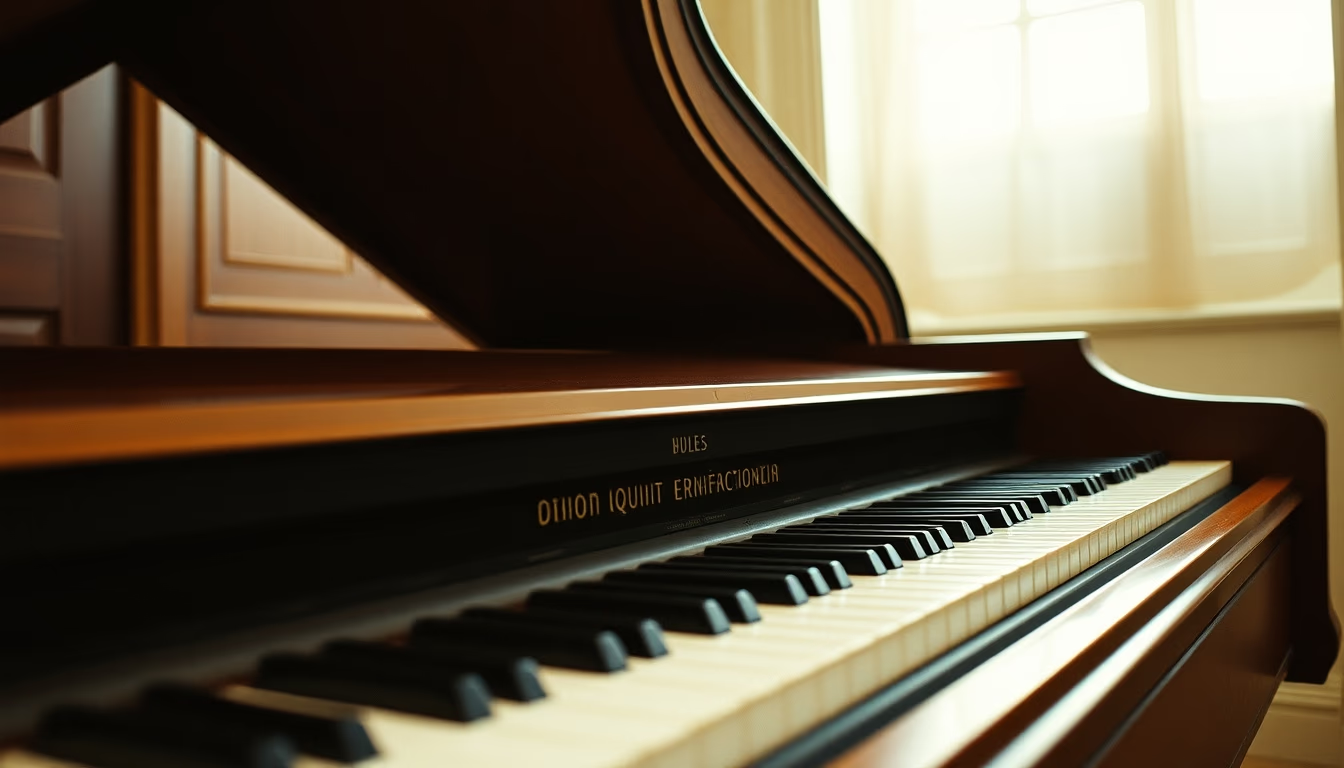
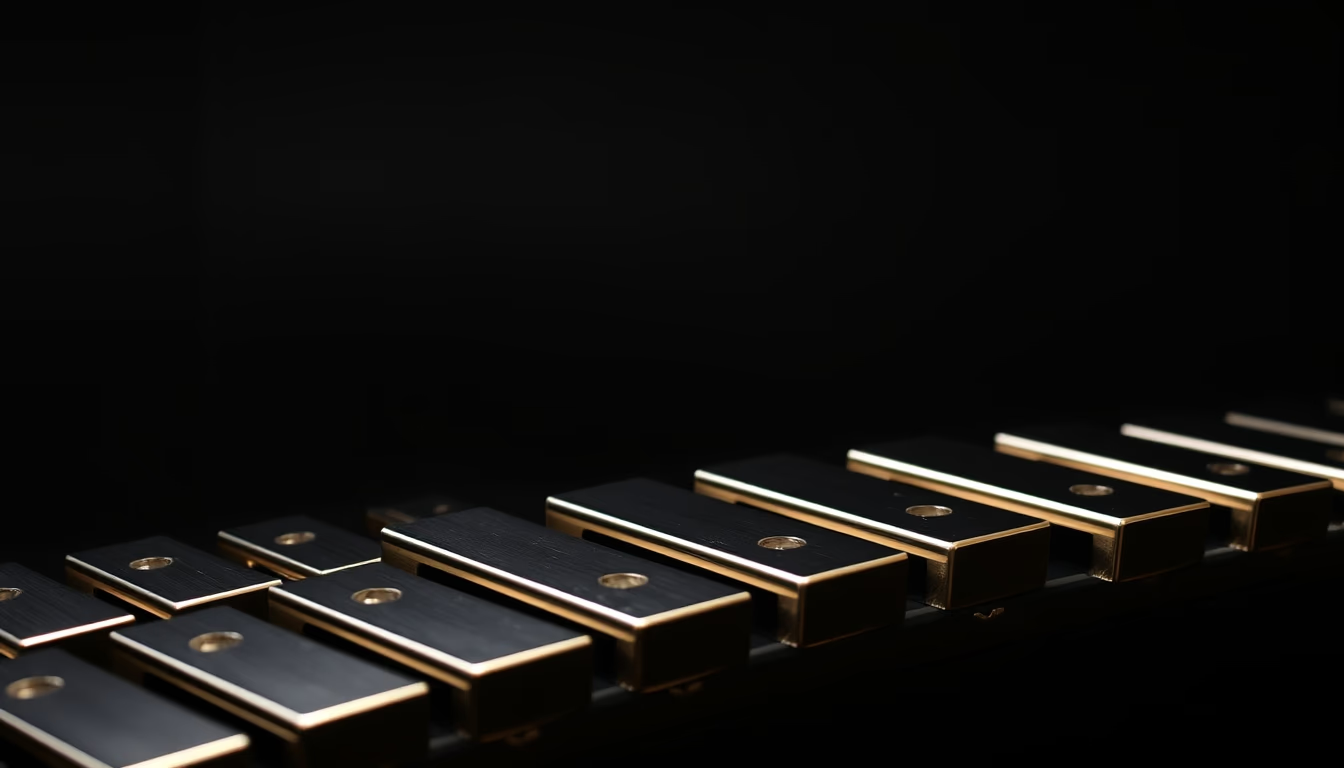
The baroque harpsichord, a plucked string instrument, was essential in 17th and 18th century music, defining the Baroque era with its distinctive timbre.
About this subject
The baroque harpsichord is a plucked string instrument widely used during the Baroque period (c. 1600-1750). Unlike the piano, which produces sound by hammers striking strings, the harpsichord plucks them with quill or leather plectra, generating a brighter sound with limited dynamic range. This mechanism allows clear articulation and precise attack, ideal for the contrapuntal music of the era.
Its origins trace back to the 14th century, but it reached its zenith in the Baroque. Harpsichord variants ranged from the virginal to the clavicembalo, with one or two manuals (keyboards) and registers that altered the timbre. They were often decorated with paintings and carvings, reflecting the status of their owners. Composers such as Johann Sebastian Bach, Domenico Scarlatti, François Couperin, and Jean-Philippe Rameau wrote masterpieces for the instrument, exploring its technical and expressive possibilities.
In Brazil, although not native, the baroque harpsichord is studied and performed by early music groups, such as the Baroque Orchestra of the Brazilian Colonial Music Festival. Replicas of historical instruments have allowed a sonic rediscovery. Interestingly, the harpsichord was gradually replaced by the pianoforte in the 19th century but experienced a revival in the 20th century thanks to performers like Wanda Landowska and Gustav Leonhardt.
Building a baroque harpsichord requires meticulous craftsmanship: the soundboard, metal strings, and wooden registers. Each instrument has a unique personality. The baroque repertoire for harpsichord includes suites, preludes, fugues, and sonatas. The harpsichord also played a key role in the basso continuo, the foundation of baroque harmony. Its sound pervades genres such as opera, sacred music, and chamber music.
Frequently Asked Questions
What is the difference between the baroque harpsichord and the piano?
The baroque harpsichord produces sound by plucking strings with plectra, resulting in a brighter timbre and no dynamic variation based on touch. The piano uses hammers that strike strings, allowing variable dynamics.
Which baroque composers are famous for harpsichord works?
Johann Sebastian Bach, Domenico Scarlatti, François Couperin, and Jean-Philippe Rameau are some of the main composers who wrote extensively for the harpsichord.
Is the baroque harpsichord still used today?
Yes, mainly in early music performances and by specialists in historically informed performance. Replicas are built, and contemporary recordings are made.
Direct URL
https://pub-c7d6a6ea828543ac903a74a341ccb2e1.r2.dev/imagens/harpsichord-baroque-film-grain-authentic-p3.avifHow to credit
Include a visible link back to UtilizAí. Copy one of the snippets below:
<a href="https://xn--utiliza-eza.com/en/midia/imagens/harpsichord-baroque-film-grain-authentic-p3">Harpsichord baroque</a> by <a href="https://xn--utiliza-eza.com">UtilizAí</a>, licensed under <a href="https://creativecommons.org/licenses/by/4.0/">CC BY 4.0</a>.
[Harpsichord baroque](https://xn--utiliza-eza.com/en/midia/imagens/harpsichord-baroque-film-grain-authentic-p3) by [UtilizAí](https://xn--utiliza-eza.com), CC BY 4.0
License: CC-BY-4.0