Harpsichord baroque
1344×768 · AVIF · CC BY 4.0
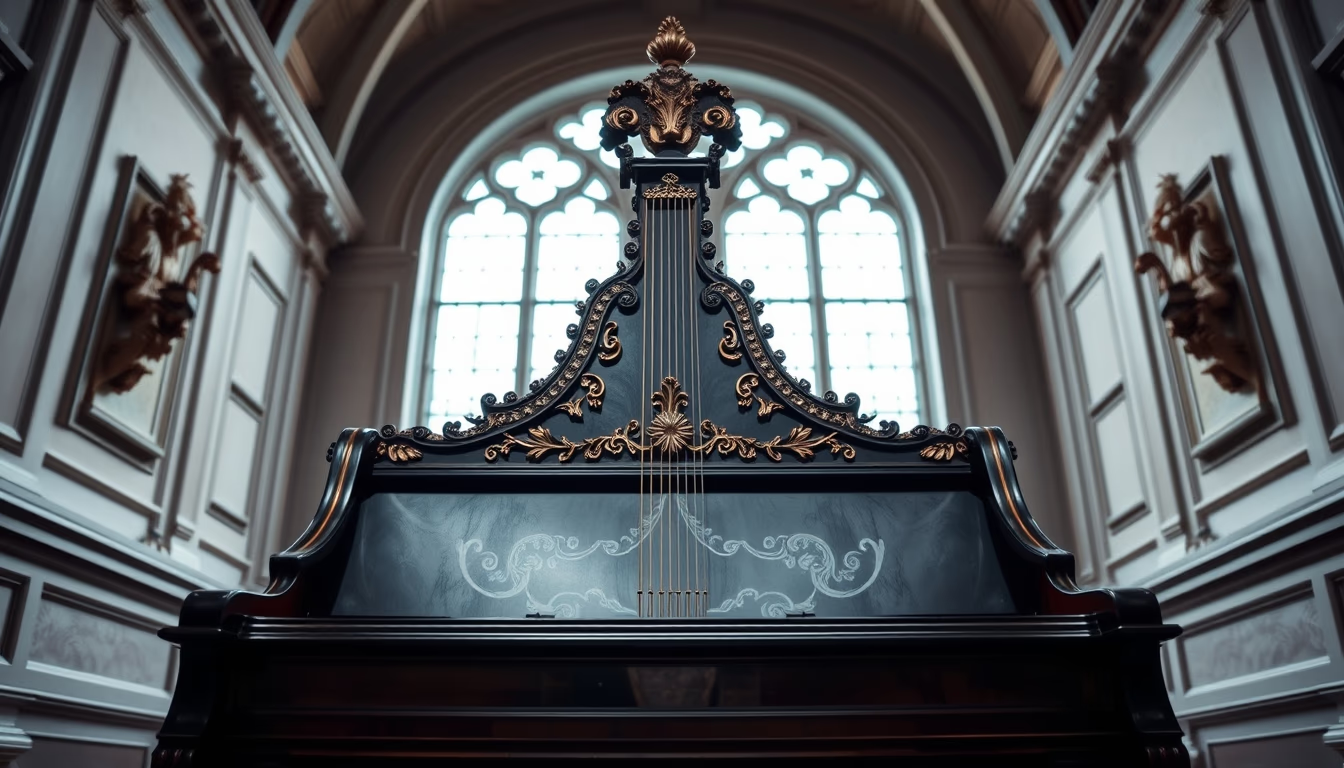
The baroque harpsichord is a plucked-string keyboard instrument that dominated music from the 16th to the 18th century, essential for composers like Bach and Scarlatti.
About this subject
The baroque harpsichord, known as 'cravo' in Portuguese, was the primary keyboard instrument of the Baroque period, roughly from 1600 to 1750. Unlike the modern piano, which produces sound by hammers striking strings, the harpsichord uses plectra that pluck the strings, creating a brighter, metallic timbre with limited dynamic range. The instrument originated in medieval Europe, with the earliest depictions dating to the 15th century, but reached its peak in the Baroque era, where it was used for solos, chamber music, opera, and as continuo in orchestras.
Composers such as Johann Sebastian Bach, Domenico Scarlatti, Georg Friedrich Händel, and François Couperin wrote extensively for the harpsichord. Bach explored its contrapuntal possibilities in works like 'The Well-Tempered Clavier' and the Goldberg Variations. Scarlatti composed over 550 sonatas for harpsichord, many with innovative techniques such as hand crossing and bold leaps. The harpsichord was also a status symbol, found in courts and aristocratic homes.
The construction of a baroque harpsichord uses fine woods like oak and lime, and metal strings. Instruments can have one or two manuals (keyboards) and multiple registers that alter the sound. One famous example is the Blanchet harpsichord, used in 18th-century France. With the rise of the piano in the late 1700s, the harpsichord fell out of fashion but was rediscovered in the 20th century by musicians like Wanda Landowska and Gustav Leonhardt, who led the historically informed performance movement.
Today, the harpsichord is appreciated in early music performances and modern recordings. Its unique sound continues to influence contemporary composers and is often associated with Baroque elegance. The English word 'harpsichord' derives from Italian 'arpa' (harp) and 'corda' (string), reflecting its plucking mechanism.
Frequently Asked Questions
What is the difference between a harpsichord and a piano?
A harpsichord produces sound by plucking strings, while a piano strikes them with hammers. This gives the harpsichord a brighter tone and limited dynamic range, whereas the piano allows for volume variation.
Which Baroque composers are famous for writing for harpsichord?
Johann Sebastian Bach, Domenico Scarlatti, George Frideric Handel, and François Couperin are the most notable. Bach wrote 'The Well-Tempered Clavier' and the Goldberg Variations, and Scarlatti composed over 550 sonatas for harpsichord.
Is the harpsichord still used in modern music?
Yes, especially in early music performances and historically informed recordings. It also appears in contemporary music and film scores, due to its distinctive sound and the demand for historical authenticity.
Direct URL
https://pub-c7d6a6ea828543ac903a74a341ccb2e1.r2.dev/imagens/harpsichord-baroque-architectural-photography-p2.avifHow to credit
Include a visible link back to UtilizAí. Copy one of the snippets below:
<a href="https://xn--utiliza-eza.com/en/midia/imagens/harpsichord-baroque-architectural-photography-p2">Harpsichord baroque</a> by <a href="https://xn--utiliza-eza.com">UtilizAí</a>, licensed under <a href="https://creativecommons.org/licenses/by/4.0/">CC BY 4.0</a>.
[Harpsichord baroque](https://xn--utiliza-eza.com/en/midia/imagens/harpsichord-baroque-architectural-photography-p2) by [UtilizAí](https://xn--utiliza-eza.com), CC BY 4.0
License: CC-BY-4.0