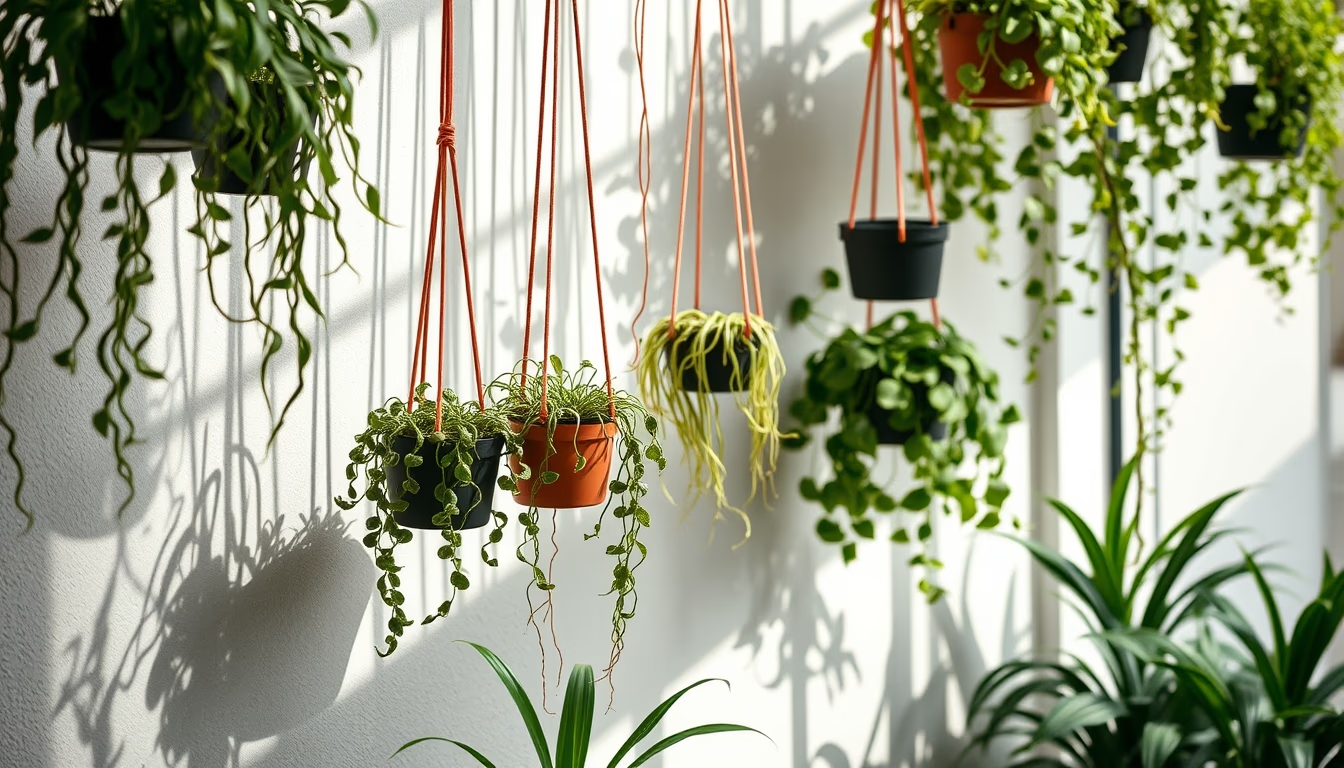
Hanging plants vertical garden
1344×768 · AVIF · CC BY 4.0
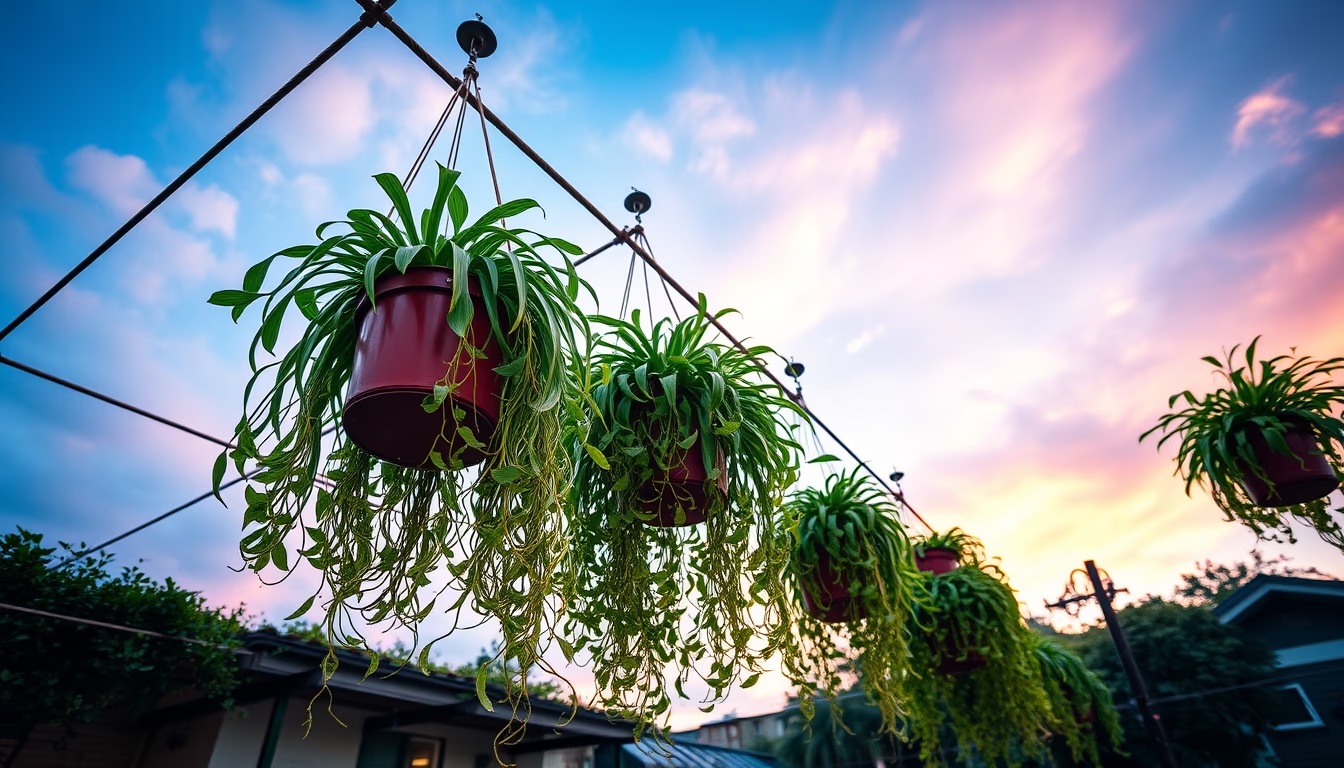
Vertical gardens with hanging plants offer an elegant solution for small spaces, combining aesthetics and environmental benefits.
About this subject
Vertical gardens, also known as living walls, transform vertical surfaces into green areas, maximizing space usage. Incorporating hanging plants such as pothos (Epipremnum aureum), wandering jew (Tradescantia zebrina), and ferns (Nephrolepis exaltata) adds movement and texture, creating a cascading effect that softens architectural lines. These setups can be built using modular panels, felt systems, or simply with hanging pots, adapting to both indoor and outdoor environments.
The popularity of vertical gardens surged in recent decades, driven by French botanist Patrick Blanc, who developed the modern living wall concept in the 1980s. Beyond aesthetics, these gardens offer proven benefits: thermal insulation, noise reduction, air purification (filtering volatile organic compounds), and increased humidity. In urban areas, they help mitigate the heat island effect.
To maintain a healthy vertical garden, plant selection is key. Hanging species thrive in indirect light and well-drained substrate. Automated drip irrigation is ideal, ensuring even distribution without waterlogging. Monthly liquid fertilization during spring and summer boosts growth. Regular pruning controls volume and encourages new shoots, maintaining the desired shape.
Interestingly, NASA studies have shown that plants like pothos are effective at removing formaldehyde from indoor air. Moreover, vertical gardens can be installed on balconies, kitchens, bathrooms, and facades, democratizing access to greenery even in compact apartments. With proper care, a vertical garden with hanging plants can last for years, bringing life and freshness to any space.
Frequently Asked Questions
How do I care for a vertical garden with hanging plants?
Provide indirect light, automated drip irrigation, and well-drained substrate. Fertilize monthly in spring and summer, and prune regularly to control growth.
Which hanging plants are best for indoor environments?
Pothos, wandering jew, ferns, peperomia, and philodendron are excellent due to their adaptability to low light and low maintenance.
Does a vertical garden help reduce ambient temperature?
Yes, plant evapotranspiration and moist substrate cool the surrounding air, contributing to thermal insulation and lowering indoor temperature.
Direct URL
https://pub-c7d6a6ea828543ac903a74a341ccb2e1.r2.dev/imagens/hanging-plants-vertical-garden-long-exposure-fresh6.avifHow to credit
Include a visible link back to UtilizAí. Copy one of the snippets below:
<a href="https://xn--utiliza-eza.com/en/midia/imagens/hanging-plants-vertical-garden-long-exposure-fresh6">Hanging plants vertical garden</a> by <a href="https://xn--utiliza-eza.com">UtilizAí</a>, licensed under <a href="https://creativecommons.org/licenses/by/4.0/">CC BY 4.0</a>.
[Hanging plants vertical garden](https://xn--utiliza-eza.com/en/midia/imagens/hanging-plants-vertical-garden-long-exposure-fresh6) by [UtilizAí](https://xn--utiliza-eza.com), CC BY 4.0
License: CC-BY-4.0