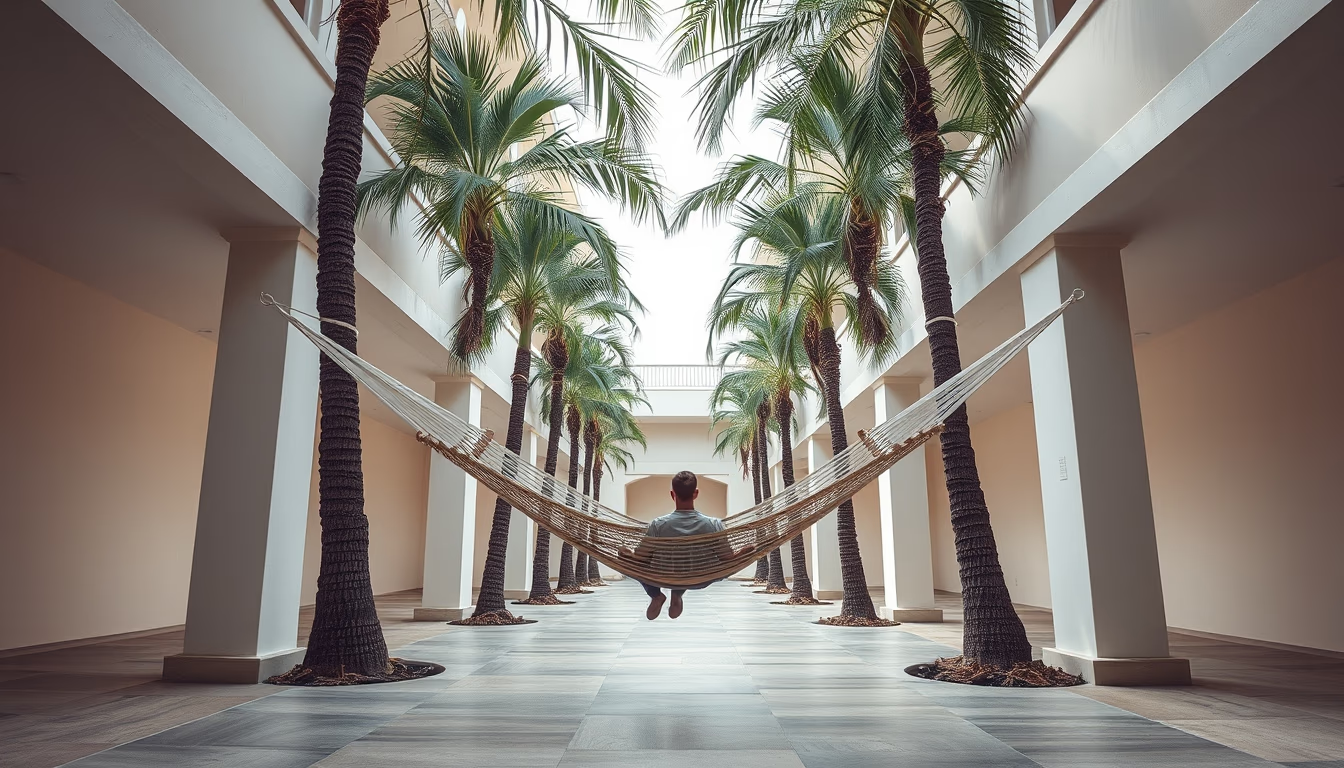
Hammock over crystal water
1344×768 · AVIF · CC BY 4.0

Hammock suspended over crystal-clear waters in a tropical setting, combining relaxation with paradise views.
About this subject
Suspending hammocks over crystal-clear waters is a common practice in tropical destinations worldwide, especially in regions with coral reefs and low sediment levels. Places like the Maldives, the Caribbean, and Brazilian beaches such as Sancho Beach in Fernando de Noronha or Porto de Galinhas in Pernambuco offer this unique experience. The water's clarity results from the absence of suspended particles and the presence of corals that act as natural filters. In these areas, depths are usually shallow, allowing hammocks to be anchored on fixed or floating structures, giving visitors a stunning underwater view while they rest. Culturally, the hammock is deeply rooted in northeastern Brazil, where it has been used for centuries as domestic furniture and a symbol of hospitality. In international resorts, the water hammock has become an icon of luxury and tranquility, often depicted in photographs with a tilt-shift effect that distorts perspective to simulate a miniature. This technique, though artistic, does not diminish the immersive reality of swinging over a seabed teeming with life, such as colorful fish and sea turtles. The popularity of this combination boosts ecotourism and the preservation of these fragile ecosystems. Visiting such landscapes requires responsibility, such as avoiding chemical sunscreens that damage corals. The experience of resting in a hammock over such clear waters is an invitation to contemplate nature and slow down the daily pace.
Frequently Asked Questions
Where can I find hammocks over crystal-clear water?
Resorts in tropical destinations such as the Maldives, the Caribbean, and Brazilian beaches like Porto de Galinhas and Fernando de Noronha offer this experience. They are usually installed in calm, shallow waters over reefs or white sand.
Why does the water look so clear?
The clarity results from low levels of sediment and plankton, as well as the presence of corals and calcareous sand that reflect light. These conditions are common in reef regions far from rivers and pollution.
Is the tilt-shift effect real in the image?
No, it is a photographic technique that combines lens shift and tilt to simulate a shallow depth of field. This makes the scene appear as a miniature, but the photo depicts a real, full-size setting.
Direct URL
https://pub-c7d6a6ea828543ac903a74a341ccb2e1.r2.dev/imagens/hammock-over-crystal-water-tilt-shift-miniature-fresh4.avifHow to credit
Include a visible link back to UtilizAí. Copy one of the snippets below:
<a href="https://xn--utiliza-eza.com/en/midia/imagens/hammock-over-crystal-water-tilt-shift-miniature-fresh4">Hammock over crystal water</a> by <a href="https://xn--utiliza-eza.com">UtilizAí</a>, licensed under <a href="https://creativecommons.org/licenses/by/4.0/">CC BY 4.0</a>.
[Hammock over crystal water](https://xn--utiliza-eza.com/en/midia/imagens/hammock-over-crystal-water-tilt-shift-miniature-fresh4) by [UtilizAí](https://xn--utiliza-eza.com), CC BY 4.0
License: CC-BY-4.0