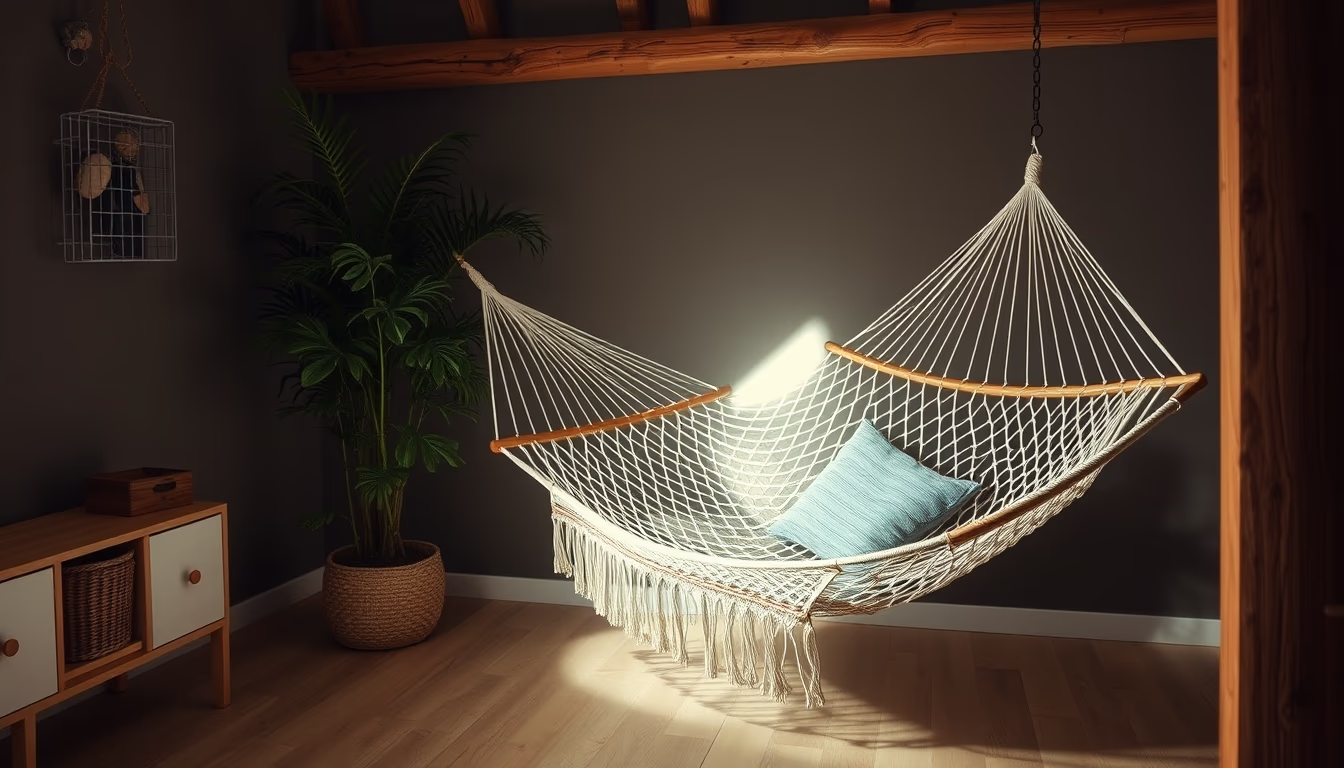
Hammock indoor cozy
1344×768 · AVIF · CC BY 4.0

An indoor hanging hammock turns any room into a cozy retreat with tropical vibes and effortless relaxation.
About this subject
The hammock is one of the most iconic symbols of Brazilian leisure, but its origins trace back to the indigenous peoples of Central and South America. The Taíno and Carib tribes wove hammocks from cotton more than a thousand years ago, and the word 'hamaca' comes from the Taíno language. In Brazil, the hammock was first used by native tribes and later by Portuguese colonizers, becoming a staple in the hot and humid Northeast region, where its open weave allows air to circulate and keeps the body cool.
Today, indoor hammocks have found a place in urban apartments and studios, prized for their versatility. Unlike outdoor models, indoor hammocks use lightweight fabrics and are suspended from steel stands or specialized hooks that work with drywall. Research from the University of Geneva indicates that the gentle sway of a hammock stimulates the human vestibular system, promoting deep relaxation and improving sleep quality.
Beyond comfort, the hammock serves as a decorative element. In bohemian, Scandinavian, or tropical interiors, it adds texture and color, often replacing armchairs or small sofas. Brazilian brands such as Rede Bahia and Casa das Redes export handmade hammocks to 30 countries, highlighting the production of organic cotton from Ceará and Paraíba. For proper installation, experts recommend a minimum distance of 1.20 meters between hanging points and a 30-degree angle to avoid excessive wall stress.
Frequently Asked Questions
How do I hang an indoor hammock without damaging the wall?
Use steel hammock stands that rest on the floor and ceiling, or install ceiling hooks with proper anchors for drywall or concrete. Keep the hammock 40, 60 cm off the ground for sitting and 80 cm for lying down.
Is sleeping in a hammock bad for your back?
Not necessarily. A properly adjusted hammock with firm fabric can provide ergonomic support. Sleeping diagonally aligns the spine, keeping it straight. Avoid overly loose hammocks that cause a banana-shaped curve.
What is the best fabric for an indoor hammock?
Organic cotton is popular for its breathability and softness. Crochet or macramé hammocks are decorative but may leave imprints on skin. For durability, look for hammocks with reinforced edges and tight weaves.
Direct URL
https://pub-c7d6a6ea828543ac903a74a341ccb2e1.r2.dev/imagens/hammock-indoor-cozy-fish-eye-wide-angle-fresh1.avifHow to credit
Include a visible link back to UtilizAí. Copy one of the snippets below:
<a href="https://xn--utiliza-eza.com/en/midia/imagens/hammock-indoor-cozy-fish-eye-wide-angle-fresh1">Hammock indoor cozy</a> by <a href="https://xn--utiliza-eza.com">UtilizAí</a>, licensed under <a href="https://creativecommons.org/licenses/by/4.0/">CC BY 4.0</a>.
[Hammock indoor cozy](https://xn--utiliza-eza.com/en/midia/imagens/hammock-indoor-cozy-fish-eye-wide-angle-fresh1) by [UtilizAí](https://xn--utiliza-eza.com), CC BY 4.0
License: CC-BY-4.0