Hammock between palm trees
1344×768 · AVIF · CC BY 4.0
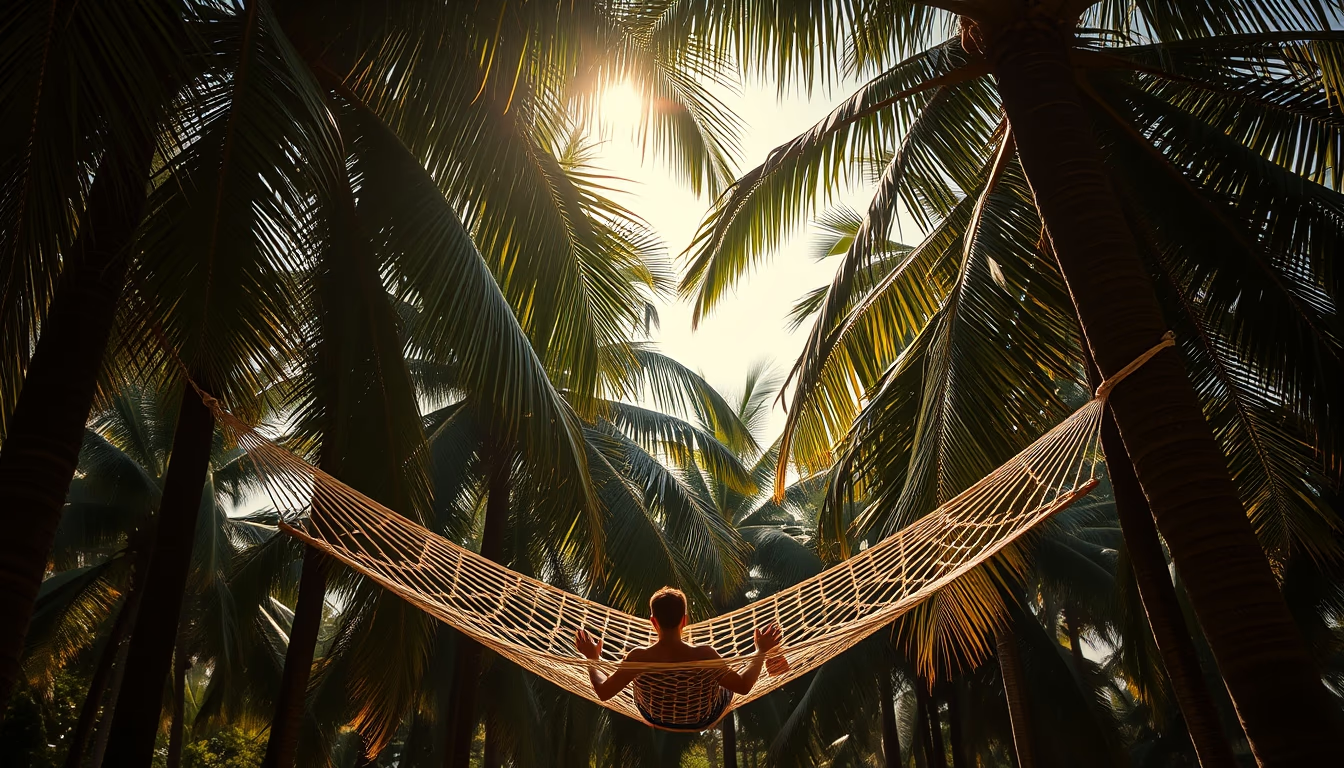
A hammock between palm trees evokes restful shade and tropical leisure, a symbol of Brazilian beach culture and global relaxation.
About this subject
The hammock is a cultural artifact deeply rooted in Brazil, especially along coastlines and in the Amazon. Originally crafted by Indigenous peoples in Central and South America, it was adopted by colonizers and became part of Brazilian daily life, used for sleeping, resting, or simply enjoying the breeze. When strung between palm trees, it evokes the classic tropical paradise image: a moment of pause under the shade of fronds, with the sound of waves in the background. This scene is common on northeastern Brazilian beaches like Porto de Galinhas and Jericoacoara, but also in international destinations such as the Caribbean and Southeast Asia.
Palm trees are essential to the tropical landscape. In Brazil, the coconut palm (Cocos nucifera), introduced by the Portuguese, is now abundant along the entire coast, while the imperial palm (Roystonea oleracea) is a symbol of Rio de Janeiro. Beyond providing shade and fruit, coconut palms are resilient to strong winds and salinity, making them ideal partners for hammocks. The combination is not only aesthetic but functional: the tree's height allows secure attachment, and the fronds filter sunlight.
Culturally, the hammock between palms represents the philosophy of "creative idleness" and well-being. Studies show that the swinging motion can induce deep relaxation and improve sleep quality. In Brazil, hammocks are also practical for vacation homes or beach camping, serving as an icon of a slow-paced lifestyle. Globally, the image of a hammock between coconut trees is used in tourism ads and decor to convey exclusivity and peace. Although Rembrandt lighting might be used photographically to enhance shadows and textures, the real fascination lies in the simplicity: a place to rest, a palm for shade, and the time to enjoy both.
Frequently Asked Questions
Why are hammocks so associated with tropical beach leisure?
Hammocks combine portability and relaxation, allowing people to rest in the shade of palm trees while enjoying the sea breeze without direct contact with sand.
What types of palm trees are most common in hammock settings in Brazil?
The coconut palm (Cocos nucifera) is the most common, found along the entire coast. The imperial palm (Roystonea oleracea) and areca palm also appear, though the latter is more ornamental.
Is sleeping in a hammock good for your back?
Many experts suggest that the gentle rocking and semi-fetal position can reduce pressure points and improve spinal alignment, provided the hammock is properly hung and used in moderation.
Direct URL
https://pub-c7d6a6ea828543ac903a74a341ccb2e1.r2.dev/imagens/hammock-between-palm-trees-rembrandt-lighting-dramatic-shadows-fresh6.avifHow to credit
Include a visible link back to UtilizAí. Copy one of the snippets below:
<a href="https://xn--utiliza-eza.com/en/midia/imagens/hammock-between-palm-trees-rembrandt-lighting-dramatic-shadows-fresh6">Hammock between palm trees</a> by <a href="https://xn--utiliza-eza.com">UtilizAí</a>, licensed under <a href="https://creativecommons.org/licenses/by/4.0/">CC BY 4.0</a>.
[Hammock between palm trees](https://xn--utiliza-eza.com/en/midia/imagens/hammock-between-palm-trees-rembrandt-lighting-dramatic-shadows-fresh6) by [UtilizAí](https://xn--utiliza-eza.com), CC BY 4.0
License: CC-BY-4.0