Gyrocopter autogyro
1344×768 · AVIF · CC BY 4.0
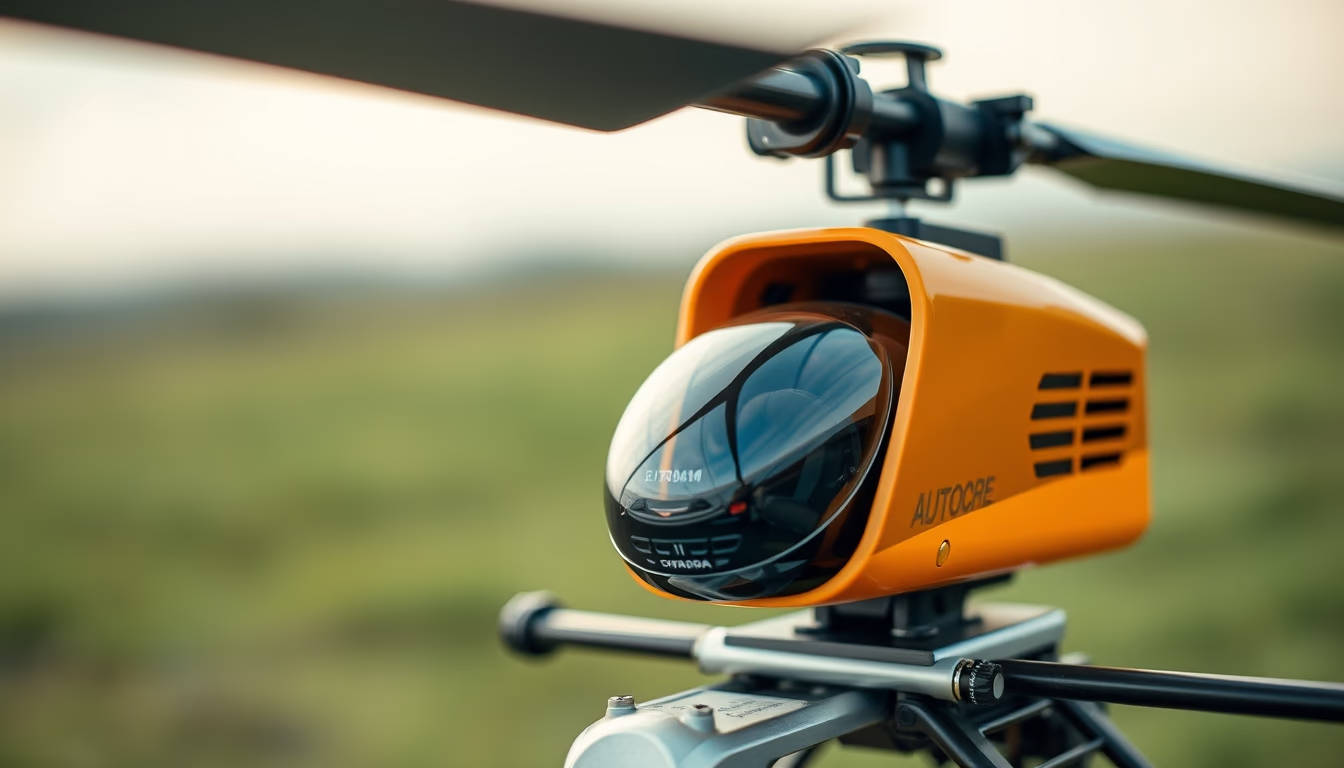
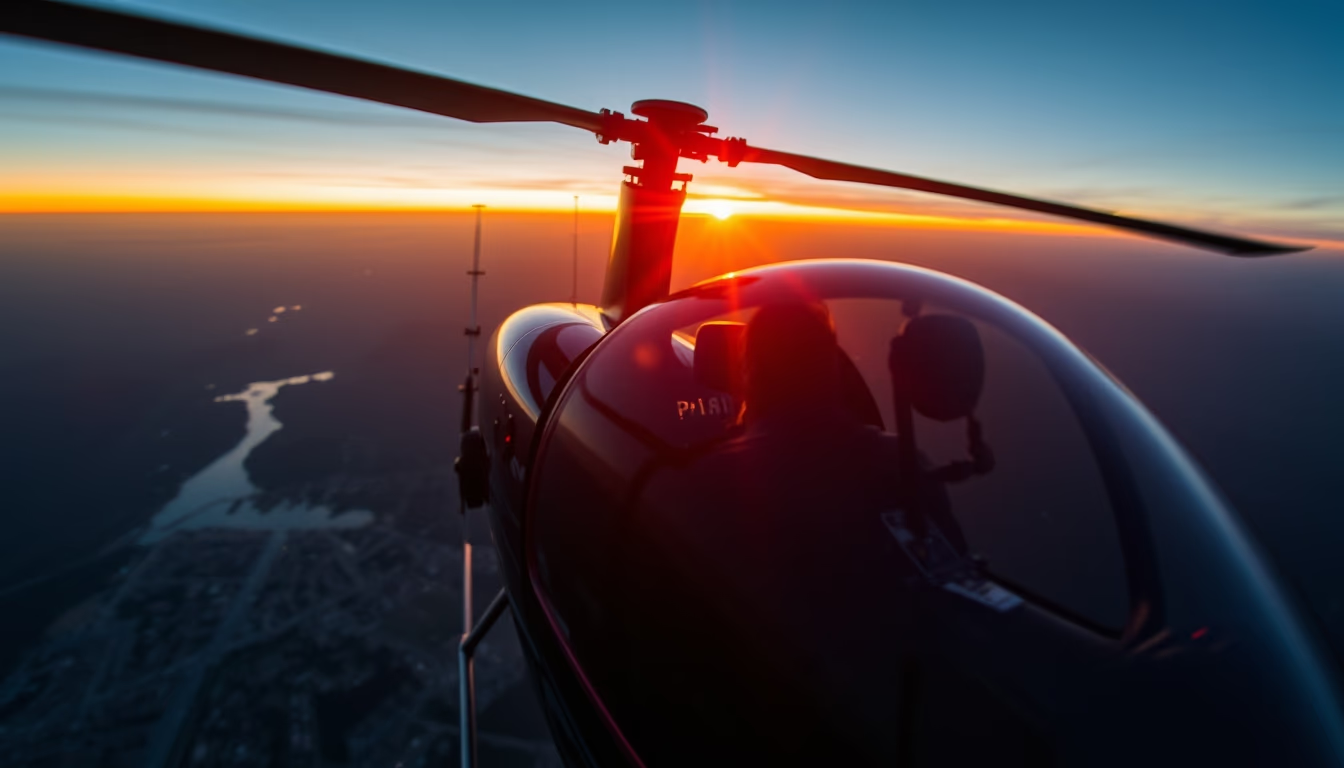
The autogyro, also known as gyrocopter, is a rotary-wing aircraft that combines features of helicopters and airplanes, using a free-spinning rotor for lift.
About this subject
The autogyro, invented by Spanish engineer Juan de la Cierva in 1923, was the first successful rotary-wing aircraft. Unlike a helicopter, its main rotor is unpowered: it spins freely due to forward motion (autorotation), generating lift. Propulsion comes from a conventional propeller driven by a piston or turboprop engine. This design makes the autogyro simpler and cheaper to operate than a helicopter, with lower maintenance costs. Moreover, autogyros cannot stall like fixed-wing aircraft, making them very safe for recreational and observation flights.
Historically, the autogyro paved the way for helicopter development. De la Cierva demonstrated the first stable flight with his C.4 model in 1923, and later the C.8 and C.30 were mass-produced. During World War II, autogyros were used for observation and training. After the war, interest waned with helicopter advances, but in recent decades there has been a revival as experimental and ultralight aircraft. Modern models like the CarterCopter and Magni Gyro are popular among enthusiasts.
The key principle of autorotation: when the rotor is tilted back, rising air causes the blades to spin, maintaining lift. This allows the autogyro to descend controllably even with engine failure, enabling safe emergency landings. The cockpit typically has side-by-side or tandem seating, and many models include a tail rotor for yaw control. Typical top speeds range from 100 to 200 km/h, with endurance of a few hours.
Frequently Asked Questions
What is the difference between an autogyro and a helicopter?
In a helicopter, the main rotor is powered and can generate lift even when stationary. In an autogyro, the rotor spins freely via autorotation, requiring forward motion to maintain lift. Autogyros are generally simpler, lighter, and cheaper.
How does an autogyro fly without an engine on the rotor?
The autogyro's rotor is tilted backward; as the aircraft moves forward, the upward airflow causes the blades to spin, creating lift. This phenomenon is autorotation.
Are autogyros safe?
Yes, they are considered very safe because they cannot stall or spin. In case of engine failure, the pilot can perform a controlled landing in autorotation.
Direct URL
https://pub-c7d6a6ea828543ac903a74a341ccb2e1.r2.dev/imagens/gyrocopter-autogyro-macro-closeup-fresh12.avifHow to credit
Include a visible link back to UtilizAí. Copy one of the snippets below:
<a href="https://xn--utiliza-eza.com/en/midia/imagens/gyrocopter-autogyro-macro-closeup-fresh12">Gyrocopter autogyro</a> by <a href="https://xn--utiliza-eza.com">UtilizAí</a>, licensed under <a href="https://creativecommons.org/licenses/by/4.0/">CC BY 4.0</a>.
[Gyrocopter autogyro](https://xn--utiliza-eza.com/en/midia/imagens/gyrocopter-autogyro-macro-closeup-fresh12) by [UtilizAí](https://xn--utiliza-eza.com), CC BY 4.0
License: CC-BY-4.0