Gyrocopter autogyro
1344×768 · AVIF · CC BY 4.0
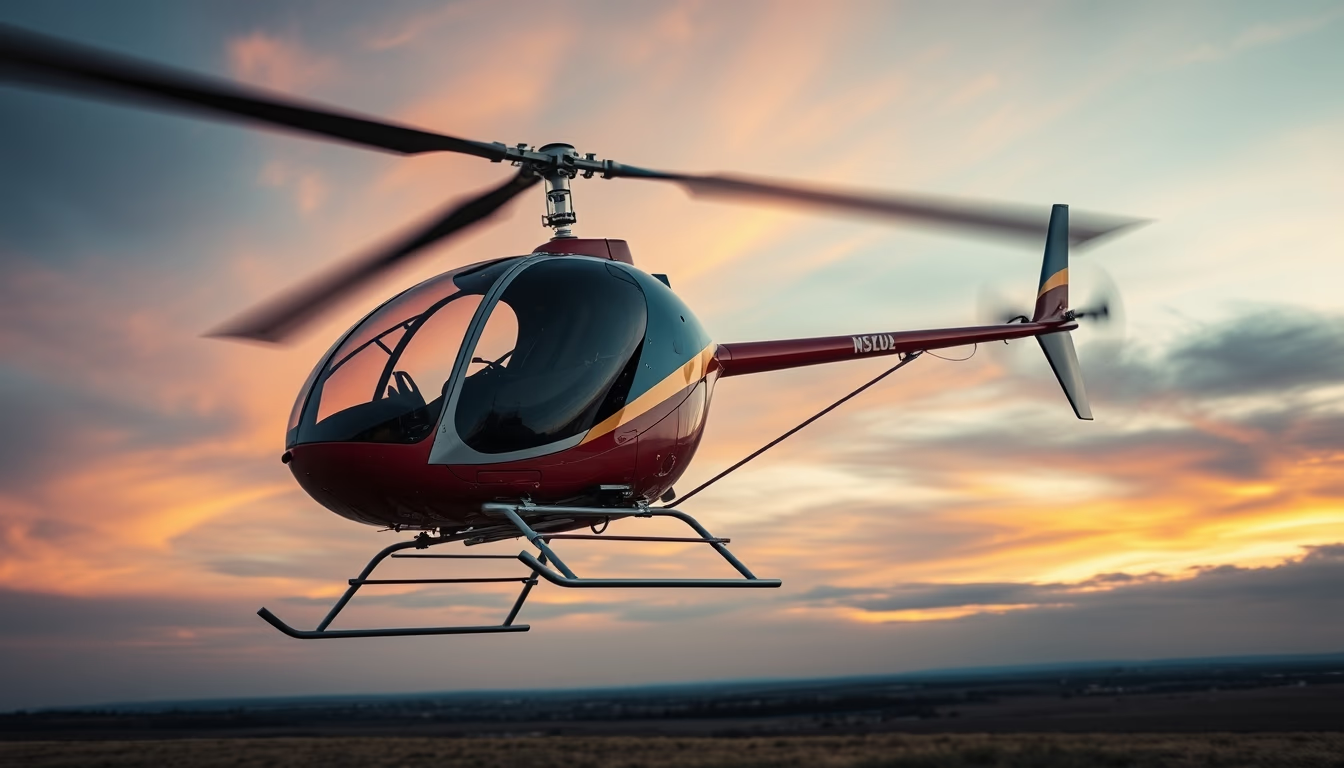
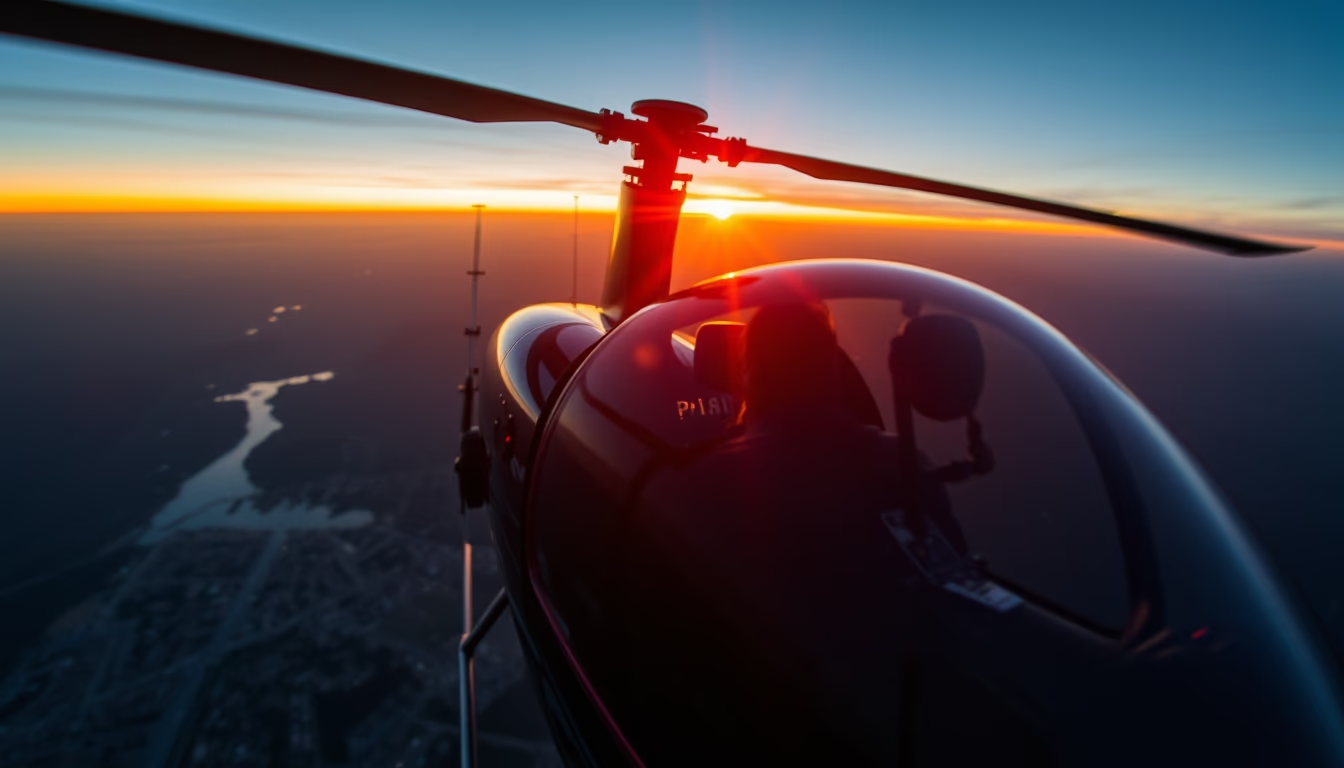
The autogyro, also known as a gyrocopter, is a rotorcraft invented in the 1920s that uses autorotation for lift.
About this subject
The autogyro, invented by Spanish engineer Juan de la Cierva in 1923, was the first successful type of rotorcraft. Unlike a helicopter, its main rotor is unpowered, spinning in autorotation due to the upward airflow generated by forward motion. Propulsion is provided by a conventional engine-driven propeller, usually mounted at the rear. This design allows the autogyro to take off in short distances, fly at low speeds, and remain safe even in engine failure, as the rotor continues to autorotate, enabling a controlled descent and landing.
Historically, autogyros preceded helicopters and influenced their development. In the 1930s, 1940s, they were used for military reconnaissance, mail delivery, and other roles. Today, they are popular among sport aviation enthusiasts, with ultralight and small gyrocopter versions. Modern models can reach speeds up to 180 km/h and have a range of several hours. Their simple construction and low maintenance costs make them appealing for amateur pilots.
A technical curiosity: the term "autogyro" was originally a trademark of the Cierva Autogiro Company but became generic. In Brazil, there is an active community of autogyro pilots, with associations and regular fly-ins. Safety is a strong point: even without engine power, the craft can glide and land softly as long as minimum airspeed is maintained, a highlight in training manuals.
Frequently Asked Questions
What is the difference between an autogyro and a helicopter?
The main difference is that the autogyro's rotor is unpowered, spinning in autorotation, while a helicopter's rotor is engine-driven. Autogyros require forward motion to generate lift, unlike helicopters which can hover. Autogyros are simpler and safer in case of engine failure.
Does an autogyro need an engine to fly?
Yes, the engine provides thrust via a propeller, creating forward motion that keeps the rotor in autorotation. However, if the engine fails, the rotor continues to autorotate, allowing the craft to glide and land safely if enough altitude is available.
Who invented the autogyro?
The autogyro was invented by Spanish engineer Juan de la Cierva, who made the first successful flight in 1923. His invention paved the way for the development of modern helicopters.
Direct URL
https://pub-c7d6a6ea828543ac903a74a341ccb2e1.r2.dev/imagens/gyrocopter-autogyro-long-exposure-fresh3.avifHow to credit
Include a visible link back to UtilizAí. Copy one of the snippets below:
<a href="https://xn--utiliza-eza.com/en/midia/imagens/gyrocopter-autogyro-long-exposure-fresh3">Gyrocopter autogyro</a> by <a href="https://xn--utiliza-eza.com">UtilizAí</a>, licensed under <a href="https://creativecommons.org/licenses/by/4.0/">CC BY 4.0</a>.
[Gyrocopter autogyro](https://xn--utiliza-eza.com/en/midia/imagens/gyrocopter-autogyro-long-exposure-fresh3) by [UtilizAí](https://xn--utiliza-eza.com), CC BY 4.0
License: CC-BY-4.0