Gyrocopter autogyro
1344×768 · AVIF · CC BY 4.0
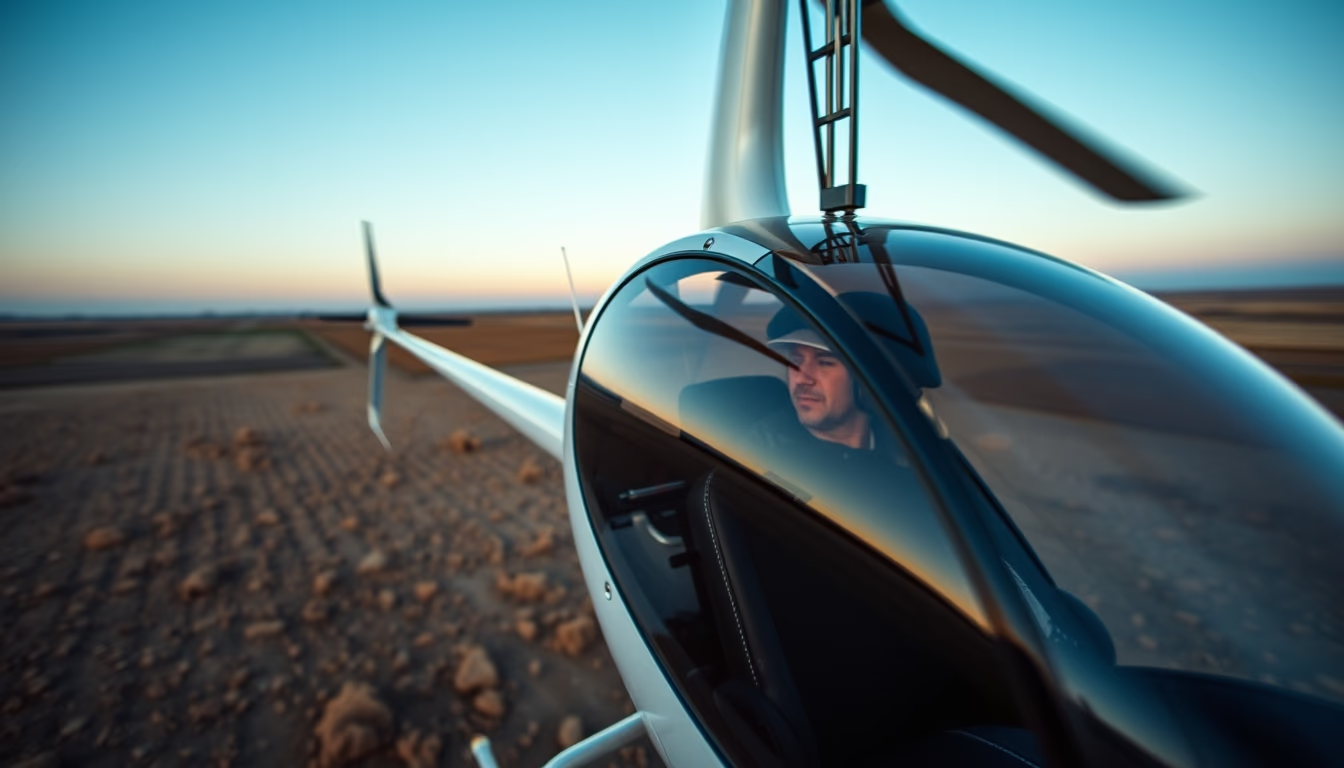
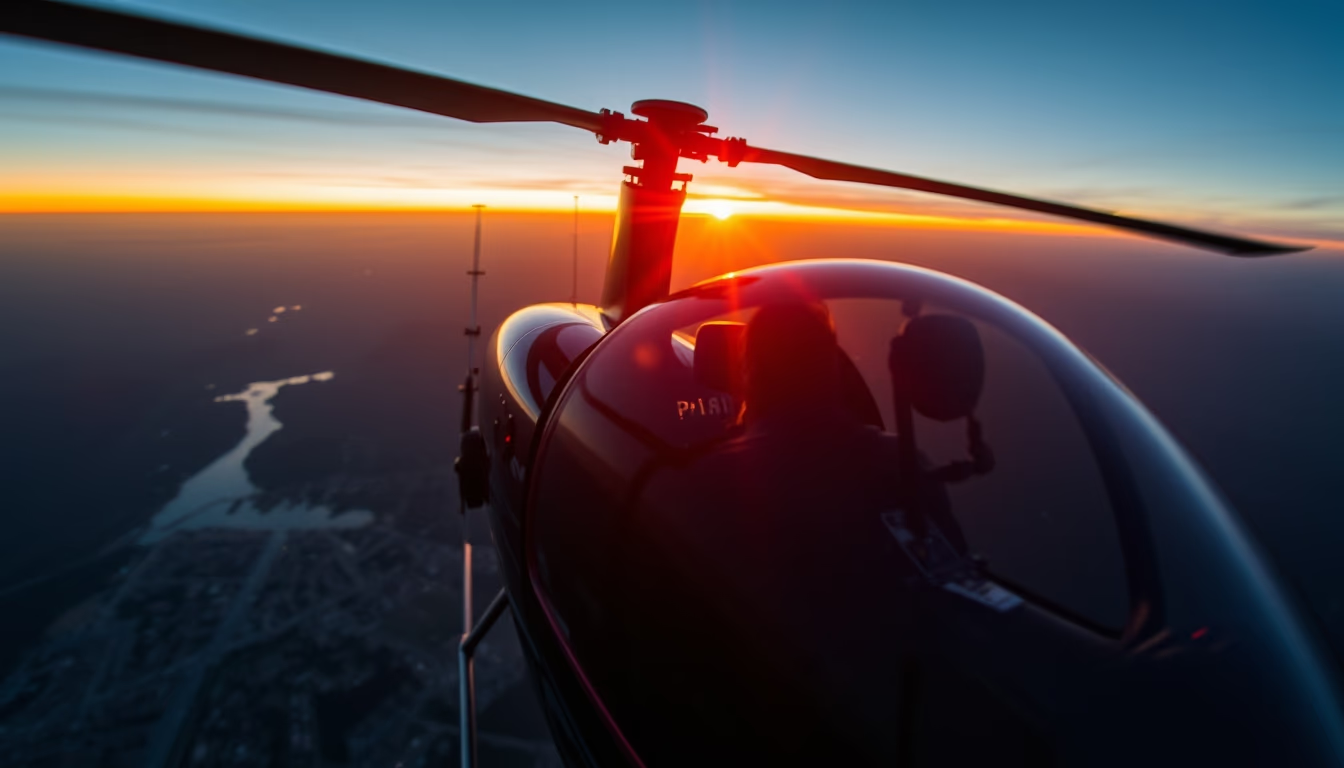
The autogyro, precursor to the helicopter, combines rotary wings and a propeller for stable flight.
About this subject
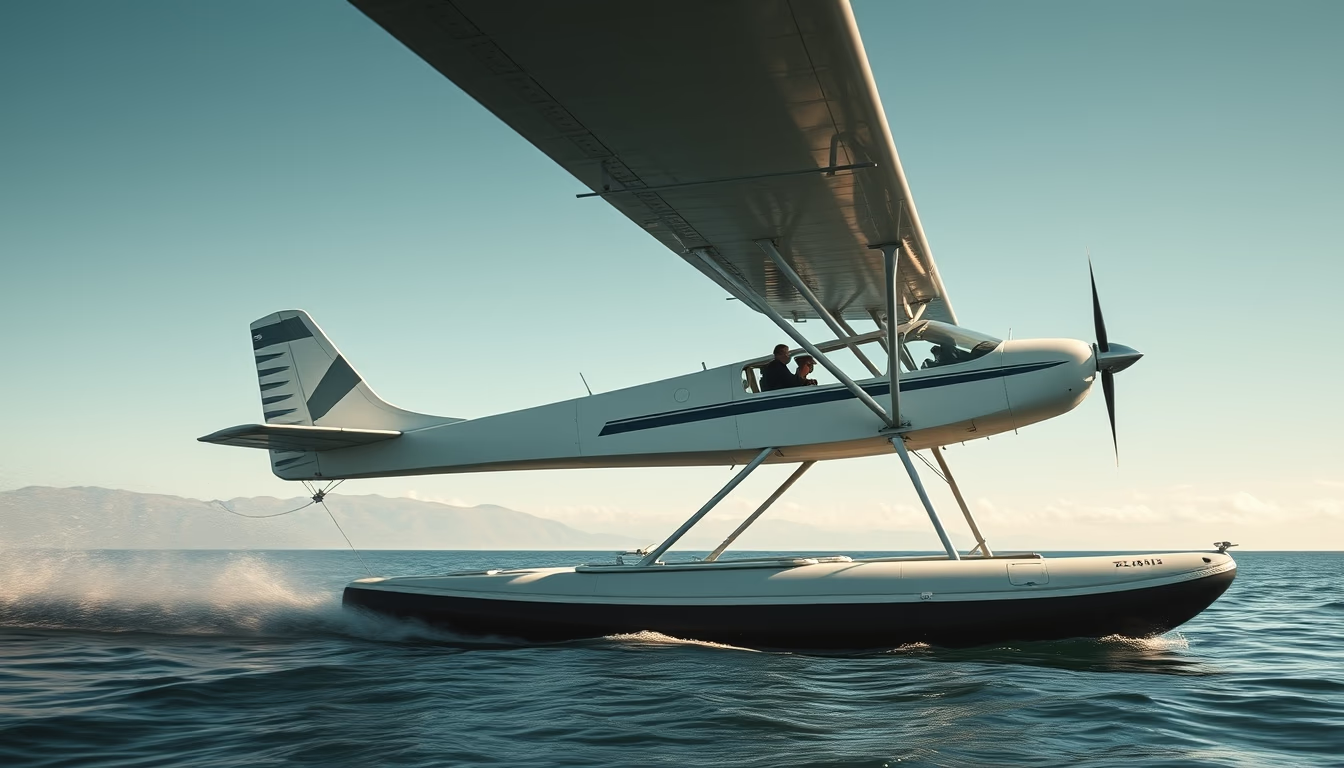
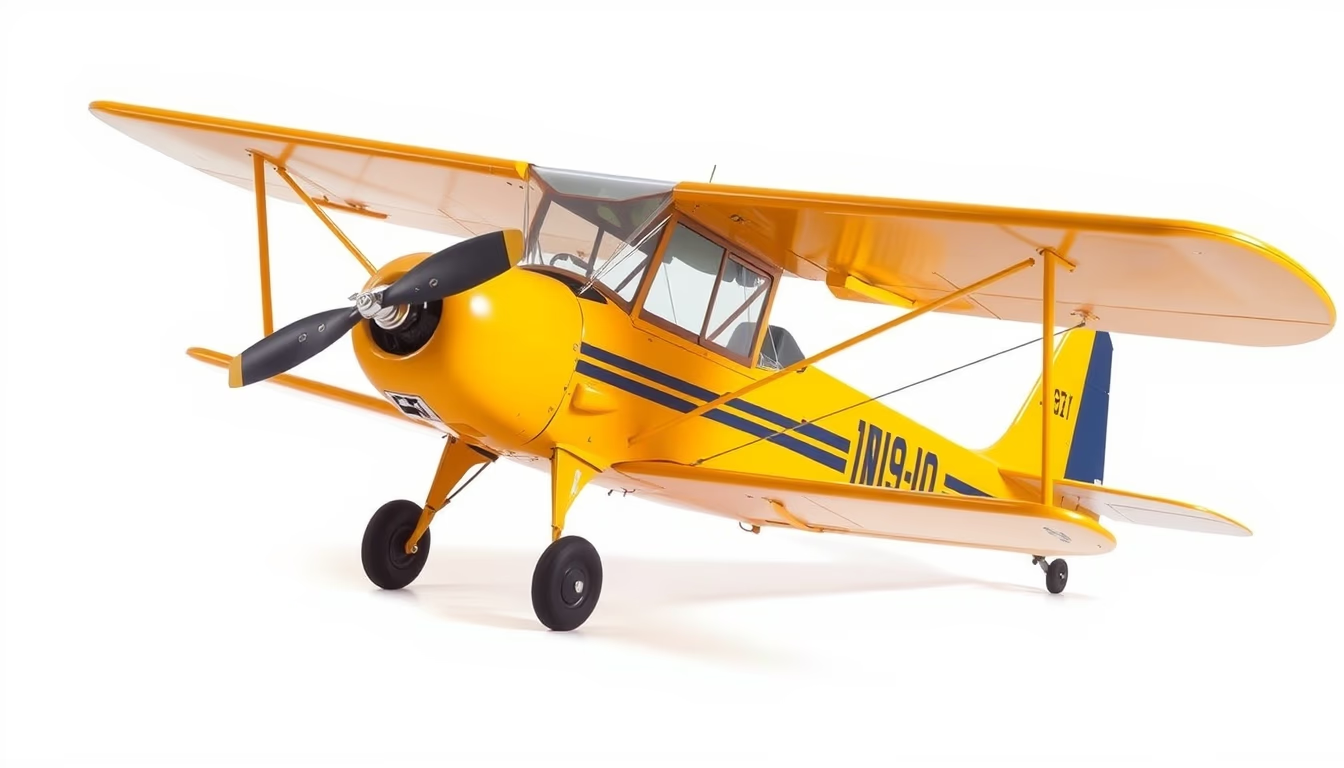
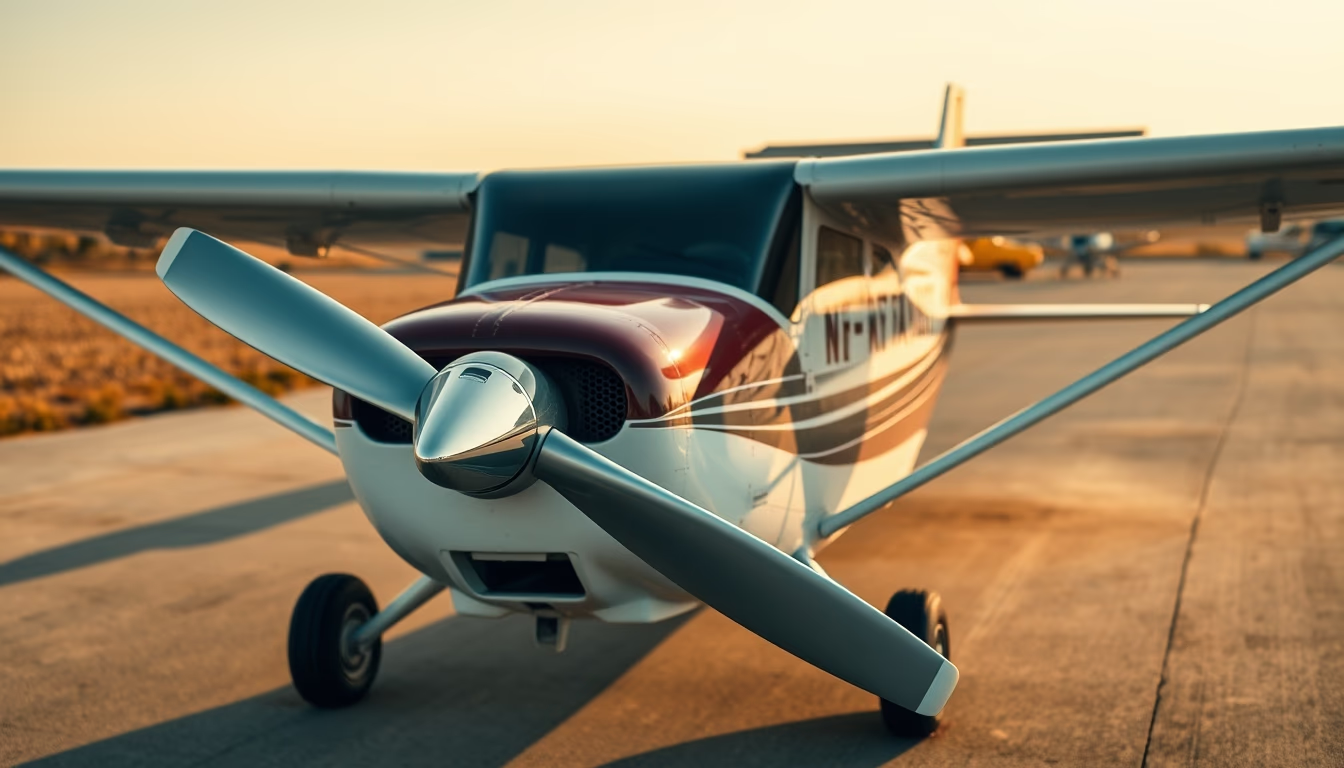
The autogyro, also known as a gyrocopter, is a rotary-wing aircraft that uses an unpowered rotor to generate lift. Unlike a helicopter, the autogyro's rotor spins freely due to forward motion, creating aerodynamic forces. A propeller, usually mounted at the front or rear, provides the necessary thrust. This configuration was invented by Spanish engineer Juan de la Cierva in 1923, who sought a safe aircraft resistant to stalls. The first successful flight occurred on January 9, 1923, at the Cuatro Vientos Airfield in Madrid.
Autogyros stand out for their ability to fly at low speeds and land in very short distances, making them ideal for confined areas. Unlike helicopters, they cannot hover but offer better cruise efficiency and lower mechanical complexity. During the 1930s and 1940s, autogyros were widely used for military reconnaissance, mail transport, and even polar expeditions. Companies like the Cierva Autogiro Company licensed the technology to manufacturers in the UK, France, Germany, and the US.
Today, autogyros are popular among sport and recreational aviation enthusiasts. Modern models like the AutoGyro MTOsport and Magni Gyro are built in Europe and the US, following light aircraft regulations. Safety is a key advantage: in case of engine failure, the autogyro can glide and land safely because the rotor continues spinning. In Brazil, autogyro use is regulated by the National Civil Aviation Agency (ANAC) and has slowly grown, mainly for leisure flying and pilot training.
Frequently Asked Questions
What is the difference between an autogyro and a helicopter?
In an autogyro, the rotor spins freely due to forward motion, without its own engine. In a helicopter, the rotor is powered, allowing hovering. An autogyro cannot hover but is simpler and safer in case of engine failure.
How does an autogyro take off?
Autogyros can take off by rolling on the runway like an airplane, or with a rotor pre-rotation system to shorten the takeoff distance. Some models have a jump-takeoff capability using a rotor auxiliary system.
Are autogyros still used today?
Yes, they are mainly used for recreational flying, pilot training, and even surveillance. They are popular in countries like Germany, the US, and the UK. In Brazil, the fleet is small but growing among enthusiasts.
Direct URL
https://pub-c7d6a6ea828543ac903a74a341ccb2e1.r2.dev/imagens/gyrocopter-autogyro-documentary-photography-fresh8.avifHow to credit
Include a visible link back to UtilizAí. Copy one of the snippets below:
<a href="https://xn--utiliza-eza.com/en/midia/imagens/gyrocopter-autogyro-documentary-photography-fresh8">Gyrocopter autogyro</a> by <a href="https://xn--utiliza-eza.com">UtilizAí</a>, licensed under <a href="https://creativecommons.org/licenses/by/4.0/">CC BY 4.0</a>.
[Gyrocopter autogyro](https://xn--utiliza-eza.com/en/midia/imagens/gyrocopter-autogyro-documentary-photography-fresh8) by [UtilizAí](https://xn--utiliza-eza.com), CC BY 4.0
License: CC-BY-4.0